Audience Targeting: How to Find Your Ideal Customer
Audience targeting is the strategic process of identifying and focusing marketing efforts on a specific consumer subgroup most likely to convert.
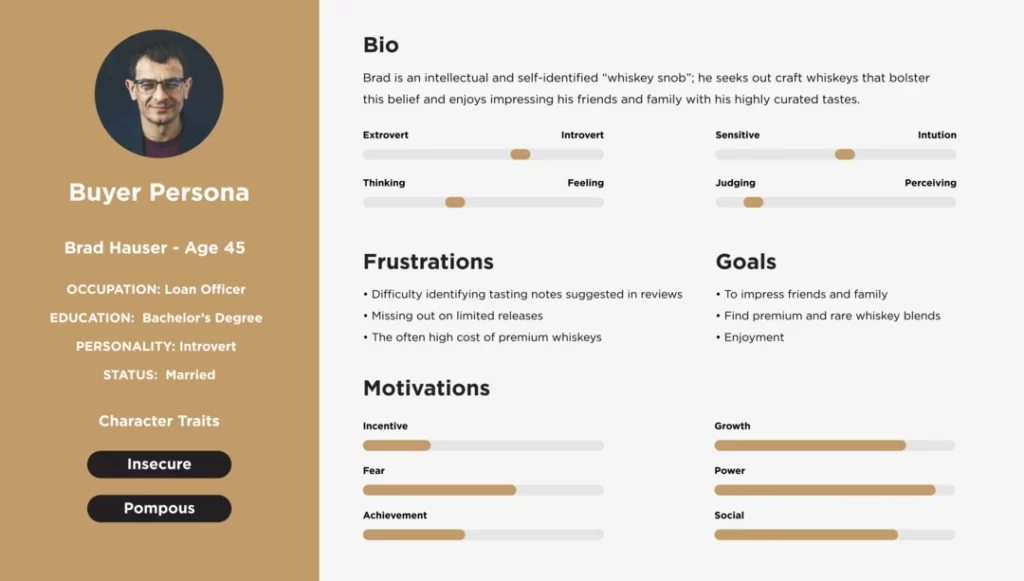
This involves creating a detailed buyer persona by analysing four key data types: demographic (age, income), geographic (location), psychographic (lifestyle, values), and behavioural (purchase history).
Using platforms like Google Ads and Meta Ads, businesses can then deliver highly relevant messages, improving marketing ROI and ensuring ad spend isn’t wasted.
- Build detailed buyer personas using demographic, psychographic, geographic and behavioural data to target high-conversion subgroups.
- Prioritise first‑party and zero‑party data, privacy‑preserving tech, and server‑side APIs for resilient, cookieless targeting.
- Continuously test, refine and use AI (predictive LTV, synthetic audiences) to focus spend on profitable, high‑intent segments.
The Foundations of Audience Targeting

Before diving into the nitty-gritty, let’s clarify what audience targeting means.
Audience targeting is the process of identifying and reaching the people most likely to be interested in your product or service.
It’s not about casting the widest net possible.
It’s about fishing where the fish are.
Why Does It Matter?
Not everyone cares about what you’re selling.
And that’s okay.
Your job isn’t to convince the whole world to buy from you. It’s to find the slice of the population that already wants what you’re offering.
Effective audience targeting:
- Increases conversion rates
- Lowers acquisition costs
- Improves customer satisfaction
- Boosts brand loyalty
In other words, it turns marketing from a money pit into a profit machine.
Privacy-First Targeting & Cookieless Solutions
The traditional “follow the user” model has collapsed.
With the total deprecation of third-party cookies and the tightening of global privacy regulations, reaching your ideal customer now requires a shift from tracking identity to interpreting signals.
First-party data has moved from being a supplementary asset to your primary engine for growth.
To find your audience in 2026, you must stop relying on external platforms to “know” your customer and start owning the relationship yourself.
This involves transitioning to Privacy-Enhancing Technologies (PETs), which enable you to process user data without ever exposing personally identifiable information.
One of the most effective strategies today is Contextual Targeting 2.0. Unlike the basic keyword matching of the past, modern contextual targeting uses machine learning to understand the “semantic environment” of a page.
If you are selling high-end kitchenware, you no longer need to follow a “foodie” across the web using a tracking pixel. Instead, you target high-value content clusters—specific recipe formats, culinary technique videos, and luxury lifestyle editorials—where your audience is naturally engaged.
Furthermore, API-based conversions (like the Meta Conversions API or Google’s Enhanced Conversions) have replaced the browser-based pixel.
These tools send data directly from your server to the advertising platform, bypassing browser restrictions and providing a more accurate picture of how your targeted segments are behaving.
By focusing on these durable, server-side connections, you ensure your targeting remains resilient against future browser updates.
The Death of the ‘Persistent Identity’: In 2026, the industry has shifted toward “Ephemeral Targeting.” Research suggests that 72% of high-intent consumers now use tools to mask their digital footprint daily. Consequently, the most successful brands have stopped trying to build permanent profiles. Instead, they use Differential Privacy—a mathematical technique that adds “noise” to datasets so that individual users cannot be identified, but the aggregate patterns (e.g., “users in London who buy eco-friendly soap on Tuesdays”) remain 99% accurate. This is the secret to scaling without infringing on user rights.
The Building Blocks of Audience Targeting
1 – Demographics
This is the basic stuff:
- Age
- Gender
- Income
- Education
- Location
It’s a start, but it’s not enough on its own.
2 – Psychographics
This is where things get interesting. Psychographics dive into:
- Values
- Interests
- Lifestyle
- Personality traits
- Attitudes
Understanding psychographics is like having a crystal ball that reveals what makes your audience tick.
3 – Behaviours
Actions speak louder than words. Look at:
- Purchase history
- Brand interactions
- Online activity
- Device usage
Behaviours give you concrete data with which to work.
4 – Pain Points and Desires
What keeps your audience up at night? What do they dream about?
Understanding these emotional drivers is crucial for crafting messages that resonate.
5 – Customer Data Types for Targeting
First-party data is information you collect directly.
Think site analytics, CRM fields, and purchase history.
Zero-party data is information customers share intentionally.
Think survey answers, preference centres, and quiz results.
Second-party data is a trusted partner’s first-party data.
It is shared under a direct agreement.
Third-party data is aggregated from external sources.
Its reach is wide, but reliability can vary.
Prioritise first and zero-party data for durability.
They are privacy-resilient and accurate.
Map each data source to a clear permission scope.
Log purpose, retention, and lawful basis in your CRM.
Use consented data to seed models and audiences.
Avoid mixing unknown consent states across activation channels and platforms.
Now that we’ve covered the basics, let’s roll up our sleeves and get into the good stuff.
How to Identify Your Ideal Audience
1 – Predictive Modelling & LTV Forecasting
Targeting everyone who “might buy” is a recipe for thin margins. In 2026, the focus has shifted to Predictive Lifetime Value (PLTV).
Using machine learning models, you can now analyse the early Behavioural signals of a new lead to predict their total value over the next three years.
If the model identifies that a lead from a specific LinkedIn campaign has a high probability of becoming a “Whale” (a top 5% spender), your bidding system should automatically increase the budget to secure that lead.
Predictive Modelling allows you to exclude “Price-Sensitive” segments who only buy during sales and focus your spend on “Brand-Loyal” segments who prioritise quality and service. This ensures that your audience targeting isn’t just finding customers, but is finding profitable customers.
The ‘Churn Signal’ Early Warning: Advanced audience targeting isn’t just for acquisition; it’s for retention. By monitoring Negative Behavioural Signals (e.g., a decrease in login frequency or a visit to the ‘how to cancel’ FAQ page), companies are now creating “At-Risk Audiences.” These segments are automatically pushed into a high-priority service queue or sent a “loyalty-saving” offer before they even realise they are about to leave.
2 – Conduct Surveys and Interviews
Nothing beats hearing directly from your audience.
Create a survey using tools such as SurveyMonkey or Typeform. Ask about:
• Demographics
• Challenges they face
• Goals and aspirations
• How they make purchasing decisions
Pro tip: Offer an incentive for completing the survey. A small discount or entry into a prize draw can dramatically increase response rates.
3 – Dive into Analytics
Your website and social media analytics are treasure troves of audience data.
Google Analytics can tell you:
- Where are your visitors coming from
- What content do they engage with the most
- How they move through your site
GA4 lets you build reusable Audiences for ads.
Use Explorations to map paths and drop-offs.
Cohort exploration shows retention by start date.
Path exploration surfaces loops and dead ends.
Predictive metrics can flag churn and purchase intent.
Eligibility depends on event volume and data quality.
Keep UTM names consistent to clean your reports.
Enable BigQuery export to analyse events without sampling limits.
Use consistent naming for events and parameters across properties and apps.
Define key conversions with clear, stable event names always.
Social media insights reveal:
- Age and gender distribution
- Interests and behaviours
- Best times to post
4 – AI-Powered Persona Architecture
In 2026, sophisticated marketers use Synthetic Audiences to simulate how a specific demographic will respond to a campaign before a single pound is spent on ads.
Instead of naming a persona “Tina” and guessing her challenges, you now feed your First-party data into a large language model (LLM) to create a “Living Persona.” This digital twin can be interviewed, queried, and tested.
How to Build a Synthetic Audience Model:
- Data Ingestion: Upload anonymised customer transcripts, support tickets, and sales calls into a private, secure AI environment.
- Attribute Mapping: Use the AI to identify non-obvious Psychographic clusters. You might discover that your best customers aren’t just “tech-savvy,” but are specifically motivated by “decentralised productivity tools.”
- Stress Testing: Prompt the AI to act as this persona: “You are a CTO at a mid-sized firm who is sceptical of new software. What are three reasons you would reject this landing page?”
- Continuous Refresh: Unlike a traditional persona, a synthetic model updates in real-time as new Behavioural data flows into your CRM.
This approach moves targeting from a creative exercise to a quantitative science. You aren’t just targeting a persona; you are targeting a validated psychological profile that has already “vetted” your messaging.
5 – Use Competitive Analysis
Your competitors can teach you a lot about your audience.
Look at:
- Who they’re targeting
- How do they position themselves
- What messaging seems to resonate
Tools like SimilarWeb and SpyFu can give you insights into their traffic sources and keywords.
But remember: The goal isn’t to copy. It’s to find gaps and opportunities.
6 – Leverage Social Listening
People are talking about your industry online. Are you listening?
Use tools like Brandwatch or Mention to monitor:
- Industry keywords
- Brand mentions
- Competitor discussions
This real-time data can reveal emerging trends and pain points you might have missed.
7 – Test and Refine
Audience targeting is more than just a one-and-done process. It’s ongoing.
Start with your best guess, then test and refine using real-world data.
A/B testing is your friend here. Try different messages, visuals, and offers to see what resonates.
Pick one primary metric before you test.
Change one variable per test to isolate the impact.
Use a sample size calculator before launching.
Run for a full business cycle if you can.
Avoid peeking and stopping when trends look good.
Document your hypothesis and results every time.
Roll winners to the next test without delay.
Reserve a holdout to properly measure baseline performance shifts.
Pre-register metrics and stop rules internally before each launch.
At Inkbot Design, we constantly tweak our targeting. What worked last year might not work today.
Stay agile, and be bold when pivoting when the data tells you to.
Strategies for Reaching Your Target Audience
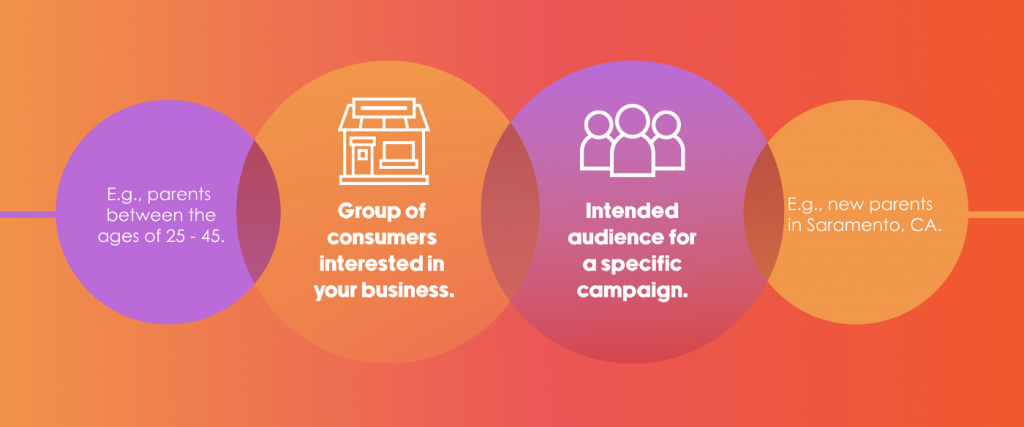
Now that you’ve identified your ideal audience, how do you reach them?
1 – Content Marketing
Create valuable content that addresses your audience’s pain points and desires.
This could be:
- Blog posts
- Videos
- Podcasts
- Infographics
- Whitepapers
The key is consistency and quality. Don’t just create content for its own sake.
Every piece should serve a purpose and provide real value.
2 – Social Media Marketing
Choose platforms where your audience hangs out.
For B2B? LinkedIn might be your goldmine.
Targeting Gen Z? TikTok could be the way to go.
Don’t spread yourself too thin. It’s better to excel on one platform than to be mediocre on five.
LinkedIn targets by industry, company size, and seniority.
Job title, function, and skills are also available.
Use Matched Audiences for account lists and contacts.
Install the Insight Tag for website retargeting.
Build lookalikes from your best-fit accounts.
Layer seniority to reach budget holders fast.
3 – Influencer Partnerships
Find influencers who already have your target audience’s ear.
But here’s the catch:
Bigger isn’t always better.
Micro-influencers (those with 10k-100k followers) often have more engaged audiences and cost less.
4 – Email Marketing
Despite what you might have heard, email isn’t dead; it’s far from it.
Email marketing still offers the highest ROI of any digital marketing channel.
The key? Segmentation and personalisation.
Don’t blast the same message to everyone. Tailor your emails based on subscriber behaviour and preferences.
Set up a preference centre for topics and frequency.
Use double opt-in to confirm consent.
Keep unsubscribe links clear and one click.
Store consent logs to meet GDPR and CCPA.
Map preferences to segments for personalisation.
Pro tip: Use quizzes to capture zero-party data.
5 – Paid Advertising
Platforms like Google Ads and Facebook Ads offer exact targeting options.
You can target based on:
- Demographics
- Interests
- Behaviours
- Lookalike audiences
Google Ads removed Similar Audiences in 2023.
Use Optimised targeting or Audience expansion instead.
Feed strong Audience signals, such as Customer Match lists.
Performance Max can ingest these signals as well.
Meta Lookalike Audiences still use high-quality seed data.
Refresh source lists often to maintain match rates.
Use custom segments from search terms and site behaviour.
Layer detailed demographics when intent signals are sparse initially.
Exclude irrelevant placements and audiences to reduce waste spend.
Start small, test different approaches, and scale what works.
6 – SEO (Search Engine Optimisation)
Optimise your website and content for the keywords your audience is searching for.
But remember: SEO is a long game. Don’t expect overnight results.
Focus on creating high-quality, valuable content that naturally incorporates relevant keywords.
7 – Community Building
Create spaces where your audience can connect with your brand.
This could be:
- A Facebook group
- A Slack community
- A forum on your website
Engaged communities can become your most powerful marketing asset.
8 – Partnerships and Collaborations
Find complementary businesses that serve the same audience but aren’t direct competitors.
Co-create content, run joint webinars or cross-promote each other’s products.
It’s a win-win: You both get access to a broader audience.
9 – Retargeting
Only some visitors to your site will convert immediately.
Retargeting lets you show ads to people who’ve interacted with your brand.
It’s like a gentle reminder: “Hey, remember us? We’re still here when you’re ready.”
Set frequency caps to avoid ad fatigue.
Exclude recent converters from all retargeting sets.
Match membership windows to your buying cycle.
Short cycles need shorter lists for relevance.
Use sequential ads to move people down the funnel.
Product view, then proof, then offer works well.
But remember: Creative rotation keeps recall high.
Cap impressions per user per day and week consistently.
10 – Personalisation
Use the data you’ve collected to create personalised experiences for your audience.
This could be:
- Dynamic website content
- Personalised product recommendations
- Tailored email campaigns
The more relevant your messaging, the higher your conversion rates will be.
Real-World Examples of Effective Audience Targeting

Let’s look at some brands that have nailed audience targeting:
1 – Dollar Shave Club
They identified a clear audience: Men tired of overpaying for razors.
Their irreverent ads and direct-to-consumer model resonated perfectly with this group.
2 – Glossier
By focusing on millennial and Gen Z women who prefer a natural look, Glossier built a cult following.
Their user-generated content strategy turned customers into brand ambassadors.
3 – Peloton
They targeted affluent, time-poor professionals who value fitness but struggle to make it to the gym.
Their premium pricing and community-focused approach perfectly matched this audience’s needs and values.
4 – Mailchimp
Initially targeting small businesses, Mailchimp expanded its audience to include larger enterprises.
They adapted their messaging and product offerings to cater to this new segment without alienating their core users.
5 – Inkbot Design (Yes, that’s us!)
We narrowed our focus to tech startups and scale-ups needing branding and design services.
By tailoring our portfolio and messaging to this niche, we saw a 300% increase in qualified leads.
The lesson? When you speak directly to a specific audience, they listen.
Typical Audience Targeting Mistakes (And How to Avoid Them)
1 – Casting Too Wide a Net
Trying to appeal to everyone usually means appealing to no one.
Solution: Focus on a specific niche and dominate it before expanding.
2 – Relying Solely on Demographics
Age and location don’t tell the whole story.
Solution: Dig deeper into psychographics and behaviours for a fuller picture.
3 – Ignoring Data
Gut feelings are great, but data is better.
Solution: Use analytics tools to inform your decisions and test your assumptions.
4 – Not Adapting to Changes
Your audience’s needs and behaviours will evolve.
Solution: Regularly review and update your audience personas and targeting strategies.
5 – Forgetting the Human Element
Behind every data point is a real person with real needs.
Solution: Balance data-driven decisions with empathy and understanding.
The Future of Audience Targeting
As we look ahead, several trends are shaping the future of audience targeting:
1. AI and Machine Learning
AI will enable even more precise targeting and predictive analytics.
2. Privacy Concerns
With regulations like GDPR and CCPA, brands must find ethical ways to collect and use data.
3. Hyper-Personalisation
Expect to see more one-to-one marketing as technology advances.
4. Voice Search Optimisation
As voice assistants become more prevalent, targeting strategies will need to adapt.
5. Augmented and Virtual Reality
These technologies will offer new ways to engage and understand audiences.
Conclusion: The Power of Precision
Effective audience targeting is about more than just reaching more people. It’s about reaching the right people.
When you truly understand your audience’s needs, desires, and pain points, you can create messages that resonate deeply.
This isn’t just marketing. It’s building relationships.
And in a world where consumers are bombarded with thousands of ads daily, those relationships are your competitive advantage.
So, take the time to dig deep. Use the strategies we’ve discussed. Test, refine, and adapt.
Your ideal audience is out there. It’s your job to find them and speak their language.
Ready to take your audience targeting to the next level? Inkbot Design specialises in creating brand identities and marketing materials that speak directly to your ideal customers. Let’s chat about how we can help you connect with the people who matter most to your business.
FAQs
How do I target audiences in a “cookieless” world?
You must transition from identity-based tracking to signal-based and contextual targeting. Focus on collecting First-party data through direct interactions and use API-based conversion tracking (like Meta’s CAPI) to send data directly from your server. This ensures you can still reach your audience without relying on browser-stored cookies.
What is a ‘Synthetic Audience’ and should I use one?
A synthetic audience is an AI-generated simulation of your customer base used to test marketing messages. You should use them to validate your campaigns and predict responses before spending your actual ad budget. They are built by feeding your CRM data and customer transcripts into a secure large language model.
Is third-party data still useful for targeting in 2026?
Third-party data is significantly less reliable due to privacy regulations and the death of the cookie. While it still offers scale, it should be used primarily as a secondary layer to refine First-party insights or within Data Clean Rooms, where the data is verified and compliant.
How does GA4 help with audience targeting?
GA4 allows you to build “Predictive Audiences” based on machine learning, such as “Likely 7-day purchasers” or “Likely churners.” These segments can be exported directly to Google Ads for immediate targeting. It focuses on events and behaviours rather than simple page views, offering a deeper view of user intent.
What’s the role of buyer personas in audience targeting?
Buyer personas help you visualise and understand your ideal customers. They guide your marketing decisions and help ensure your messaging resonates with your target audience.
How can I target my audience on a limited budget?
Focus on organic strategies like content marketing, SEO, and social media engagement. Start with one or two channels where your audience is most active and expand as you grow.
What metrics should I track to measure the success of my audience targeting?
Key metrics include engagement rates, conversion rates, customer acquisition costs, lifetime value, and return on ad spend. The specific metrics will depend on your goals and channels.
How do I find my audience on social media?
Research which platforms your audience uses most. Use social listening tools to find relevant conversations. Engage with industry hashtags and join relevant groups or communities.
Is it possible to target too narrowly?
Yes, if your audience is too narrow, you might limit your growth potential. The key is to find a balance between specificity and scalability.
How can I use competitor analysis in my audience targeting strategy?
Study your competitors’ marketing efforts, engagement rates, and customer feedback. This can reveal gaps in the market and help you differentiate your offering.