Stop Telling Me Bedtime Stories: Why Brand Utility Beats Narrative in 2026
The design industry has been obsessed with ‘storytelling’ for a decade. It’s time to admit it’s hollow, primarily marketing jargon.
Real brands in 2026 are winning through hyper-utility, radical transparency, and proof-based systems that actually do something for the customer instead of just talking at them.
- Brand Utility beats narrative: design must deliver measurable function not just crafted backstories.
- Proof over promise: consumers demand transparent evidence—raw tests, sourcing, and real user journeys.
- Agentic systems win: adaptive, AI-enabled services that remove friction outperform static, story-led identities.
Why This Matters (The Death of the Narrator)
I’ve had enough of the ‘Brand Storyteller’ job title.
Every time I see it on a LinkedIn profile, I feel a twitch in my left eye.
It’s the ultimate industry buzzword—a soft, fuzzy blanket we wrap around mediocre products to make them feel ‘human’. But here’s the thing: by 2026, the blanket has worn thin.
We are currently drowning in a sea of synthetic narratives. Thanks to the explosion of generative AI and agentic workflows, any business with a subscription to a decent LLM can churn out a ‘founding myth’ in six seconds.
The result? Total narrative saturation. When everyone has a ‘story’, no one has a story.
According to recent industry shifts, 52% of consumers now feel a distinct lack of positivity toward AI-generated marketing content.
They can smell the prompt from a mile away. If your brand is built on a ‘story’ that feels like it was written by a committee of robots, you’re not building a legacy—you’re building noise.
The tension today isn’t between good stories and bad ones. It’s between telling and doing. Business owners are tired of paying for ‘brand bibles’ that sit in a Dropbox folder gathering digital dust.
They want systems that convert. They want clarity that cuts through the 2026 attention deficit.
The Deep Dive: From Myths to Machines
So, if we aren’t telling stories, what the hell are we doing?
We’re building utility.
In 2026, the strongest brands have moved away from being ‘narrators’ and have become ‘service providers’.
Look at the failure of high-concept, story-heavy tech launches like the Humane AI Pin—all narrative, zero utility.
Compare that to the brands thriving on ‘hyper-convenience’. They aren’t telling you they care; they’re showing you by saving you three minutes of your life.
Is Your Brand a Story or a System?
A story has a beginning, a middle, and an end. A brand system is a living, breathing loop.
Most designers make the mistake of treating a brand like a static piece of literature. You write the ‘Purpose’, you pick the ‘Primary Colour’ (usually some safe blue), and you walk away. But the 2026 market demands fluid logos and adaptive visual systems.
The brand doesn’t just ‘sit’ there. It responds. It moves. It solves a problem on a WhatsApp Business thread or an RCS message before the customer even has to ask. That’s not storytelling. That’s engineering.
The Hard Numbers: Why Utility Outperforms Narrative
The design industry has long hidden behind “brand awareness” metrics because stories are notoriously difficult to track. However, Brand Utility offers measurable ROI through reduced customer acquisition costs (CAC) and increased lifetime value (LTV).
| Feature | Traditional Storytelling | Brand Utility (2026) |
| Primary Goal | Emotional Resonance | Functional Friction Reduction |
| Core Asset | Video Ads / Foundational Myths | AI Tools / Adaptive Interfaces |
| Key Metric | Sentiment / Recall | Task Completion Rate / Utility Score |
| Trust Factor | Aspirational (High Skepticism) | Proof-based (High Reliability) |
| ROI Driver | Narrative Reach | Agentic Efficiency & Retention |
The 2026 Reality Check:
Data from recent consumer shifts shows that 68% of users prefer a brand that provides a “helpful tool” over one that produces “inspiring content.”
When Nike launched the Nike Run Club app, they weren’t just telling a story about running; they provided a training framework that turned their product into a service. This utility-first approach results in a 3x higher retention rate than standard narrative-driven marketing.
Why Proof is the New Hero
We used to say the customer was the hero of the story.
I’d argue that in 2026, Proof is the hero.
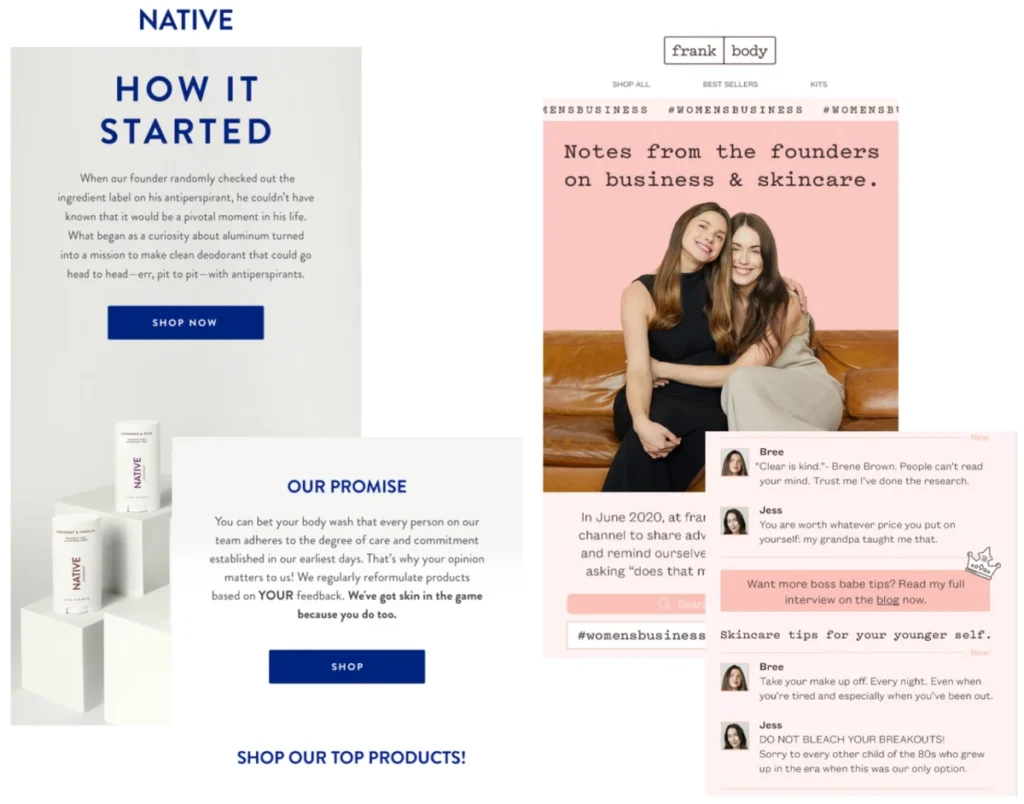
The ‘Product Truth’ is now more valuable than the ‘Brand Vision‘. Consumers are looking for ‘receipts’—the specific, unvarnished details of how a product is made, where it comes from, and why it costs what it costs.
If you’re a skincare brand, don’t tell me a story about a laboratory in the Alps. Show me the 30-day user journey clips, the raw lab testing data, and the ingredient sourcing videos. Use ‘Human Glitches’—the stutters, the raw footage, the unpolished reality—to prove you’re actually real.
Breaking the Gloss: Designing for Perfection Fatigue
We have entered an era of “Perfection Fatigue.” In a world where Adobe Firefly can generate a flawless sunset or a perfectly symmetrical face in seconds, “perfect” has become synonymous with “fake.”
To signal that your brand is run by humans, you must intentionally integrate Human Glitches. This isn’t about being unprofessional; it’s about Tactile Authenticity.
How to implement Human Glitches in your 2026 Identity:
- Variable Textures: Use film grain, risograph effects, or slight ink bleeds in digital assets to break the sterile “vector” look.
- Asymmetrical UI: Move away from perfectly centred, rigid grids. Allow for “organic” spacing that mimics human layout choices.
- Raw Documentation: Replace “Founder Stories” with raw, unedited Product Truth clips. If your product has a flaw or a limitation, state it. Radical Transparency is the ultimate human signal.
Case Study: Patagonia and the “Footprint Chronicles”
Patagonia doesn’t just tell you they are sustainable; they show you the Product Truth by mapping every factory, every chemical (like their transition away from PFAS), and every carbon footprint associated with a specific jacket. They use Radical Honesty as a design feature. Their website isn’t a storybook; it’s a transparency dashboard.
The Creative Verdict
The way I see it, the ‘Storyteller’ is the person who tells you what you want to hear. The ‘Designer’ is the person who builds what you actually need.
At Inkbot Design, we’ve stopped asking clients ‘What’s your story?’
Instead, we ask:
- What is the one truth about your product that no one else can claim?
- How does your visual identity make the customer’s life easier?
- Where is the friction in your current brand experience?
If you can’t answer those, a 50-page brand narrative isn’t going to save you. You’re just putting lipstick on a pig—and in 2026, the pig is smart enough to know it’s being played.
Stop trying to be Hemingway. Start trying to be helpful.
The future belongs to the brands that provide ‘Agentic Utility’—using AI to anticipate needs rather than just generate more copy (AI Journ, 2026). We’re moving into an era of ‘decision-ready synthesis’. People don’t want a story before they buy; they want the confidence that they aren’t making a mistake.
Designers: your job isn’t to write fiction. It’s to visualise reality so clearly that the customer doesn’t need a story to understand the value.
Strategic Takeaways
- Graphic Designers: Stop selling ‘concepts’ and start selling ‘operating systems’ that include motion, sound, and AI-native assets.
- Business Owners: Fire the storyteller and hire a strategist who can find your ‘Product Truth’ and turn it into a frictionless customer journey.
Brand Utility FAQs
Isn’t storytelling how we build emotional connections?
No. Reliability builds emotional connections. You don’t ‘love’ Amazon because of their story; you love them because the package arrives when they say it will. Trust is the highest form of emotion in business.
Is AI going to take over brand strategy?
It’ll take over the boring bits. AI is already being used for ‘idea and marketing prompt generation’. But it can’t tell you when your brand feels like a soulless corporate shell. That takes a human with a bit of a grudge against mediocrity.
What is a ‘human glitch’ in design?
It’s an intentional imperfection. A slightly wonky line, a raw texture, or a video that isn’t colour-graded to death. It’s ‘Proof of Life’ in a world of AI-generated perfection.
Should I stop using the term ‘Brand Story’?
Possibly. It’s become a signal that you’re about to overcharge for a PDF that no one will ever read. Try ‘Brand Utility’ or ‘Experience System’ instead. It sounds less like a bedtime story and more like a business asset.
How do I make my brand ‘hyper-convenient’?
Look at your friction points. If it takes more than two clicks to find your pricing or talk to a human, you’re failing. Use AI agents to handle the ‘administrative slop’ so your humans can actually solve problems.
Does visual identity still matter if utility is king?
More than ever. But its role has changed. Your visual identity is now the ‘interface’ for your utility. It needs to signal speed, ease, and honesty, not just ‘vibes’.
What’s the biggest mistake brands are making in 2026?
Trying to be everything to everyone. The ‘Global Vision’ is dead. ‘Local Specificity’—being something real for a specific group of people—is the only way to survive the algorithm.
Is ‘Brand Storytelling’ really dead?
The word is dead. The act of communicating value is alive, but it’s moved from the ‘About Us’ page to the actual product experience. If the experience is the story, you don’t need to write it down.