How to Create a Modern Website Design (Without Botching It)
As the founder of Inkbot Design, I know a thing or two about what makes a killer website nowadays. And let me tell you – gone are the days of generic, cookie-cutter sites that blend into the online abyss.
Suppose you genuinely want your business to shine and stand out. In that case, you need a visually stunning and strategically crafted website to deliver an exceptional user experience.
Easier said than done, right?
Hold on to your design hats because I’m about to share my top tips for creating a modern, people-first website that will have your customers drooling (in a good way!).
First off, let me tell you a quick story. When I first started Inkbot Design back in 2010 (2009? It was a while back!), I envision creating the most jaw-dropping, show-stopping websites the world has ever seen.
How hard could it be? I was fresh out of design school, brimming with creative ideas, and ready to conquer the digital realm.
Boy, was I in for a rude awakening!
Those first few client projects were an absolute mess – clunky layouts, gaudy colour schemes, and functionality that made users want to tear their hair out.
I quickly realised that great design is more than just slapping a nice-looking template together. There’s a whole science (and art) to crafting websites that look incredible and deliver a seamless, intuitive experience.
Fast-forward a few years, and I’ve figured out this modern website design. Now, I’m on a mission to share my hard-earned wisdom with the world.
So, if you’re ready to take your online presence to the next level, buckle up and prepare for a masterclass in all things web design!
- Understand your audience: Conduct thorough research to tailor your website to your target users' needs and preferences.
- Mobile-first design: Prioritise a fast, streamlined experience on mobile devices, as over 60% of web traffic comes from them.
- Usability and storytelling: Create a seamless user experience with intuitive navigation and engage visitors through compelling narratives.
Step 1: Understand Your Audience (and I Mean, Really Understand Them)
Before considering choosing a colour palette or layout, you must understand who you’re designing for. I can’t tell you how often I’ve seen businesses launch slick-looking websites that completely miss the mark with their target audience.
Think about it – would you design a website for a high-end luxury fashion brand like you’d design one for a local plumbing company? Of course not! Each business has a different target market, pain points, and user needs.
So, the first step in your modern web design journey is to familiarise yourself with your audience. Who are they? What are their demographics? Where do they hang out online? What kind of content or features do they find most valuable?
Use low-cost research to inform design decisions quickly. Review GA4 events and path exploration to see where users stall, then scan Google Search Console queries to learn the language people actually use.
Run five quick task-based tests with representative users, record completion and errors, and fix the biggest blockers first. Card sorting and tree testing validate menu labels and structure, and on-site search logs reveal content gaps you can close with clearer IA and copy.
Once you’ve got a clear picture of your ideal customer, you can tailor every aspect of your website design to their preferences and behaviours. Trust me, this extra bit of upfront research will pay off tenfold in the long run.
Step 2: Prioritise Mobile-Friendliness (Because Your Audience Demands It)

In today’s mobile-centric world, having a website that looks and functions beautifully on smartphones and tablets is no longer a nice-to-have – it’s an absolute necessity. In fact, according to recent statistics, over 60% of all web traffic now comes from mobile devices.
So, when designing your modern website, you must approach it with a “mobile-first” mindset. That means prioritising a clean, streamlined layout that’s easy to navigate on the go, optimising all your visuals and content for smaller screens, and ensuring your site loads lightning-fast, even on spotty 4G connections.
One of my favourite mobile design tricks is to keep navigation simple and intuitive. Ditch the clunky dropdown menus and opt for a sleek hamburger icon or sticky header. And remember, less is more when it comes to mobile – pare down your content to only the most essential elements.
Oh, and remember to test, test, test! Ensure you regularly check how your website looks and performs on various mobile devices. Nothing ruins the user experience more than a site that’s glitchy or hard to use on a smartphone.
Google Search Central confirmed that mobile-first indexing was completed in 2023, so your primary content must be fully available and usable on mobile. Core Web Vitals remain the bar, with targets of LCP 2.5 s or less, INP 200 ms or less, and CLS 0.1 or less per Google’s guidance.
Validate in PageSpeed Insights and Lighthouse, then check field data in the Chrome User Experience Report. Use responsive images with srcset and sizes, native lazy loading, and CSS container queries to keep layouts stable and fast on small screens.
Step 3: Create a Cohesive, On-Brand Visual Identity
Once you’ve got a solid handle on your audience and their mobile needs, it’s time to start thinking about your website’s overall visual identity. This is where the real fun begins!
I know what you’re thinking: “But I’m not a designer! How am I supposed to create a cohesive, visually stunning website?” Fear not, my friend. With strategic planning and a keen eye for design, anyone can craft a website that looks professionally designed.
The key is to start with a robust and distinctive brand identity. That means nailing down your logo, colour palette, typography, and any other visual assets that will be the foundation of your online presence. If you’re not a design whiz, consider working with a branding agency like Inkbot Design to help you establish a cohesive, on-brand look and feel.
Once your brand identity is locked down, you must carry those elements to your website design. Choose a colour scheme that aligns with your brand and evokes the proper emotional response from your audience. Select typography that’s visually appealing and easy to read on the screen. Feel free to get creative with custom illustrations, icons, or other design flourishes that help your site stand out.
The key here is to create a seamless, visually consistent experience across every website page. Your users should feel like they’re navigating a unified, branded space rather than a disjointed collection of pages.
Step 4: Prioritise Usability and User Experience

All right, we’ve tackled the visual side of things – now it’s time to ensure your website is an absolute breeze for your users to navigate. Let’s be honest: even the most beautiful site in the world is worthless if no one can figure out how to use it.
This is where user experience (UX) design principles come into play. Think about the journey you want your visitors to take – what are the key actions you want them to complete, and how can you make that process as smooth and intuitive as possible?
One of the best ways to approach this is to put yourself in your users’ shoes. Imagine you’re a complete newcomer to your website – what would you expect to see on the homepage? Where would you go to find certain types of information or complete specific tasks?
Use clear, task-focused labels that mirror user intent. Avoid clever labels that hide meaning; they hurt wayfinding and search relevance.
Keep navigation consistent across templates. Add breadcrumbs for deeper hierarchies and mark them up with Breadcrumb structured data to help search engines understand structure, as recommended in Google Search Central documentation.
As you design your site, constantly ask yourself: “Is this layout logical and easy to navigate?” “Are my calls to action clear and compelling?” “Am I providing a seamless, distraction-free experience?”
And remember to test, test, test! Recruit a group of real users (not just your friends and family) to give your website a spin and provide honest feedback. Their insights will be invaluable in helping you refine the UX and ensure your site is truly user-friendly.
Step 5: Leverage the Power of Storytelling
You know what they say – a picture is worth a thousand words. But in modern website design, words can be as powerful as visuals.
That’s because the most effective websites aren’t just about slick aesthetics and smooth functionality – they’re about crafting an engaging, emotional narrative that resonates with your audience. And the best way to do that? Through the art of storytelling.
Think about it – when you land on a website, what’s the first thing that catches your eye? Typically, it’s the hero section (that big, bold area at the top of the homepage). This is your chance to hook your visitors and draw them into your brand’s story.
It could be a punchy, attention-grabbing headline that teases the problem you solve. Or it’s a captivating hero image that instantly conveys your brand’s personality and values. Whatever it is, your goal should be to spark that initial curiosity and make your audience feel something.
But the storytelling continues beyond there. As users navigate your website, continue weaving that narrative thread with strategic copywriting, engaging visuals, and even interactive elements to guide them through your brand’s unique journey.
By tapping into the power of storytelling, you can create a website that’s aesthetically pleasing, deeply meaningful and memorable for your audience. And let’s be honest – in today’s oversaturated digital landscape, that emotional connection is worth its weight in gold.
Step 6: Don’t Forget the Nitty-Gritty Details
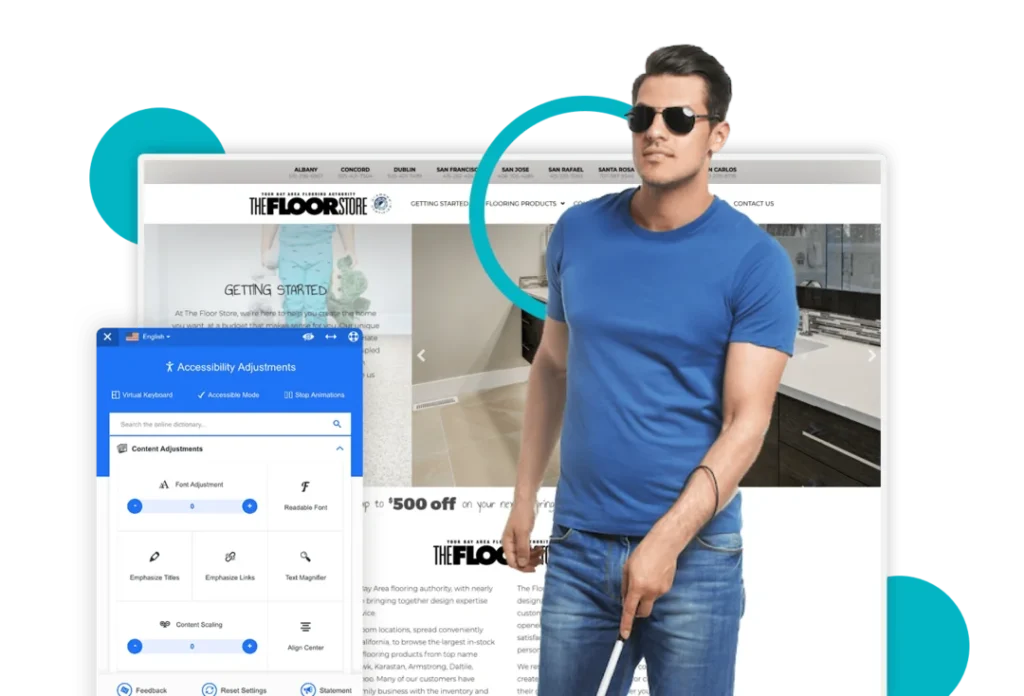
We’ve covered many of the big-picture strategic elements of modern website design. But remember the little things that can make a big difference in the end-user experience.
One of the most important details to nail down? Accessibility. In today’s diverse, inclusive online world, your website must be accessible to users of all abilities, whether they’re navigating with a keyboard, a screen reader, or other assistive technology.
This means ensuring proper colour contrast, providing alt text for all images, and structuring your content with straightforward, semantic HTML. It may seem like much extra work, but making your site accessible isn’t just the right thing to do; it can also significantly impact your SEO and overall user experience.
WCAG 2.2 introduces criteria such as Focus Not Obscured, Focus Appearance, and Target Size Minimum, raising the bar for keyboard and touch usability. Meet 4.5:1 contrast for normal text and 3:1 for large text, per W3C WAI guidance.
Ensure visible focus styles, logical tab order, and descriptive form labels. Respect prefers-reduced-motion and test with keyboard only, NVDA or VoiceOver, and an automated checker like axe. These fixes reduce errors for everyone, not just assistive tech users.
Another critical detail to consider is site speed and performance. In our TikTok-addicted, Instagram-obsessed culture, users have zero patience for slow-loading websites. That’s why optimising every element of your site – from images and videos to scripts and fonts – is essential to ensure lightning-fast load times, even on mobile.
Serve WebP or AVIF where supported, pair with responsive srcset and sizes, and reserve dimensions to stop layout shifts. Preconnect to key origins and preload the hero font and image, then defer non-essential JavaScript to reduce main-thread work.
Ship WOFF2 or variable fonts with font-display swap and subset characters you actually use. Use HTTP/2 or HTTP/3 with a CDN, compress with Brotli, and monitor regressions with automated Lighthouse runs on each deploy.
And let’s not forget about security! In an era of rampant data breaches and online scams, users must feel safe and secure when browsing your website. Ensure you have an SSL certificate, keep your CMS and plugins up to date, and consider adding extra security measures, such as two-factor authentication.
Enforce HTTPS across the site and enable HSTS, then set a strict Content Security Policy and add Subresource Integrity for third-party scripts. Keep the CMS, themes, and plugins updated, lock admin access with least privilege and 2FA, and test restores from daily backups.
Protect forms with rate limiting and bot challenges, and log authentication and error events for investigation. OWASP guidance aligns with these controls and provides checklists that non-security teams can use during builds.
Step 7: Privacy, consent, and data compliance (GDPR/UK GDPR and ePrivacy)
Direct answer: Design consent and data flows that respect GDPR, UK GDPR, and ePrivacy rules. Gain explicit, granular consent for non‑strictly necessary cookies, document choices, and make refusal as easy as acceptance. Keep data collection minimal, time-bound, and transparent, and give users control.
- Equal prominence for Accept and Reject on consent banners.
- Granular toggles by purpose, not vendor-only lists.
- Audit third-party tags, block until consent.
The State of consent in 2026: Google’s Consent Mode v2 became required for Google Ads personalisation and measurement in the EEA from March 2024, pushing sites to correctly capture and pass consent states, per Google Ads. Regulators still prioritise misleading cookie banners, with CNIL and the UK ICO continuing enforcement activity against dark patterns.
Debunked “best practice”: “Implied consent” banners are fine. They are not. Regulators have held that non‑strictly necessary cookies require prior consent and that refusal must be as easy as acceptance, as reflected in CNIL’s 2022 fines against Google and Facebook for unlawful cookie practices and in the ICO’s cookie guidance.
Real-world examples: CNIL fined Google €150m and Facebook €60m in 2022 for making refusal harder than acceptance of cookies. The UK ICO fined TikTok £12.7m in 2023 for unlawful processing of children’s data. Amazon received a €746m GDPR fine in 2021 from the Luxembourg DPA for processing advertising data. The Domino’s accessibility case, Robles v. Domino’s Pizza, saw the Ninth Circuit in 2019 affirm that the ADA applies to digital experiences, a reminder that compliance risk spans privacy and accessibility.
Consultant note: I once audited a retail site where 27 tags fired before consent, tanking CLS and trust. We moved all vendors behind a Consent Management Platform, mirrored their purposes to Google’s Consent Mode, and saw the bounce rate drop within a week, while tracking remained compliant.
Putting It All Together: A Modern Website Design Checklist
All right, now that we’ve covered the fundamental principles of modern website design, let’s quickly recap the essential elements you need to nail:
✅ Audience understanding: Deeply understand your target users’ needs, pain points, and behaviours.
✅ Mobile-first approach: Prioritise a clean, streamlined, easy-to-navigate, lightning-fast mobile experience.
✅ Cohesive branding: Establish a strong, distinctive visual identity consistently applied across every page.
✅ Intuitive user experience: Craft a logical, distraction-free navigation that guides users seamlessly through your site.
✅ Compelling storytelling: Use strategic copywriting and visuals to create an engaging, emotional narrative that resonates with your audience.
✅ Attention to detail: Ensure your site is accessible, fast-loading, and secure from end to end.
✅ Core Web Vitals and technical SEO: Hit LCP ≤ 2.5 s, INP ≤ 200 ms, CLS ≤ 0.1 per Google, add structured data where applicable, keep XML sitemaps, robots.txt, canonicals, and headings clean.
✅ Compliance and accessibility: Meet WCAG 2.2 Level AA per W3C WAI, run keyboard and screen reader tests, and implement GDPR- or UK GDPR-aligned consent with clear privacy and cookie policies.
By keeping these guidelines in mind, you’ll be well on your way to designing a modern, people-first website that looks amazing and delivers an exceptional user experience. And who knows – with a little bit of strategic planning and much creativity, you might end up with a site worthy of an award (or at least a few envious glances from your competitors!).
And remember, if you ever need help bringing your modern website vision to life, the team at Inkbot Design is always here to lend a hand.