Subway Logo Design Evolution: The Story Behind the Sandwich Giant
Most business owners spend thousands on marketing but ignore the ONE asset that makes or breaks customer perception in 0.05 seconds.
Your logo.
Subway—a company that went from a single store to 40,000+ locations worldwide—understood this power. Their logo evolution isn’t just a design story; it’s a masterclass in scaling visual identity worth billions.
What if I told you that Subway’s seemingly simple logo adjustments directly correlated with their most explosive growth periods?
In the next few minutes, I will explain precisely how Subway transformed their visual identity from a local sandwich shop to a global empire, the critical mistakes it avoided that bankrupted its competitors, and the three psychological triggers embedded in its logo that subconsciously make you hungry.
- Logo Evolution: Subway's logo changes reflect strategic decisions linked to significant growth and brand positioning throughout its history.
- Psychological Triggers: The logo uses colour and typography to stimulate appetite and communicate healthiness, aligning with the "Eat Fresh" message.
- Market Adaptation: Each redesign addressed market challenges, including competition in the healthy fast food space and shifts in consumer preferences.
- Brand Recognition: Consistent elements like the arrows and colour scheme have maintained Subway's strong brand identity despite various redesigns.
The Origin Story: Pete’s Super Submarines (1965-1968)
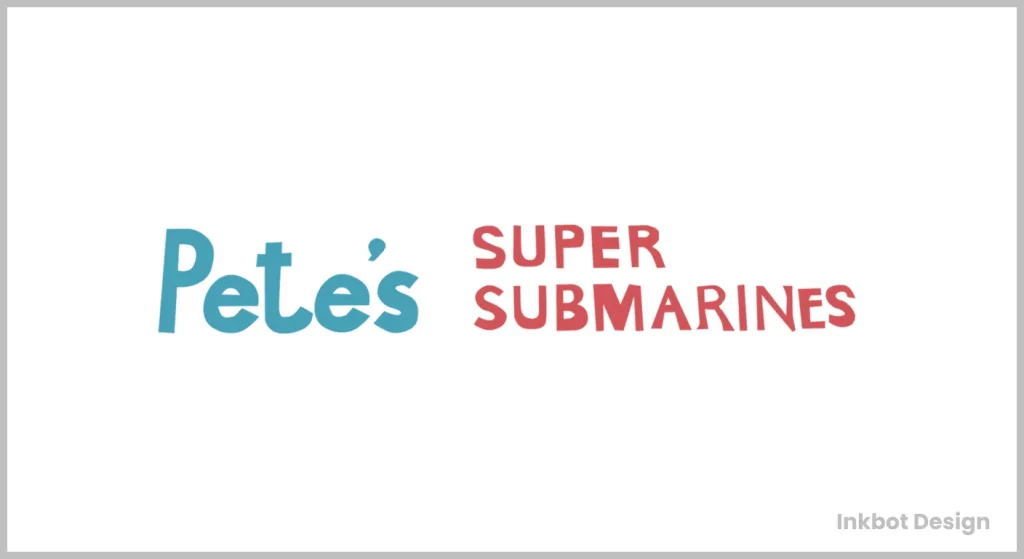
Subway began as “Pete’s Super Submarines” in Bridgeport, Connecticut, in 1965. 17-year-old Fred DeLuca founded it with a $1,000 loan from family friend Dr. Peter Buck. The initial logo was straightforward and utilitarian – nothing fancy.
This was the mid-60s America. Fast food was booming, and McDonald’s and Burger King expanded rapidly. The original logo reflected the submarine sandwich concept with straightforward typography – no iconic symbols yet. The business was purely local, with no grand ambitions of the empire it would become.
The First Rebrand: “Subway” Is Born (1968)

By 1968, they renamed “Subway” and adopted their first proper logo. This featured yellow, hand-drawn text with a slight upward slant. The letters had arrows pointing outward on both ends – a subtle nod to the sandwich shop’s expansionist ambitions.
Strategic Thinking: The name change to Subway was brilliant – shorter, memorable, and evocative of urban life and movement. The yellow colour stood out against competitors and created an appetite appeal.
This period marked the beginning of Subway’s franchising model, eventually becoming their path to explosive growth.
The 70s-80s Evolution: Building Recognition

Throughout the 70s and 80s, Subway refined its logo. It maintained the yellow but introduced the now-recognisable white text with a thick black outline placed inside a yellow oval.
Strategic Shift: This version added more dimension and improved visibility. The high-contrast colours made the logo easy to spot from a distance – crucial for roadside locations. The oval shape suggested completeness and satisfaction.
During this time, Subway was expanding rapidly through franchising. By 1981, they had 200 locations, and the more standardised logo helped create consistency across this growing network.
The Arrow Era Begins (1982-2002)
In 1982, Subway introduced its signature arrows on their wordmarks “S” and “Y”. This version featured a more structured, italicised font with white letters, a black outline, and a yellow background.
The Strategy: The arrows symbolised movement, speed, and efficiency – key selling points for a quick-service restaurant. The italic font reinforced the idea of forward motion and dynamism.
This logo coincided with Subway’s significant growth period. By 2002, they’d grown to over 16,000 locations globally. The arrows became shorthand for the brand, providing instant recognition.
The Modern Era: Streamlining and Simplifying (2002-2016)
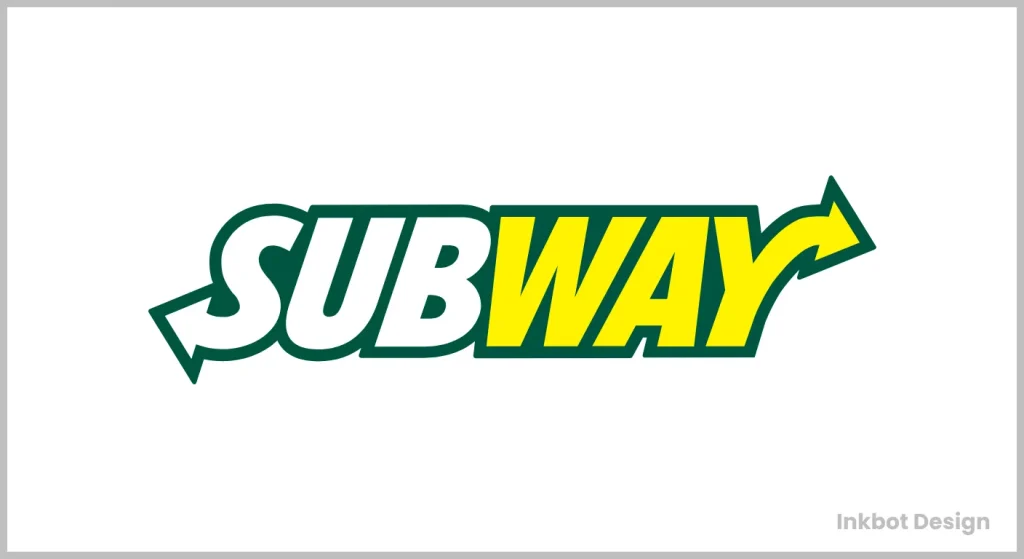
In 2002, Subway refreshed its logo, maintaining the core elements but with a cleaner, more contemporary look. The yellow oval background became lighter, the text more streamlined, and the arrows more pronounced.
Strategic Thinking: This update aligned with broader design trends toward simplification. It maintained brand recognition while appearing more modern and sophisticated.
This logo update coincided with Subway’s health-focused marketing campaigns, including the famous Jared Fogle advertisements. The cleaner design subtly reinforced their “eat fresh” messaging.
The Bold Simplification (2016-Present)

In 2016, Subway unveiled its most dramatic logo change to date. The new design eliminated the oval background and bold outlines, leaving just the wordmark with the iconic arrows on the “S” and “Y.” The colour palette shifted to a brighter yellow-green with white accenting.
The Strategy: This minimalist approach aligned with modern design trends toward flat design and simplicity. The logo works better across digital platforms and smaller screens – essential in the mobile era.
Business Context: This rebrand came during a challenging period. Subway faced declining sales and store closures and had just weathered the PR disaster of Jared Fogle’s legal troubles. The new logo was a broader effort to refresh the brand image.
Psychology of Subway’s Visual Elements

Colours: Subway’s shift from yellow to yellow-green was significant. Yellow stimulates appetite and optimism, while green conveys freshness, health, and sustainability. This combination perfectly supports their “Eat Fresh” positioning.
Typography: The consistent use of a sans-serif, bold font projects simplicity and straightforwardness – aligning with their no-frills, customisable product.
Arrows: The persistent arrows suggest forward movement and direction – subliminal cues that Subway is progressive and that customers are making a wise choice by moving “forward” with Subway.
Competitive Positioning
Throughout its history, Subway has visually positioned itself differently from burger-focused competitors:
- While McDonald’s, Burger King, and Wendy’s leaned heavily on red (stimulating quick decisions and impulse purchases), Subway’s yellow and green palette established a distinct health-oriented alternative.
- As fast food faced growing criticism for unhealthy offerings in the early 2000s, Subway’s green-focused rebrand further distanced them from competitors, cementing their position as the “healthy” fast food option.
Public Reception and Controversies
The 2016 rebrand received mixed reviews from design experts and customers. Some praised its modern simplicity, while others felt it lost some of the brand’s character and warmth.
The timing was particularly challenging given Subway’s business troubles. Some critics saw it as a superficial fix to deeper operational issues, including product quality concerns and franchisee relations.
The Current Logo: Strengths and Weaknesses

Strengths:
- A clean, modern aesthetic that works well across digital platforms
- Maintains the iconic arrows for brand recognition
- The colour scheme effectively communicates freshness.
Weaknesses:
- Lost some of the bold presence of earlier versions
- It may blend in more with other minimalist modern logos
- Some brand recognition was sacrificed for contemporary appeal
Future Projections
Looking ahead, Subway may need to evolve its visual identity to address several challenges:
- Digital-first experiences requiring more dynamic and adaptable logos
- Increased competition in the “healthy” fast food space
- The need to appeal to Gen Z consumers who value authenticity and sustainability
A future direction is incorporating more flexible elements that can animate in digital contexts while maintaining the core arrow motifs. We might also see more emphasis on the green aspect of their colour palette to reinforce sustainability credentials.
Key Lessons from Subway’s Logo Evolution
- Consistency in key elements: Subway maintained certain signature elements (mainly the arrows) that preserved brand recognition despite multiple changes.
- Adapt to current design trends while maintaining heritage: Each update modernised the look without abandoning what came before.
- Visual alignment with brand positioning: The shift toward green colours perfectly supported their “Eat Fresh” messaging.
- Simplification for digital contexts: The move toward simpler designs reflects the need for logos to function across many platforms and sizes.
- Logo as a crisis management tool: The 2016 rebrand was partly an attempt to refresh public perception during a challenging period.
Subway’s logo evolution reflects a brand that started with humble beginnings and grew into a global powerhouse. Each iteration of their visual identity has been a strategic response to their business reality – from ambitious upstart to established leader to a brand fighting to maintain relevance.
The most successful periods came when their visual identity, messaging, and actual product experience aligned. When those elements diverged – as happened during their recent challenges – no logo change alone could solve the underlying issues.
FAQ: Subway Logo Design Evolution
When was the original Subway logo created?
The original Subway logo was created in 1968 when Fred DeLuca and Dr. Peter Buck founded the company. The first logo featured the name “Pete’s Super Submarines” since the original restaurant was called “Pete’s Submarines” before being shortened to “Subway” in 1972.
How many significant redesigns has the Subway logo undergone?
The Subway logo has undergone five major redesigns since its inception. The most significant changes occurred in 1968 (original), 1982 (introduction of the iconic arrows), 2002 (refined typography), 2016 (modernised look with brighter colours), and 2023 (simplified design with a return to the brand’s roots).
What is the significance of the arrows in the Subway logo?
The arrows that extend from the “S” and “Y” in the Subway logo were introduced in 1982 and symbolise the movement and speed of service – representing how customers can quickly enter and exit the restaurant with their sandwiches. The arrows also subtly suggest the entrance and exit of a subway station, reinforcing the brand name.
Why did Subway change its colour scheme from brown to yellow and green?
Subway moved from its original brown colour scheme to yellow and green in the 1980s to evoke freshness and healthier food options. Green represents fresh vegetables and healthier choices, while yellow conveys optimism and energy. This colour shift aligned with Subway’s positioning as a fresher alternative to traditional fast food.
Who designed the most recognisable version of the Subway logo?
The most recognisable version of the Subway logo with the italic font and arrows was designed by Peter Bacchia in collaboration with the advertising agency Thibodeau & Thibodeau in the early 1980s. This design formed the foundation for all subsequent logo iterations until the 2023 redesign.
What prompted Subway’s controversial 2016 logo redesign?
The 2016 logo redesign was prompted by Subway’s need to revitalise its brand after facing several challenges, including controversy surrounding former spokesperson Jared Fogle and increasing competition in the health-conscious fast food market—the redesign aimed to project a more modern, clean image while maintaining brand recognition.
How did Subway’s logo evolution reflect changes in its business strategy?
Subway’s logo evolution directly mirrored its business strategy shifts: the early submarine-shaped logo reflected its sandwich focus; the addition of arrows coincided with rapid expansion; the refined 2002 version aligned with international growth; the 2016 redesign matched a health-conscious rebrand; and the 2023 version supported a return to core values amid market challenges.
Did Subway’s logo changes affect its brand recognition?
Despite multiple redesigns, Subway maintained extraordinary brand recognition throughout its logo evolution. The consistent elements of the arrows and green-yellow colour scheme became so iconic that even with simplification and modernisation, the Subway logo remained one of the most recognisable fast food logos globally, with brand recognition exceeding 90% in consumer studies.
What psychological principles does Subway use in its logo design?
Subway employs several psychological principles in its logo design: the slanted, italicised font creates a sense of motion and efficiency; the yellow-green colour combination stimulates appetite while suggesting healthiness; the arrows make a directional flow that guides the eye; and the consistent use of rounded, friendly typography conveys accessibility and approachability.
How does Subway’s logo compare to other fast-food chains in terms of design evolution?
Unlike competitors like McDonald’s and Burger King, which maintained relatively similar logo concepts throughout their histories, Subway has been more willing to evolve its visual identity while preserving key elements. Subway’s approach balances heritage with modernisation. McDonald’s golden arches have remained nearly untouched for decades, and Burger King recently returned to a retro-inspired design.
What was the public reaction to Subway’s latest logo redesign in 2023?
The 2023 Subway logo redesign received mixed reactions. Design professionals praised its simplified approach and return to brand roots while maintaining recognition. However, some loyal customers expressed nostalgia for the more familiar 2002-2016 version. Marketing analysts viewed it positively as part of Subway’s broader strategy to refresh its image amid declining market share.
How does Subway ensure the consistency of its logo across 40,000+ global locations?
Subway maintains strict brand guidelines through its comprehensive Franchise Identity Manual, which precisely defines logo usage, colour specifications (Pantone, CMYK, RGB values), minimum size requirements, clear space rules, and prohibited alterations. Franchisees receive digital asset packages and must submit all marketing materials for approval before use. This ensures global consistency despite cultural adaptations in different markets.