Guide to Personal Branding for CEOs & Executives
The internet is currently a cemetery of “thought leadership” written by AI and posted by executives who are too busy to care.
If you are a CEO or a senior executive, you have likely been told you need a “personal brand.” You’ve probably been told to “post more” or “be authentic.”
Most of this advice is garbage.
In 2026, the industry is saturated with AI-generated content. The “Selfie-CEO” who spends their morning hunting for likes is increasingly viewed as a liability by shareholders and boards. Why? Because vanity metrics don’t move the needle on market cap.
However, being invisible is equally dangerous. If the market cannot find a verified, authoritative, and human narrative attached to your name, they will let an algorithm invent one for you. This lack of control is a technical and financial risk.
- Personal branding is a strategic, technical asset that mitigates risk and builds a measurable Trust Premium for the company.
- Prioritise semantic authority and a Knowledge Graph node via JSON-LD to control how AIs represent your identity.
- Focus on information gain: publish data-driven, proprietary insights rather than frequent low-value posts.
- Use your brand as a security asset: maintain verified multi-channel presence and C2PA/PoP protections against deepfakes.
- Measure ROI through trust metrics: talent inflows, high-quality media citations, deal outcomes, and Information Gain scores.
What is Personal Branding for CEOs?

Personal branding for CEOs is the strategic management of an executive’s professional identity, digital footprint, and perceived authority to align with corporate goals and market expectations.
It is a technical asset used to mitigate risk, attract elite talent, and increase the organisation’s “Trust Premium” in a volatile market.
The 3 Core Elements of CEO Branding:
- Semantic Authority: Ensuring your name is linked to specific entities (industries, technologies, or values) within the Google Knowledge Graph.
- The Trust Moat: A verified history of human-led insights that AI cannot replicate or hallucinate.
- Strategic Visibility: Being present in the specific rooms (digital or physical) where your target audience—investors, clients, and talent—seeks confirmation of leadership.
Understanding personal branding is no longer optional for the C-suite. It is the difference between being a “Key Person Risk” and a “Key Brand Asset.”
The Economics of Executive Authority
Let’s talk about money. Most consultants won’t, because they don’t understand it. They think branding is about “colours” and “vibes.”
A study by Deloitte Insights suggests that nearly half of a company’s reputation is directly attributable to the reputation of its CEO. In 2026, this “Reputation Premium” is a measurable metric in M&A (Mergers and Acquisitions) activity.
When a buyer looks at a mid-market firm, they aren’t just buying the P&L; they are purchasing the leadership’s ability to command the market’s attention and trust.
The “Key Person Risk” vs. The “CEO Premium”
If your brand is tied too closely to your personality—and that personality is volatile—you become a risk. We call this the Musk Effect. Conversely, if your brand is tied to competence and stability, you create a “CEO Premium.”
According to McKinsey & Company, companies with highly trusted leaders outperform their peers by up to 2.5x in terms of revenue growth. Trust isn’t just a soft skill; it’s a financial multiplier.
Real-World Example: Satya Nadella (Microsoft)
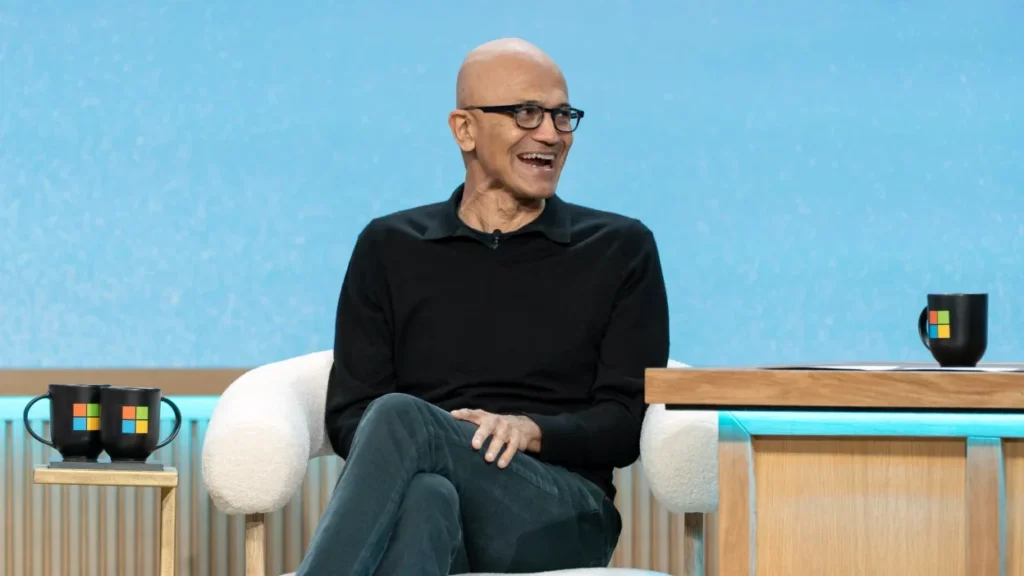
When Nadella took the helm, he didn’t just change the product roadmap; he changed the “Brand Aura” of the leadership.
By shifting from the “Know-it-all” culture of the 2000s to a “Learn-it-all” personal philosophy, he signalled to the market that Microsoft was ready for the cloud and AI era. This personal brand shift preceded one of the most significant expansions in market cap in history.
The 2026 Regulatory Landscape: Why “Invisible” is Non-Compliant
In the UK, the Financial Reporting Council (FRC) has transitioned into a new era of transparency.
Under the UK Corporate Governance Code 2024 (with key provisions, such as Provision 29, coming into full effect for 2026 financial years), boards are now required to provide a declaration on the effectiveness of their risk management and internal control framework.
How does this relate to your personal brand? Institutional investors, such as BlackRock or Legal & General, no longer view the CEO’s reputation as a “soft” metric.
They view it as a core component of “Operational Resilience.” If a CEO has no digital footprint, they cannot effectively manage a narrative during a market short-sale or a data breach.
Strategic Compliance Checklist:
- ESG Integration: Your personal brand must be semantically linked to your company’s ESG (Environmental, Social, and Governance) targets. In 2026, a CEO who doesn’t publicly own their firm’s sustainability narrative is viewed as a “Greenwashing Risk.”
- Director Duties (Section 172): Under the Companies Act 2006, directors must promote the success of the company. A strong, authoritative brand is now argued to fulfil this duty, as it lowers the cost of capital and enhances stakeholder trust.
The Myth of the CEO “Influencer”
I once audited a client—a CEO of a £50m fintech firm—who was obsessed with his LinkedIn “reach.” He was posting five times a week, mainly inspirational quotes and photos of his morning coffee.
His reach was high. His authority was zero.
When we surveyed his top-tier clients, they found his posts “distracting” and “unprofessional.” He was behaving like a 22-year-old creator, not a seasoned executive.
The Uncomfortable Truth: In 2026, high visibility without high utility signals low status. If you have time to post three times a day, the market assumes you aren’t busy running your company.
Why Quality Over Quantity is the Only 2026 Strategy
In the age of LLMs, anyone can generate “Top 5 Tips for Success.” To stand out, a CEO must provide Information That Yields Information Gain. This means sharing technical nuances, uncomfortable industry truths, or specific data-driven insights that only someone in your position could know.
| Feature | The Amateur “Influencer” CEO | The Pro “Authoritative” CEO |
| Content Focus | Personal life, platitudes, “hustle.” | Industry shifts, data, strategic vision. |
| Frequency | Daily (or multiple times daily). | Bi-weekly or monthly (High Impact). |
| Platform | LinkedIn, Instagram, TikTok. | Industry journals, LinkedIn (Strategy), Keynotes. |
| Goal | Likes, comments, followers. | Trust, talent attraction, and valuation. |
| Production | Low-quality selfies/AI text. | Custom brand identity and deep research. |
Moving Beyond SEO: Generative Engine Optimisation (GEO)
In 2026, your audience isn’t just “Googling” you; they are asking Perplexity, SearchGPT, or Claude for a summary of your leadership style.
If these models don’t have enough high-quality, structured data to draw on, they will “hallucinate” your profile based on outdated or competitor-driven information.
To win in the age of Generative Search, you must implement a GEO strategy focused on Information Gain.
Building Your Knowledge Graph Node
To ensure search engines and LLMs correctly identify you, your technical team must deploy an advanced JSON-LD Schema. This isn’t just basic “Person” markup; it requires:
- knowsAbout: Linking your name to specific entities like “Cloud Infrastructure” or “Regenerative Agriculture”.
- sameAs: Explicitly connecting your website to your verified LinkedIn, Wikipedia (if applicable), and UK Companies House profiles.
- memberOf: Identifying your role in industry bodies like the CBI (Confederation of British Industry) or the IoD (Institute of Directors).
The “Source of Truth” Workflow
| Goal | AI Search Behaviour | CEO Action |
| Citation | AI prefers primary data and unique perspectives. | Publish annual “State of the Industry” reports with original data. |
| Trust | Models look for consensus across high-authority domains. | Secure interviews in The Financial Times or Bloomberg to act as “Entity Verification.” |
| Recall | Agents need structured lists and clear summaries. | Use “TL;DR” summaries at the top of long-form manifestos for easier machine ingestion. |
The Deepfake Defence: Protecting Your Intellectual Property
As of 2026, the cost of generating a high-fidelity video deepfake of a CEO has plummeted to nearly zero. This has led to a surge in “Synthetic Reputation Attacks,” where fake videos of executives making controversial statements are used to manipulate stock prices or extort firms.
Your Brand as a Security Asset
A robust personal brand isn’t just for marketing; it is your Proof of Personhood. By maintaining a consistent, multi-channel presence that includes biometric anchors (regular high-definition video and high-fidelity audio podcasts), you create a “baseline” of your authentic voice and appearance.
- The Verified Vault: Leading UK CEOs are now using platforms such as Proof of Personhood (PoP) or encrypted digital signatures for their official statements.
- Content Authenticity Initiative (CAI): Ensure your official photography uses C2PA metadata standards that verify the image was captured by a real camera at a specific time, protecting you against AI-generated “paparazzi” shots.
The State of CEO Branding in 2026
We have entered the “Post-Authenticity” era. In 2025, the market was flooded with “authentic” content that low-cost agencies actually scripted. In 2026, the pendulum has swung back.
The Shift:
- Ghostwriting is under fire: Audiences can now detect AI-written content with high accuracy. If your “Thought Leadership” sounds like a GPT-4 output, you are actively damaging your reputation.
- Privacy is a Power Move: We are seeing a trend of “Selective Invisibility.” High-value CEOs are pulling back from public social media and moving toward “Dark Social”—exclusive newsletters, private communities, and high-end niche publications.
- The Rise of the “GEO” (Generative Engine Optimisation): CEOs are now optimising their public statements so that when a user asks an AI (like Perplexity or SearchGPT), “Who is the leader in sustainable supply chain management?”, the AI cites them as the primary source.
Debunking the “Human Side” Myth
You have probably been told that you need to show your “human side” to be relatable. You’re advised to share photos of your dog or your sourdough bread.
This is a myth. A Nielsen Norman Group study on executive credibility found that while “relatability” is fine for B2C influencers, B2B decision-makers prize competence and predictability above all else.
If you are a CEO, your “human side” should be your intellectual struggle. Share the difficult decisions you made. Share why you pivoted the company.
Share the data that changed your mind. This is “Human Branding” for adults. It shows you are a person who thinks, not just a person who exists.
Strategic Implementation: The “Inkbot” Method
We don’t do “fluff.” We do architecture. Building a CEO brand follows a strict hierarchy:

1. The Semantic Foundation
Before you post a single word, we define your “Entity Map.” What three topics do you want to “own” in the eyes of the algorithm? If you are the CEO of a cybersecurity firm, you should be semantically linked to “Quantum Encryption,” “Zero Trust Architecture,” and “Cyber Resilience.”
2. The Content Moat
We produce “Synthetic-Knowledge” assets. These are not blog posts; they are industry-shaping manifestos. They use primary data and proprietary frameworks. This content is designed to be cited by other publications, building your personal branding for freelancers or even major competitors who can’t match your depth.
3. The Feedback Loop
We monitor your “Trust Score” across the web. Are you being mentioned in the same breath as your competitors? Is the sentiment around your leadership positive or neutral? Neutral is often worse than negative in 2026; it means you are irrelevant.
Why Top Talent Follows People, Not Logos
The 2026 talent market is hyper-fragmented. Elite engineers and senior VPs no longer care about corporate mission statements on a “Careers” page. They care about the human they will be reporting to.
According to research by Glassdoor and LinkedIn, companies with a “High-Authority CEO” see:
- 35% reduction in Cost Per Hire (CPH): Talent reaches out directly to the executive, bypassing expensive headhunters.
- 50% increase in offer acceptance rates: Candidates cited the CEO’s public vision as a deciding factor in their career move.
Example: The Fintech Pivot. A mid-sized UK fintech firm struggling to hire AI talent saw a 400% increase in inbound CVs after their CEO started a monthly deep-dive series on the “Ethics of Agentic Finance.”
By moving away from “corporate speak” and into technical philosophy, he positioned the firm as the intellectual leader in the space, attracting the exact “Learn-it-all” profiles needed for 2026.
The Verdict
Personal branding for CEOs in 2026 is a high-stakes technical discipline. It is about financial valuation, semantic authority, and the strategic mitigation of AI-driven misinformation.
Stop playing the “Influencer” game. It’s beneath you.
Start building a Trust Moat that protects your company, attracts the world’s best talent, and ensures that when the market looks for a leader, they find a human authority—not an algorithmic ghost.
If you are ready to stop the fluff and start building a real executive asset, you should request a quote or contact us to discuss a bespoke strategy.
Frequently Asked Questions (FAQ)
Is a personal website necessary, or is LinkedIn enough in 2026?
LinkedIn is a “rented” platform. In 2026, algorithm shifts or policy changes can “shadowban” your voice instantly. A personal website acts as your Canonical Source of Truth for the Google Knowledge Graph. It is the only place where you own the Schema Markup that tells AI models exactly who you are.
How do I handle political or social issues in the UK market?
The UK market is more conservative than the US. However, under the Wates Principles, large private companies are expected to show social responsibility. The rule for 2026: Only speak on issues that have a direct Material Impact on your industry or employees. Avoid “virtue signalling”; focus on “value alignment.”
What is the ‘Information Gain’ score, and why does it matter?
Google and AI engines now de-prioritise content that simply repeats existing facts. Information Gain is a metric that rewards you for adding new data, unique perspectives, or proprietary frameworks. If your post reads like a Wikipedia page summary, its authority score in 2026 will be near zero.
Can I use AI to write my content?
You can use AI for research and structural editing, but the “core insight” must be yours. In 2026, Watermarking Technologies and “Stylometric Analysis” allow platforms (and savvy readers) to detect 100% AI-generated content. If you are caught “outsourcing your brain,” your Trust Premium will evaporate.
What is the “CEO Premium”?
The “CEO Premium” is the additional value investors place on a company because of the perceived competence, stability, and authority of its leader. It can significantly boost stock prices and M&A valuations.
How do you measure the ROI of a personal brand?
ROI is measured through “Trust Metrics,” including the quality of inbound talent, the ease of closing high-value deals, media mentions in top-tier publications, and the “Information Gain” score of their content.
Should a CEO talk about their personal life?
Only if it serves a strategic purpose, in 2026, “relatability” for the sake of it is seen as amateur. Sharing personal stories is effective only when they illustrate a professional lesson or a core company value.
What is Semantic SEO for personal brands?
It is the process of ensuring that search engines like Google understand the relationship between a CEO (an entity) and their specific areas of expertise, company, and industry, often achieved through Schema markup and high-quality citations.
Is ghostwriting still acceptable for CEOs in 2026?
Only if the ghostwriter acts as an “editor of thoughts” rather than a “generator of content.” The CEO must provide the core insights, data, and opinions; the writer simply polishes the delivery to maintain the CEO’s unique voice.
How does a CEO’s brand impact M&A?
Acquirers look for stability. A CEO with a strong, authoritative brand suggests a company with a clear vision and a “Key Brand Asset” that adds intangible value to the deal, often leading to higher multiples.
What is the first step in building a CEO brand?
The first step is a “Brand Audit” to see what the digital world currently says about you. From there, you build a “Semantic Map” of the topics you need to own to align with your corporate objectives.


