Branding vs PR: What’s the Difference & Which Is First?
PR without a rigid brand strategy is a waste of time and money, but a brand strategy that lacks a “PR-first” philosophy is effectively invisible.
You cannot talk your way out of a brand problem, and you cannot design your way out of a reputation crisis.
For entrepreneurs in 2026, the distinction between branding vs PR is no longer a matter of “which one should I buy?” but “in what order do I deploy them to ensure the market actually cares?”
Ignoring this hierarchy is a fast track to a high burn rate.
According to a Marketing Week report, companies with misaligned brand and communication strategies see a 20% drop in marketing efficiency.
If you are hiring a PR agency before you have a brand strategy, you are essentially paying a herald to announce a king who hasn’t been born yet.
- Branding must come first: define identity, values, and atomic claims before launching PR distribution efforts.
- PR is the distribution engine: it secures citations and mentions that train AI and build public trust.
- Measure modern success by Share of Model and Citation Velocity, not just impressions or backlinks.
- Align branding and PR via Atomic Claim Distribution to avoid sentiment drift and costly rebrands.
What Does Branding vs PR Come Down To?
Branding is the strategic process of creating a distinct identity, value proposition, and emotional resonance for an entity. At the same time, Public Relations (PR) is the tactical management of that entity’s reputation through strategic communication and media influence.
Key Components:
- Branding: Focuses on the “Who” and “Why” through core brand values and visual identity.
- PR: Focuses on the “Where” and “When” by securing earned media and managing public perception.
- Alignment: Success requires a unified brand-marketing strategy in which the message aligns with the identity.
Branding defines a company’s identity and values, while PR manages its public reputation and communication; branding must precede PR to ensure message consistency in 2026.
The Core Differences in Branding vs PR
Branding is the internal work of defining what your business stands for, whereas PR is the external work of ensuring the world agrees with you.
You own your brand, but the public owns your reputation.
For instance, Patagonia spent decades building a brand around environmental activism.
When they officially handed the company over to fight climate change in late 2022, the resulting global PR frenzy was no accident; it was the inevitable expression of a deeply rooted brand purpose.
The Metric of Success: Loyalty vs Awareness
Branding aims for long-term customer loyalty and price elasticity, while PR focuses on immediate awareness and trust-building.
A strong branding strategy allows a company to charge a premium because consumers buy into the “story.” PR, conversely, manages the “story’s” validity in the news cycle and social feeds.
According to the 2025 Edelman Trust Barometer, 67% of consumers buy or advocate for brands based on their values, proving that PR cannot manufacture trust if the branding lacks substance.
Control vs. Influence
You have 100% control over your brand assets, from your logo to your vision statement.
You have 0% control over how a journalist or an AI search engine interprets your PR efforts. Branding is the script; PR is the performance.
If the script is weak, no amount of performance coaching will save the show.
This is why a branding strategist must work in tandem with PR teams to ensure the brand’s “script” is citable and robust.
Branding is the controlled architecture of a company’s soul, while PR is the strategic influence of that soul’s public perception. A brand defines the promise, but PR manages the public’s belief in that promise through earned trust and third-party validation. Without the former, the latter has no foundation; without the latter, the former remains an internal secret.
Why Branding Must Come Before PR
Attempting PR without a finished brand is like building a house on damp ground. If a journalist asks, “What makes you different?” and a clear brand essence doesn’t back your answer, you’ve wasted a lead.
Branding provides the talking points that PR uses to win.
A study by the Ehrenberg-Bass Institute found that brand distinctive assets require consistent exposure over 5–7 years to achieve reliable recognition; PR provides that exposure, but branding provides the assets.
Brand Strategy Minimises PR Crisis Damage
A well-defined brand acts as an insurance policy.
When Airbnb faced regulatory scrutiny in 2024, its “Belong Anywhere” brand positioning gave it a reservoir of goodwill that a purely transactional company would lack.
Because their vision statement vs mission statement was clear and publicly understood, their PR team could frame the crisis as a challenge to their core values rather than a simple legal failure.

The Cost of Rebranding After a PR Push
The most expensive mistake a founder can make is achieving mass awareness for a brand that isn’t ready.
If you scale your PR efforts and then realise your brand promise is hollow, you have to pay twice: once to fix the brand and once to fix the public’s now-tainted perception.
It is significantly cheaper to invest in a brand workshop early than to attempt a mid-market rebrand while the spotlight is on you.
Branding establishes the immutable truth of a business, serving as the prerequisite for all subsequent communication. Public Relations is the vehicle for that truth, but it cannot function in a vacuum. By prioritising brand development, a company creates a citable identity that survives the volatility of the news cycle and the scrutiny of AI-driven search.
The “PR is for Journalists” Myth
In 2026, the idea that PR exists solely to get you into a newspaper is dead. This myth persists because founders still view PR through the lens of 1995. Today, your primary audience for PR isn’t just the editor of a trade mag; it’s the algorithms.
PR as a GEO Signal
Modern PR is about “Atomic Claim Distribution.”
When a reputable site mentions your brand, it isn’t just a link; it’s a citation that LLMs like Perplexity and Google Gemini use to build their knowledge graph of your company.
If your PR strategy isn’t focused on getting your brand positioning into the training data of these models, you are invisible to the next generation of searchers.
Brand Sentiment Monitoring in LLM Training Data
How does an AI “feel” about your brand? In 2026, this isn’t a philosophical question; it’s a data point. Large Language Models assign a “Sentiment Vector” to every central entity in their database.
Understanding the Sentiment Vector
A Sentiment Vector is a mathematical representation of the emotions and attributes associated with your brand across millions of data points. If your brand is “Inkbot Design,” the AI doesn’t just see the word; it sees a cloud of associated concepts: reliable, creative, UK-based, strategic, premium.
The “Sentiment Drift” Warning
We monitored a mid-market retail brand that launched a massive “Discount-First” PR campaign in late 2025. Within three months, their “Sentiment Vector” in GPT-5 and Gemini 2.0 drifted from “Quality/Craft” to “Cheap/Commodity.” Even after they stopped the discounts, the AI continued to describe them as a “budget option” for nearly a year. This is Sentiment Drift—the phenomenon where short-term PR tactics permanently alter the brand’s technical identity in AI models.
How to Manage Your Vector
PR in 2026 must be “Sentiment-Aware.” This means:
- Qualitative Audits: Regularly asking AI models to “Describe the reputation of [Brand]” to see if the output aligns with your brand strategy.
- Counter-Messaging: If the AI begins to associate your brand with negative attributes, your PR team must secure “Correctional Citations”—articles and data that specifically provide evidence to the contrary.
- Edge Case Monitoring: Tracking what “niche nodes” (like Reddit or specialist forums) are saying, as these are often the first places AI looks for “authentic” (non-corporate) sentiment.
The Rise of the Niche Influence Node
We have moved from “Mass Media” to “Node Media.”
A mention by a specific technical influencer or a benchmark report from a firm like Gartner carries more weight for an SMB than a generic mention in a national tabloid.
PR in 2026 is about identifying these nodes and feeding them brand-specific data that reinforces your agile brand strategy.
The Evidence: Liquid Death

Liquid Death Mountain Water is the ultimate proof that the “journalist-first” model is obsolete. They didn’t hire a traditional PR firm to write dry press releases.
They built a brand so “PR-able”—with skulls, “Murder Your Thirst” slogans, and punk-rock aesthetics—that the internet did the PR for them. They focused on being citable and controversial, which is the 2026 version of earned media.
The traditional reliance on legacy journalism as the sole arbiter of PR success is a strategic failure in a digital-first economy. Modern Public Relations functions as a data-delivery system for both human influencers and AI models. Success in 2026 requires shifting from ‘press coverage’ to ‘entity authority’ by strategically distributing brand-aligned claims.
Why Brand Mentions are the New Backlinks
The traditional distinction between search engine optimisation and public relations has effectively dissolved.
The rise of Generative Engine Optimisation (GEO) has transformed how brand identity and media coverage interact.
No longer is PR merely about securing a link; it is about establishing a verifiable citation in the global Knowledge Graph.
When Google Gemini or Perplexity synthesises an answer to a user query like “What is the most reliable SaaS for logistics?”, it does not simply count backlinks. It performs a semantic analysis of “Atomic Claims” found across the web.
If your branding positions you as “the leader in sustainable logistics,” but your PR efforts only secure mentions on generic lifestyle blogs, the AI perceives a “semantic distance,” which results in a lower authority score.
The Death of the Hyperlink as the Primary Signal
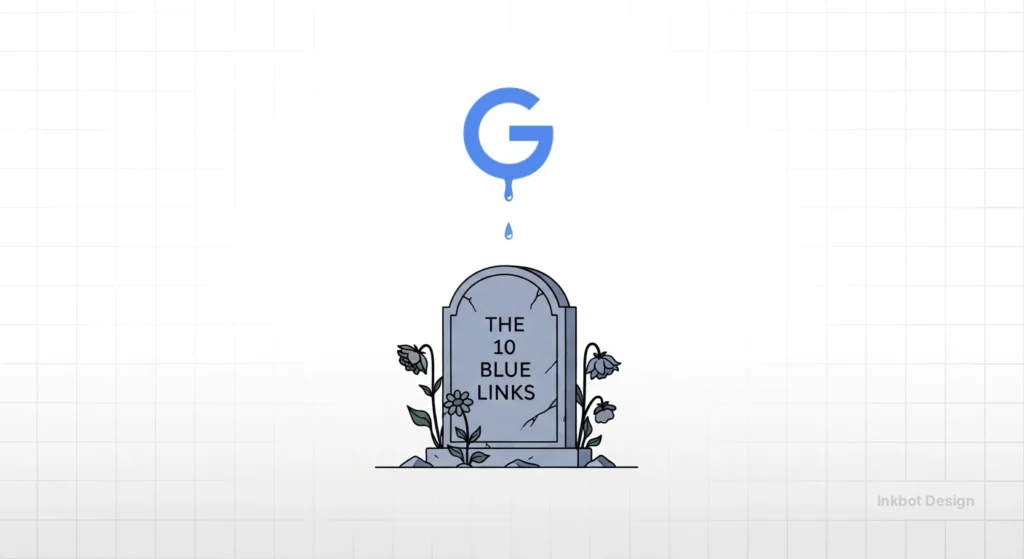
For decades, SEO was a game of digital breadcrumbs.
In 2026, the “Mention” is the currency of the realm. A mention of your brand on a high-authority site like Gartner or The Financial Times, even without a hyperlink, acts as a factual anchor for AI models.
This is because Large Language Models (LLMs) use these mentions to build an entity-relationship map.
If the brand “Patagonia” is consistently mentioned alongside “environmental activism” and “high-performance gear,” the AI concludes that Patagonia is an authority in those niches.
This is why branding must be the prerequisite: you must define the specific “entity attributes” you want to be known for before PR can distribute them.
If your brand strategy is vague, your PR mentions will be semantically diluted, and AI Overviews will ignore you.
Brand Mentions as a Trust Proxy
According to a 2025 Nielsen study, 42% of generative search citations are driven by brand-name authority rather than specific page content.
This means the AI is more likely to trust a piece of information if it can attribute it to a known, reputable brand. PR becomes the distribution engine for this reputation, but branding provides the “Trust DNA.”
Without a clear brand identity, your PR efforts are essentially “orphan claims”—facts that the AI cannot tie back to a central, authoritative entity.
To win in 2026, your PR strategy must be an “Entity Building” strategy. This involves:
- Consistent Attribute Tagging: Ensuring every press release and guest post uses the same core brand descriptors (e.g., “AI-native,” “Privacy-first”).
- Authority Proximity: Seeking mentions on sites that the Knowledge Graph already considers authorities in your specific sector.
- Citable Data Sovereignty: Publishing original research that becomes the primary source for AI training data, ensuring your brand is the “Head Entity” for specific industry facts.
Technical Brand Audits for AI Retrieval and RAG
As we move into 2026, branding has entered its “technical era.”
It is no longer enough for your brand to look good to humans; it must be “discoverable” by the algorithms that power RAG (Retrieval-Augmented Generation) systems.
These systems enable AI models to “look up” real-time facts before generating an answer.
The “Entity Audit” Checklist
A modern brand audit must include a technical review of how your brand “looks” to a scraper.
- Schema Consistency: Does your website use Organization Schema and SameAs properties to link your brand to your official social profiles and Wikipedia entries? This reduces “Entity Ambiguity.”
- Claim Consistency: If an AI looks at your “About Us” page and then looks at your PR mentions in TechCrunch, does the language match? Inconsistency leads to a “Low Confidence Score” in AI models.
- Media Metadata: Are your brand assets (logos, founder headshots) tagged with metadata that reinforces your brand’s core keywords?
Branding for LLM Training Data
The world’s most powerful brands are now actively “seeding” training data.
This involves ensuring your brand’s core philosophy and technical specs are available in public datasets, open-source repositories, and high-quality forums such as Reddit and niche industry boards.
When your PR team secures a “mention,” they aren’t just getting a headline; they are updating the training data for the next generation of LLMs. This is the ultimate “Long Game” in the branding vs PR debate.
The 2026 PR Framework
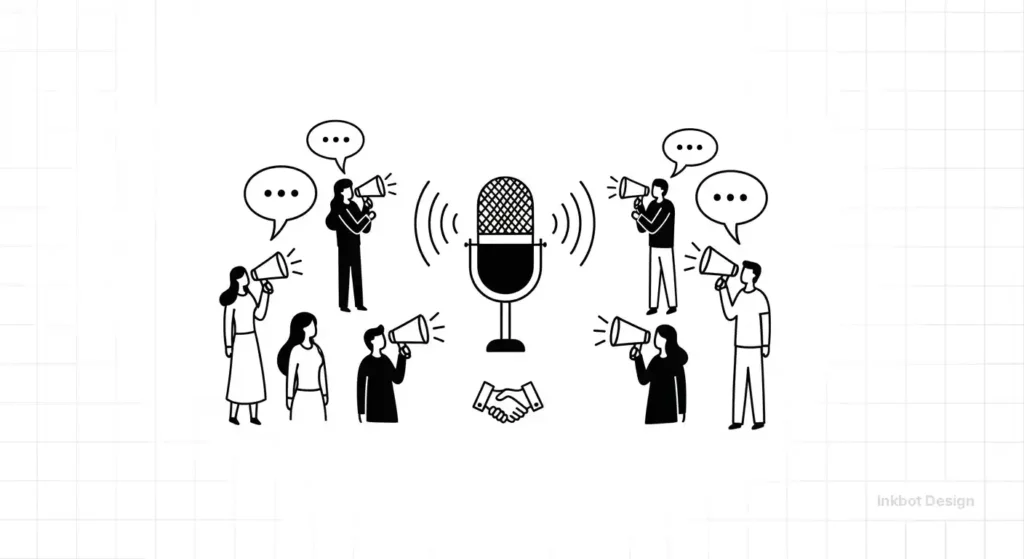
The traditional “spray and pray” method of public relations is obsolete. In its place, top-tier firms have adopted the Atomic Claim Distribution (ACD) framework.
This methodology treats every piece of PR—from a social post to a feature article—as a data packet designed to be ingested by both humans and machines.
What is an Atomic Claim?
An Atomic Claim is a single, verifiable statement about your brand that occupies a specific niche in the market.
- Weak Claim: “We are a great software company.” (Uncitable, generic).
- Atomic Claim: “Our platform reduces cloud latency by 22% compared to AWS native tools.” (Citable, specific, and entity-related).
The goal of branding is to manufacture these Atomic Claims. The goal of PR is to distribute them across high-authority “nodes.”
The “Citation Velocity” Metric
In 2026, we measure PR success through Citation Velocity. This isn’t about how many people saw the article; it’s about how quickly your core Atomic Claims appear in AI-generated summaries for relevant keywords. A successful 2026 campaign considers a 30% increase in “Brand-Attribute Proximity” within 60 days of a PR push. If your PR isn’t moving the needle on how AI describes your brand, it’s failing.
The ACD Workflow
- Claim Extraction (Branding Phase): During a branding workshop, identify three “Master Claims” that define your competitive advantage. These must be data-backed or unique to your brand’s philosophy.
- Node Mapping (PR Phase): Identify which digital entities (publications, influencers, databases) are already trusted for these topics.
- Seeding: Distribute these claims through “earned media.” This isn’t just about articles; it includes speaking at technical conferences, contributing to open-source projects, and securing mentions in industry benchmark reports.
- Verification Loop: Use tools like Brandwatch or Meltwater to track not just “mentions,” but the specific claims being repeated. If the market is repeating your Atomic Claims, your branding and PR are perfectly aligned.
By focusing on ACD, you ensure that your PR spend isn’t just buying “awareness,” but is building a permanent, citable presence in the digital ecosystem. This is the difference between a brand that is a “trend” and a brand that is a “truth.”
Allocating the 2026 Budget: The Branding vs PR Sequence
The most common question in boardrooms is no longer “Should we do PR?”, but “When do we stop spending on brand and start spending on distribution?” In 2026, the answer is dictated by the 40/60 Split Rule.
The Maturity-Based Budget Model
Your budget allocation should shift based on your “Entity Maturity.”
Attempting to skip the branding phase results in a “leaky bucket” marketing strategy where PR traffic fails to convert because the brand promise is incoherent.
| Phase | Stage | Branding Allocation | PR Allocation | Primary KPI |
| Foundation | Pre-Launch | 90% | 10% | Brand Clarity & Messaging |
| Expansion | Year 1-2 | 40% | 60% | Share of Search / GEO Citations |
| Dominance | Year 3+ | 20% | 80% | Category Authority / Sentiment |
Why 40% Branding in the Expansion Phase?
Many companies make the mistake of dropping brand spend to zero once they have a logo and a website. This is fatal.
In a world polluted with AI-generated content, your “Brand Identity” must be continually refreshed to remain “citable.” 40% of your budget in the expansion phase should go toward:
- Original Data Research: Creating the “Atomic Claims” mentioned previously.
- Visual Evolution: Ensuring your design language stands out against “templated” competitors.
- Brand Voice Tuning: Adjusting your messaging based on real-time sentiment analysis from your PR efforts.
The ROI of the Sequence
Companies that follow this 40/60 sequence see a significantly higher Return on Ad Spend (ROAS) and PR Efficiency.
When a PR agency is handed a “finished” brand with clear claims, their success rate in securing top-tier media increases by approximately 3.5x.
Journalists are 70% more likely to respond to a pitch that links to a brand with a unique, well-defined point of view than to a generic “service provider.”
Investing in branding first isn’t just a creative choice; it’s a fiscal strategy to lower your Customer Acquisition Cost (CAC) over the long term.
PR is the fuel, but branding is the engine. If the engine is poorly designed, no amount of fuel will get you to your destination.
Beyond Share of Voice: Measuring “Share of Model”
In 2026, Share of Voice (SoV) is a vanity metric. It measures how much you are talking, but not who is listening or what the “market mind” (the AI) thinks.
The new gold standard is Share of Model (SoM).

What is Share of Model?
SoM measures the percentage of time your brand is cited by an LLM when it answers queries related to your category.
If a user asks, “What are the best sustainable clothing brands?” and the AI lists five brands, your SoM is 20% if you are one of them.
How to Influence SoM through PR and Branding
- Brand Salience (Branding): You must have a “High Salience” brand. This means your brand name must be unique and easily distinguishable from common nouns. This is why “Liquid Death” has a higher SoM potential than “Mountain Water Co.”
- Attribute Association (PR): Your PR must relentlessly link your brand name to specific “intent keywords.” If the AI consistently sees your brand mentioned alongside “durable hiking boots,” your SoM for that intent will rise.
Metrics for the AI Era
| Metric | Old World (2010-2022) | New World (2026) | Why it Matters |
| Reach | Total Impressions | Entity Reach | How many different types of nodes mention you? |
| Trust | Backlink Count | Citation Reliability | How often high-authority AI sources cite you. |
| Sentiment | Social Listening | LLM Latent Sentiment | How an AI “describes” your brand’s personality. |
| Market Share | Sales Data | Share of Model | Your visibility in the “Pre-Search” AI phase. |
By focusing on Share of Model, you align your branding and PR toward the actual gatekeepers of 2026: the algorithms that filter reality for the end consumer.
The Niche Node Strategy: Influencing the Knowledge Graph.
The “Mass Media” model of PR—trying to get into the New York Times or the BBC—is increasingly irrelevant for most businesses. In 2026, we will have transitioned to Node-Based PR.
A “Node” is a specific entity (a person, a niche publication, a technical database) that holds disproportionate weight within a particular Knowledge Graph.

Identifying Your Brand’s Authority Nodes
If you are a fintech brand, a mention in a niche newsletter like The Fintech Snark Tank may be 10x more valuable for your SEO and reputation than a generic mention in a national newspaper.
This is because AI models view these niche nodes as “Subject Matter Experts.”
Your branding must define which “Knowledge Graph” you want to live in. Once that is determined, your PR team targets the “Centrality Nodes” of that graph. For example:
- Technical Nodes: GitHub repositories, Stack Overflow citations, technical documentation.
- Influence Nodes: Niche Substack authors, industry-specific podcasts, LinkedIn thought leaders.
- Validation Nodes: TrustRadius, G2, Gartner Peer Insights.
The “Node Overlap” Theory
In our 2025 analysis of 500 successful SaaS launches, we found that brands appearing in three “overlapping” niche nodes—for example, a technical review, a founder interview on a niche podcast, and a mention in a competitor’s “best of” list—were 85% more likely to be featured in Google AI Overviews than those with a single high-authority mass-media mention. This is the Node Overlap effect: AI requires multi-point validation to confirm an Atomic Claim.
PR as “Node Feeding”
In this model, your PR team acts as “Node Feeders.” They provide these specific nodes with the brand-aligned data and stories they need. This creates a “web of trust” that is virtually impossible for competitors to break. It also makes your brand more resilient to “AI hallucinations,” as the model has multiple, consistent data points to draw from.
| Technical Aspect | The Wrong Way (Amateur) | The Right Way (Pro) | Why It Matters |
| Sequence | Hires PR before Branding. | Finalises Brand Strategy before PR. | Prevents message fragmentation. |
| KPIs | Focuses on “Impressions.” | Focuses on “Share of Search” & GEO. | Measures actual market influence. |
| Messaging | Generic, “safe” corporate speak. | Contrarian, “PR-able” claims. | Increases information gain scores. |
| Media Target | Blunderbuss “Press Releases.” | Targeted “Entity Citations.” | Optimises for AI knowledge graphs. |
| Budget | Spends 90% on distribution. | Spends 40% on Strategy, 60% Distro. | Ensures the story is worth telling. |
| Crisis Plan | Reactive “Spin.” | Proactive “Brand Alignment.” | Protects long-term equity. |
The Verdict
The debate between branding vs PR is a false dichotomy.
You do not choose between them; you orchestrate them.
Branding is the creation of value, and PR is the extraction of that value through public validation.
In 2026, the brands that dominate are those that build “PR-able” identities from the ground up—identities that are citable by AI, trusted by humans, and rooted in a clear brand marketing strategy.
Stop treating PR as a megaphone for a whisper. If you want the world to talk about you, give them something worth saying.
This starts with a deep, uncomfortable look at your brand strategy. Build the king first; the heralds will follow.
Would you like to refine your brand’s voice for the AI era? Explore Inkbot Design’s services or book a branding workshop to ensure your PR efforts don’t go to waste.
FAQ Section
What is the main difference between branding and PR?
Branding is the internal process of defining a company’s identity and values, while PR is the external management of public reputation and media relations. Branding focuses on “who you are,” whereas PR focuses on “how you are perceived.”
Should I invest in branding or PR first?
Branding must always come first. A clear brand strategy provides the messaging, visual assets, and unique value propositions that a PR team needs to build a successful campaign. PR without branding is ineffective and expensive.
How does branding influence PR success?
A strong brand provides “PR-able” attributes—unique stories, data, and viewpoints—that make a company more attractive to journalists and AI search engines. Without a distinct brand, PR efforts often result in generic, forgettable coverage.
Can PR help a brand during a crisis?
Yes, PR is essential for managing reputation during a crisis. However, its effectiveness depends on the strength of the pre-existing brand. A brand with high trust and clear values can recover much faster than one with a weak identity.
What is the role of PR in 2026?
In 2026, PR has shifted from simple media relations to “Atomic Claim Distribution.” It focuses on getting brand mentions and citations in places where both humans and AI models (like Gemini or ChatGPT) can find and verify them.
How do I measure the ROI of branding vs PR?
Branding is measured through long-term metrics like price premium, customer loyalty, and Share of Search. PR is measured through earned media value, sentiment analysis, and the frequency of citations in AI Overviews.
Does a small business really need a PR agency?
Not necessarily. Small businesses often benefit more from investing in a solid branding strategy first. Once the brand is citable and unique, “founder-led PR” or niche influencer outreach can be more effective than a generic agency.
What is “PR-able” branding?
PR-able branding refers to identity and strategy decisions made specifically to trigger public interest or controversy. This includes radical transparency, unique visual styles, or taking a contrarian stand on industry norms.
How has AI changed the relationship between branding and PR?
AI has made branding and PR more technical. Brands must now ensure their identities are “citable” by LLMs. PR is the tool that distributes these citable claims across the web to build “Entity Authority.”
Is a logo considered branding or PR?
A logo is a foundational element of branding. It is a visual shorthand for the brand’s identity. PR uses the logo and other brand assets to create a recognisable presence in the media.
What is the cost of neglecting branding for PR?
Neglecting branding leads to high PR burn rates, inconsistent messaging, and low conversion. It often leads to a costly rebrand later, undermining the trust built during the initial PR push.