The Customer Loyalty Loop: Turning Orders into Advocates
True customer loyalty does not exist; only the successful reduction of friction and the amplification of identity-habit remain.
Customers are not loyal to your business; they are faithful to the version of themselves your brand allows them to project.
Brands that fail to move beyond transactional rewards lose an average of 15% of their market share to competitors who prioritise “Mental Availability,” according to research from the Ehrenberg-Bass Institute.
This isn’t about being “nice” to your customers. It is about becoming an invisible, indispensable part of their daily routine.
To achieve this, you need a robust customer experience strategy that focuses on the psychological triggers of repeat behaviour.
- Make your brand top of mind by building memory associations tied to real-life buying moments to increase mental availability.
- Remove friction with seamless digital experiences like passkeys and one-click reorders to make repeat purchases effortless.
- Prioritise light buyers and broad-reach retention activities over rewarding the loyal few to drive true growth.
- Foster identity-driven advocacy via micro-communities, surprise rewards, and shareable moments that signal customers' desired selves.
What is Customer Loyalty?
Customer loyalty is a recurring behavioural pattern in which a consumer consistently chooses one brand over competitors, driven by a combination of reduced cognitive friction, emotional identity alignment, and perceived switching costs.

Key Components:
- Mental Availability: The probability that a buyer will notice, recognise, or think of your brand in a buying situation.
- Frictionless Re-entry: A user experience that makes the second purchase significantly easier than the first.
- Identity Signalling: The degree to which using the product reinforces the customer’s desired social or personal image.
Customer loyalty is a cognitive habit formed when a brand consistently reduces friction while reinforcing a consumer’s desired self-identity through distinctive assets.
The Double Jeopardy Law & Light Buyer Acquisition
To understand retention in 2026, one must first confront the Double Jeopardy Law.
Popularised by Byron Sharp and the Ehrenberg-Bass Institute, this law states that brands with smaller market shares have fewer buyers, and those buyers are slightly less loyal (in both frequency and brand-sharing).
If your strategy focuses exclusively on “deepening” loyalty among your most frequent buyers, you are fighting a losing battle against statistical gravity.
Growth does not come from turning a heavy buyer into a “super-heavy” buyer; it comes from increasing Mental Availability and Physical Availability among “light buyers”—those who might only buy from you once a year.
The Light Buyer Paradox: Most loyalty programs are designed to reward the top 20% of customers. However, a brand’s stability relies on the “long tail” of light buyers. In 2026, successful retention is about ensuring that when a light buyer enters the market, your brand is the path of least resistance. This requires a shift from “loyalty” (an emotional state) to “habit” (a cognitive shortcut).
Implementation: The 60/40 Rule Modern quantitative analysis suggests that 60% of your retention budget should be spent on broad-reach activities that keep the brand “famous” for everyone. In contrast, only 40% should be spent on targeted “loyalty” interventions. If you ignore the light buyers, your “loyal” base will naturally erode through category churn, and there will be no one to replace them.
Contrary to the popular Pareto Principle (80/20 rule), the Ehrenberg-Bass data shows that for most categories, the “vital many” light buyers contribute more to brand growth than the “loyal few.” Focusing on “loyalty” as a growth lever is often a tactical error based on skewed data.
Mental vs Physical Availability: The Real Retention Drivers
If you aren’t easy to think of and easy to find, no amount of “loyalty points” will save your market share.
1. Mental Availability: Being ‘Top of Mind’ in the Moment of Need
Mental availability is the probability that a buyer will notice, recognise, or think of your brand in a buying situation. This is built through Category Entry Points (CEPs).
- Wrong way: Thinking of loyalty as “How much do they love us?”
- Right way: Thinking of loyalty as “When they are hungry/tired/breathtakingly busy, do we pop into their head first?”
To increase mental availability, your brand must build a vast network of memory associations. This is why Coca-Cola doesn’t just market “soda”; they sell “The Mid-afternoon Slump,” “The Cinema Experience,” and “The Family Dinner.”
In 2026, you must map your retention strategy to these specific life moments.
2. Physical Availability: Reducing the Distance to Purchase
Physical availability in 2026 is digital. It is the measure of how little effort it takes to acquire your product.
- Presence: Are you on the platforms where your customers spend time? (e.g., TikTok Shop, Instagram Checkout, or Amazon Buy with Prime).
- Prominence: When they search for a solution, are you the first result, or buried behind three “Sponsored” tabs?
- Relevance: Is your product available in the format they want (e.g., subscription, one-off, or “buy now, pay later”)?
| Factor | Focus area | 2026 metric | Retention impact |
| Mental availability | Memory & branding | Brand linkage score | High (long-term) |
| Physical availability | Distribution & UX | “Clicks to cart” ratio | Very high (immediate) |
| Loyalty programme | Incentives | Redemption frequency | Low (tax-based) |
The ‘Availability’ Audit. If your retention is dropping, don’t ask “Is our reward program good enough?” Ask: “Has a competitor made it easier to be remembered, or easier to be bought?” In 90% of cases, the “loyal” customer simply found a more available alternative.
The “Reward Points” Myth
The belief that “loyalty programs create loyal customers” is one of the most expensive delusions in modern marketing.
Most points-based systems are merely a “loyalty tax” paid to people who were going to buy from you anyway.
According to a 2025 McKinsey & Company study, over 50% of consumers enrolled in top-tier loyalty programs showed no measurable change in their purchasing frequency or basket size. These programs often fail because they focus on extrinsic motivation—bribing the customer—rather than intrinsic habit. When the rewards stop, or a competitor offers a bigger bribe, the “loyalty” evaporates.
In 2026, the focus has shifted to building brand loyalty through “Value-Alignment.” Customers stay when the brand acts as a shortcut for their decision-making. If you have to pay a customer to stay, you haven’t built loyalty; you’ve built a subsidy.
“Transactional loyalty is a race to the bottom where the brand with the largest margins wins by default. True advocacy is built when the cost of switching is not a lost discount, but a lost sense of identity. You do not want customers who buy because it is cheap; you want customers who buy because it is ‘them’.”
The Psychology of the Loyalty Loop
Customer retention is a byproduct of successful user experience design.
When a customer interacts with your brand, they are constantly evaluating the “Cost of Interaction” against the “Identity Payoff.”

Reducing Cognitive Load
The human brain is wired to conserve energy. If your checkout process requires more than three clicks, or if your “loyalty portal” requires a separate login, you are creating friction that kills habits.
Nielsen Norman Group (NN/g), the UX research consultancy, found that users are 60% more likely to return to an interface that requires minimal learning on the second visit.
This is why the Starbucks App is a masterclass in retention—not because the coffee is superior, but because the “Reorder” button is the most prominent feature.
Biometric UX: The Death of the ‘Login’ Gate
In 2026, the most significant barrier to customer loyalty isn’t a lack of love for the brand—it’s the “Login Gate.”
Every time a user is asked to remember a password or find a “loyalty ID,” cognitive load increases, and the likelihood of completing a purchase drops by approximately 35% per additional field.
The Rise of Passkeys and Biometric Continuity.
Forward-thinking brands are moving toward “Passwordless Retention.” By implementing FIDO2 standards and Passkeys, brands allow users to re-engage using only their face or fingerprint.
This creates a psychological “bridge” that makes the transition from “thinking about buying” to “having bought” almost instantaneous.
The ‘Invisible’ Loyalty Program
Imagine a customer walks into a physical store or lands on a site.
Through UWB (Ultra-Wideband) technology or seamless mobile wallet integration, the “loyalty” benefits are applied automatically. There is no card to scan, no app to open.
The Starbucks App pioneered this with its “Order Ahead” feature, but the 2026 standard is Biometric Continuity. If the customer has to work to be “loyal,” you have already lost.
Friction Impact on Retention (2026 Data)
| Interaction type | Average time to complete | Drop-off rate | Retention impact |
| Email/password login | 22 seconds | 45% | Negative |
| SMS one-time code | 15 seconds | 28% | Neutral |
| Social login (OAuth) | 8 seconds | 15% | Positive |
| Biometric / passkey | Under 2 seconds | 3% | High growth |
Enhancing Brand Experience
A customer’s memory of your brand is not a video recording; it is a collection of “peaks” and “ends.” To turn an order into an advocate, you must engineer a peak during the unboxing or service delivery phase.
This brand experience must be consistent across every touchpoint. If your Instagram looks like a luxury boutique but your shipping emails look like a 1995 spreadsheet, the loop breaks.
Never Lose A Customer Again
Never Lose a Customer Again tackles the “leaky bucket” syndrome of modern business: the fact that most companies spend 90% of their energy on acquisition and almost nothing on the First 100 Days of the customer relationship.
As an Amazon Partner, when you buy through our links, we may earn a commission.
Identity-Signalling and Advocacy
Advocacy happens when a customer feels that recommending your brand makes them look better. This is the “In-group” dynamic.
Brands like Apple or Lululemon don’t just sell products; they sell a membership to a specific social class or lifestyle.
When a customer shares your content, they are curating their own digital identity.
“Advocacy is the final stage of a loop where the brand becomes a tool for the customer’s self-expression. If your product does not help the customer signal who they are to the world, they will never move beyond the transactional stage of the relationship. Loyalty is the ultimate expression of brand-as-identity.”

Advocacy as Social Capital: Why Customers Share
In 2026, a “referral” is a high-risk social transaction.
When a customer recommends your brand to a friend, they are betting their Social Capital on your performance. If your brand fails, they look bad.
Advocacy as a Status Symbol
People don’t share “good deals”; they share things that make them look Smart, Early, or Ethical.
- Smart: “I found a way to get 20% off high-end tech.”
- Early: “I’m one of the first 500 people to use this new AI tool.”
- Ethical: “I only buy from brands that use carbon-neutral shipping.”
Engineering the ‘Shareable Moment’
To turn a buyer into an advocate, you must provide them with a “Social Kit.”
- Visual Assets: Don’t just ask for a review; give them a beautiful, “Instagram-ready” graphic of their usage stats (the Spotify Wrapped model).
- Exclusivity: Give them a “Friend-Only” invite code to hand out as a gift. This changes the dynamic from “I’m doing the brand a favour” to “I’m doing my friend a favour.”
The ‘Micro-Influencer’ Pivot
The 2026 data shows that a recommendation from a “Real Person” with 200 followers is 5x more likely to convert than a celebrity endorsement. Your loyalty strategy should focus on empowering these “Micro-advocates” by giving them direct access to your team or behind-the-scenes content that they can “leak” to their small circle.
Hyper-Local Micro-Communities: Discord and the Rise of Owned Spaces
By 2026, the era of “Social Media Marketing” for loyalty has fractured.
The algorithms of X and Meta have become so unpredictable that brands can no longer guarantee their most loyal customers will even see their content. The solution is the Micro-Community.
The Shift to ‘Owned’ Social
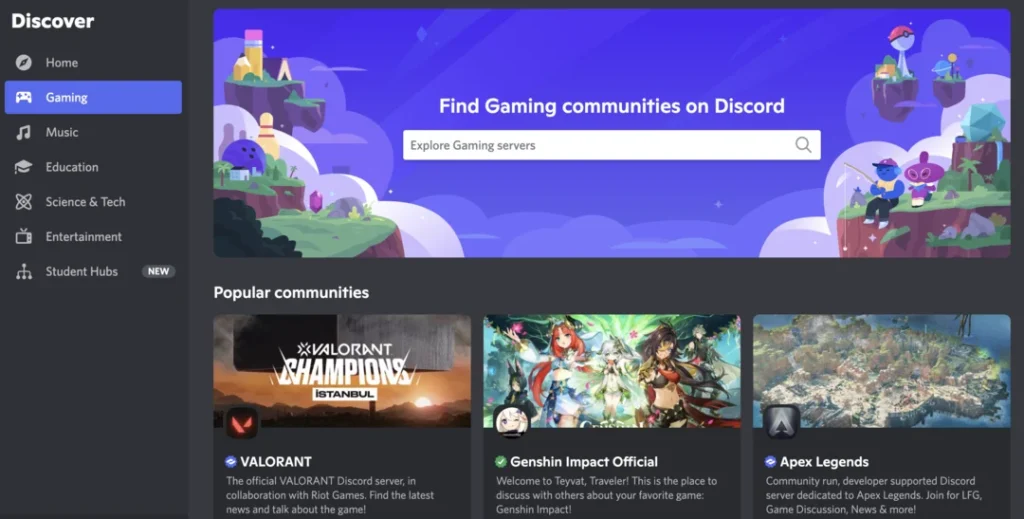
Successful brands are migrating their “Super-users” to private, high-engagement environments like Discord, WhatsApp Channels, or proprietary “Circle” spaces.
- Why it works: These spaces bypass the algorithm. When you post, 100% of your members see it.
- The ‘Insider’ Effect: Being in a brand’s Discord feels like elite-tier membership. It provides the “Identity-Signalling” that a standard email list cannot.
Managing the Micro-Community
A community is not a broadcast channel. It is a dialogue. In 2026, “Community Managers” have been replaced by “Value Facilitators.”
- Co-creation: Use your community to test new product names, packaging designs, or service features. This builds “Sunk Cost Loyalty”—the customer feels they helped make the product, so they are less likely to leave it.
- Peer-to-Peer Support: When a “Super-user” answers a question for a “Newbie” in your Discord, they are reinforcing their own status as an expert, further cementing their loyalty.
In 2026, loyalty is increasingly dictated by the “Vibe”—a difficult-to-quantify sense of aesthetic and cultural alignment. Micro-communities allow brands to curate this vibe through exclusive digital assets, custom emojis, and specific language (slang) that only insiders understand. This creates a “Linguistic Switching Cost.” If a customer leaves the community, they lose the ability to speak their tribe’s language.
The State of Customer Loyalty in 2026
The landscape of retention has been fundamentally altered by the “Privacy-First” era and the rise of Generative AI.
With the total phase-out of third-party cookies in late 2024, brands can no longer rely on stalking customers across the web to “remind” them to buy.
Zero-Party Data Strategy: The ‘Preference Centre’
With the total obsolescence of third-party cookies, the “stalker” model of marketing is dead. In its place is Zero-Party Data—information that the customer voluntarily gives you because they trust you to use it for their benefit.
The Preference Centre as a Value Exchange
A 2026 “Preference Centre” is not a boring checklist of “Do you want our newsletter?”. It is an interactive, AI-driven experience.
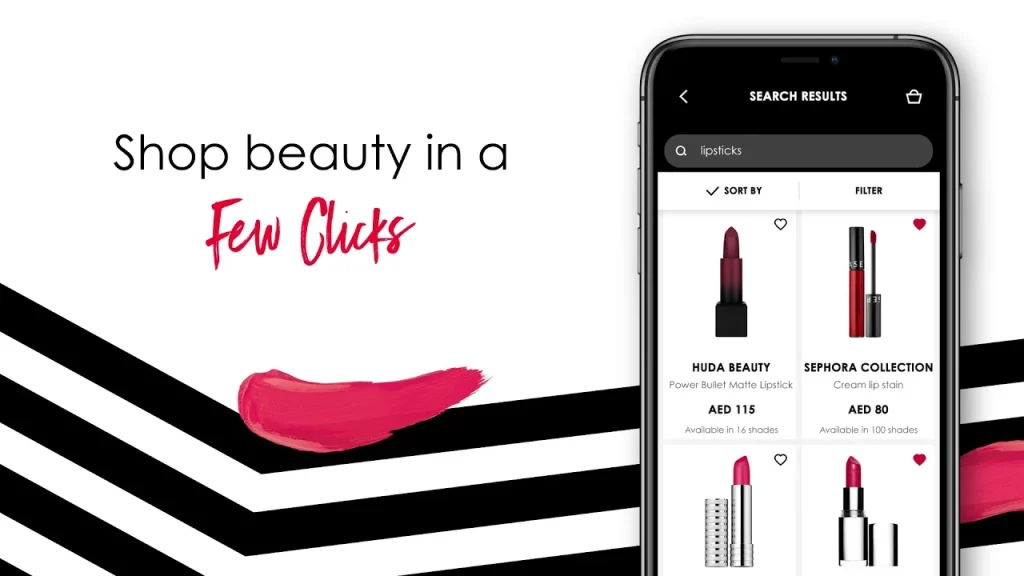
Brands like Sephora and Nike use high-value quizzes and “Fit Finders” to gather data on skin type, running style, or personal aesthetic.
Building the ‘Trust Reserve’
The goal is to move from “We know what you did” (First-party data) to “We know what you want” (Zero-party data). This requires a transparent “Trust Reserve.” When a customer shares that they are training for a marathon, and the brand responds with a tailored recovery guide—not just a shoe discount—the loyalty loop is reinforced.
Zero-Party Data Implementation Checklist:
- Contextual Ask: Don’t ask for preferences at signup. Ask when it’s relevant (e.g., after the first purchase).
- Micro-Incentives: Provide immediate value for data (e.g., “Tell us your style and we’ll unlock a hidden gallery”).
- The ‘Right to Forget’ Button: Make it as easy to delete data as it is to give it. This counterintuitively increases trust and data sharing.
AI-Predictive Retention
Artificial Intelligence tools, such as Salesforce’s Einstein GPT (significantly updated in 2025), now allow SMBs to predict churn before it happens.
By analysing micro-behaviours—such as a slight delay in opening an email or a search for “alternatives” on a site—AI can trigger a “Frictionless Re-entry” offer.
This is not a generic discount, but a proactive solution to a predicted problem.
Loyalty in Low-Frequency Industries: The Long-Tail Strategy
How do you build loyalty when the customer only buys from you once every seven years? In industries like automotive or real estate, “Repeat Purchase Rate” is a useless metric. Instead, you must focus on Utility-Based Retention and Referral Velocity.
The ‘Ownership’ Phase as a Service
Loyalty in low-frequency industries is built during the “gap” between purchases.
- Post-Purchase Utility: If you sell a car, your loyalty strategy isn’t about the next car; it’s about the maintenance app, the exclusive road-trip guides, and the software updates that make the car better over time.
- The ‘Expert’ Anchor: A real estate agent stays relevant by providing monthly, hyper-local market reports and a “Homeowner’s Concierge” (a list of trusted plumbers, electricians, etc.). By becoming an indispensable resource, you ensure that when the “Buying Cue” eventually returns years later, you are the only Mental Availability choice.
| Purchase frequency | Focus metric | Primary tactic |
| High (daily/weekly) | Habit loop | Frictionless UX & subscriptions |
| Medium (monthly) | CLV | Personalised recommendations & tiers |
| Low (yearly / decade) | Brand authority | Content utility & referral incentives |
Referral as the Proxy for Loyalty. In low-frequency sectors, an advocate who refers three friends is more valuable than a “loyal” customer who buys once and disappears. Shift your “loyalty rewards” to the Referrer, providing upgrades or maintenance credits that increase the value of their current asset.
The ROI of Surprise: Why Random Rewards Beat Points
The fundamental flaw of points-based loyalty is that it is a linear liability. For every point you issue, you are essentially creating a future debt on your balance sheet.
In 2026, innovative brands are pivoting to Surprise and Delight (S&D) models.
The Math of Surprise vs Certainty
When a customer expects a 10% discount because of their points, they view it as an entitlement. If they don’t get it, they are angry. If they do get it, they aren’t “happy”—they are merely “neutral.” However, if a customer receives a surprise gift or an unexpected upgrade, the psychological impact is 3 times the monetary value of the gift.
Case Study: The ‘Random Acts of Retention’ Experiment
An e-commerce retailer in 2025 split their loyal base into two groups:
- Group A: Earned 5 points for every £1 spent (Standard Points).
- Group B: Received no points, but 10% of orders included a “Golden Ticket” surprise (a £5 gift card or a free sample). Result: Group B had a 22% higher Repeat Purchase Rate and a 15% higher Average Order Value. Because the reward was unexpected, it was processed as a “gift” rather than a “rebate,” triggering a stronger emotional bond.
Implementing S&D at Scale:
- Low-Cost, High-Value: Use digital assets (exclusive content, early access, custom badges) as the “surprise.”
- AI-Triggered: Use your Salesforce Einstein or Hubspot data to trigger a surprise when a customer is at their “Predicted Churn Date.”
- The ‘Handwritten’ Illusion: Even at scale, use “robotic” handwriting pens to include “personal” notes in packages. Perceptions of human effort are a major driver of trust.
Professional Implementation
| Technical Aspect | The Wrong Way (Amateur) | The Right Way (Pro) | Why It Matters |
| Data Collection | Buying third-party lists to retarget. | Building Zero-Party data via interactive UX. | Higher accuracy and GDPR compliance. |
| Reward Structure | Points that expire or are hard to track. | Instant, tangible “Surprise and Delight” moments. | Reduces frustration and builds trust. |
| Communication | Blasting the whole list with the same offer. | Behaviour-triggered, personalised content. | Prevents “Unsubscribe” fatigue. |
| UX Focus | High-friction “Sign-in” gates for rewards. | One-click “Magic Links” for access. | Increases participation by 40%. |
| Feedback Loop | Sending an NPS survey once a year. | Continuous, micro-feedback at key touchpoints. | Provides actionable data in real-time. |
| Advocacy | Asking “Please leave a review” via email. | Gamifying the referral process within the UX. | Increases organic reach naturally. |
B2B Loyalty: Moving Beyond the Transactional Handshake
Customer loyalty in B2B is fundamentally different from B2C. You are not dealing with a single emotional consumer, but a “Buying Committee” with diverse incentives.
In 2026, B2B retention is built on Structural Tie-ins and Shared Ecosystems.
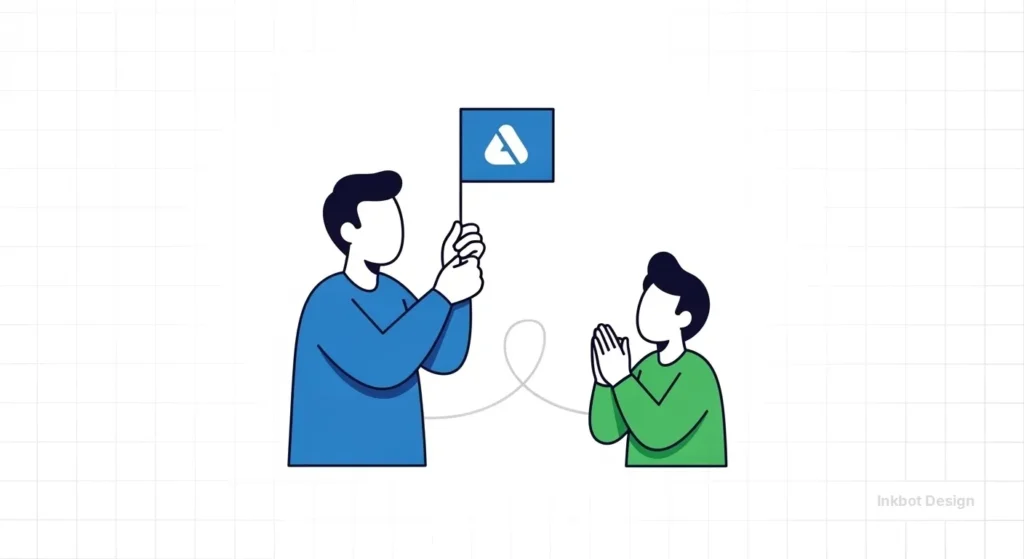
From Vendor to Infrastructure
The goal of B2B loyalty is to move from being a “vendor” to being “infrastructure.” When your software or service integrates so profoundly into the client’s workflow that removing it would cost more in productivity loss than the annual contract value, you have achieved High Switching Cost Loyalty.
The ‘Professional Identity’ Factor
B2B loyalty is also driven by personal career advancement. If using your tool makes the Procurement Manager look like a hero or helps the CTO meet their ESG goals, they become your internal advocates.
B2B Loyalty Drivers 2026:
- Certification Programs: Turn users into “Certified Experts” (e.g., HubSpot Academy), which they can then add to their LinkedIn profiles. Their professional identity is now tied to your ecosystem.
- Beta Access Groups: Invite top-tier clients to a private “Product Council” on Discord or Slack. This gives them a sense of ownership over the roadmap.
- Joint Success Metrics: Align your pricing with their success (e.g., a percentage of the savings you generate). This creates a “Partnership” rather than a “Tax.”
Retention for the Next Generation: Gen Alpha & Gamification
Generation Alpha will be entering the consumer market with significant influence over household spending. For this generation, “Loyalty” is synonymous with Gamification.
They don’t want to “collect points”; they want to “level up.”
From Loyalty to Gameplay
Gen Alpha has grown up on Roblox and Fortnite. They expect brands to offer:
- Streaks: Like Snapchat or Duolingo, brands like Nike use “Daily Activity Streaks” to keep users returning to their apps. If a user misses a day, they lose their “status,” creating a powerful psychological “Loss Aversion” trigger.
- Avatars & Digital Identity: Loyalty rewards are increasingly shifting from physical discounts to “Digital Wearables.” If a brand can provide a “Limited Edition Skin” for a user’s digital avatar, that user is locked into the ecosystem.
- Collaborative Quests: Instead of individual rewards, brands are using “Community Goals” (e.g., “If 10,000 people recycle their old shoes this month, everyone gets a badge”). This taps into the “Social Proof” and “Identity-Signalling” drivers mentioned earlier.
The ‘Play-to-Earn’ Brand Model. In 2026, the brand is no longer a shop; it is a game world. Retention is measured by “Time in Ecosystem” and “Social Interaction Density.” If your brand feels like “work,” Gen Alpha will ignore it. If it feels like “play,” you have a customer for life.
The Verdict
Customer loyalty in 2026 is a battle for the customer’s subconscious. If you are still relying on bribes and discounts, you are building a house on sand.
To turn orders into advocates, you must focus on your brand’s “Identity Payoff” and the radical reduction of friction in your customer experience strategy.
The most important directive for your business today is this: Audit your customer journey for “Cognitive Leaks.”
Every time a customer has to think, wait, or struggle, your loyalty loop is breaking. Stop trying to “wow” them with grand gestures and start respecting their time by being the easiest choice in their day.
If you are ready to stop subsidising your buyers and start building a brand that commands genuine advocacy, explore Inkbot Design’s services or read more about our approach to user experience design.
FAQs
Why is my loyalty program failing to increase sales?
Most programs fail because they reward existing behaviour rather than incentivising new habits. If your rewards are purely transactional (e.g., “Spend £100, get £5”), you are likely just discounting orders for customers who would have bought anyway. True loyalty requires emotional or identity-based triggers.
How do I measure the success of a loyalty loop?
Focus on the “Repeat Purchase Rate” (RPR) and “Customer Lifetime Value” (CLV) rather than just enrollment numbers. A successful loop shows a decrease in the time interval between the first and second purchase, indicating that the brand is becoming a habitual choice for the consumer.
What is the difference between brand loyalty and a loyalty program?
Brand loyalty is an emotional and cognitive preference for a specific brand, often regardless of price or convenience. A loyalty program is a structured marketing effort designed to encourage repeat business through extrinsic rewards. One is a feeling; the other is a tactic.
Is it true that small businesses don’t need loyalty programs?
Small businesses often benefit more from “Surprise and Delight” tactics and personal relationships than from formal programs. A handwritten note or a personalised recommendation usually creates more “Identity-Signalling” value for a customer than a generic points system could ever achieve.
When should I use discounts in a loyalty strategy?
Discounts should be used sparingly as a “re-engagement” tool for customers who show signs of churn, rather than as a permanent fixture for active buyers. Use them to reduce the friction of a first-time purchase or to win back a customer who hasn’t visited in 90 days.
How does user experience design affect customer retention?
High-quality user experience design reduces the cognitive load required to complete a purchase. When a brand is the “easiest” to use, it becomes the default choice. Nielsen Norman Group research indicates that ease of use is a primary driver of long-term brand trust.
What is the “Double Jeopardy Law” in marketing?
The Double Jeopardy Law, popularised by the Ehrenberg-Bass Institute, states that brands with less market share have fewer buyers, and these buyers are slightly less loyal. This means that to increase loyalty, you must first focus on improving your overall brand reach and acquisition.
Can AI help improve customer advocacy?
AI tools like Salesforce Einstein can predict which customers are most likely to become advocates based on their engagement patterns. By identifying these “Super-users” early, brands can provide them with exclusive content or early access, further reinforcing their identity as brand insiders.
Why are Micro-Communities important for loyalty in 2026?
As traditional social media becomes more cluttered and algorithm-driven, customers are seeking smaller, “owned” spaces. These communities provide a sense of belonging and direct access to the brand, which significantly increases the “Switching Cost” for the consumer.
Does a brand’s visual identity impact loyalty?
Yes. A consistent visual identity serves as a “Distinctive Brand Asset” that enhances “Mental Availability.” If a customer can instantly recognise your brand in a split second, the cognitive effort required to choose you is reduced, strengthening the loyalty loop.