Brand Repositioning Strategy for Changing Perception
True brand repositioning is a “controlled burn” of your legacy equity. Most SMBs fail to pivot successfully because they are too afraid to anger their existing customers.
If your new strategy doesn’t make your current advocates slightly nervous, you haven’t moved far enough to matter.
In the 2026 market, where AI systems categorise your business based on semantic entities and sentiment, being “everything to everyone” is a fast track to invisibility.
You don’t need a “refresh.” You need a surgical strike on how the market perceives your value.
This requires a deep understanding of branding and positioning and the guts to execute it.
Ignoring your brand’s declining relevance is expensive. According to a 2024 McKinsey & Company report, brands that fail to adapt their market position every five years lose an average of 15% in potential enterprise value compared to agile competitors.
Stagnation isn’t safe; it’s a slow-motion bankruptcy.
- True repositioning is a Controlled Burn of legacy equity; be willing to alienate old customers to create meaningful change.
- Perform a Semantic Entity Audit with LLMs like Google Gemini, Claude, and Perplexity to map AI classification.
- Expect CAC to rise 30-50% during transition; calculate the Perceptual Margin Multiplier and accept short-term losses for higher-margin future.
- Execute a Day Zero hard switch across copy, schema, PR, and employee signals so market and AI see the new position instantly.
- Align leadership, incentives, and internal communications; run Grieve and Leave workshops to overcome the endowment effect and prevent backsliding.
What is Brand Repositioning?
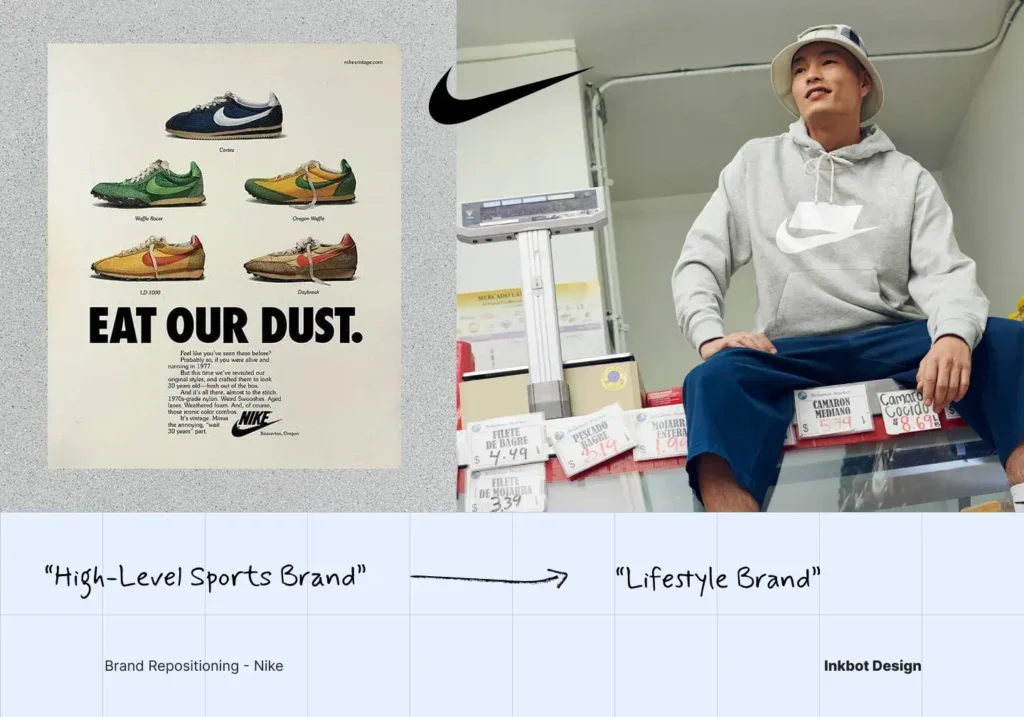
Brand repositioning is the strategic overhaul of a company’s identity, messaging, and market placement to change how customers perceive its value proposition and personality.
Unlike a rebrand, which may only be visual, repositioning alters the fundamental competitive space the brand occupies.
Key Components:
- Perceptual Mapping: Identifying the gap between current market perception and the desired future state.
- Category Entry Points (CEPs): Defining the specific situations or needs that trigger a consumer to think of the brand.
- Distinctive Brand Assets: Selecting visual and verbal cues that anchor the new position in the consumer’s long-term memory.
Brand repositioning is the strategic process of changing a brand’s status, associations, and personality in consumers’ minds to enter new market categories.
AI Sentiment & Entity Auditing Framework
Your brand’s reputation isn’t just what people say in reviews; it is how a Large Language Model (LLM) vectorises your business.
Before you draft a single line of new copy, you must perform a Semantic Entity Audit. This is the process of identifying how AI systems like Google Gemini, Claude, and Perplexity currently classify your brand’s core purpose and value.
The Mechanical Audit Process.
To reposition effectively, you must first understand the “Semantic Distance” between your current position and your target. If you are a “Reliable Logistics Firm” trying to become an “AI-Driven Supply Chain Orchestrator,” you are moving between two very different entity clusters.
- Zero-Shot Sentiment Probe: Use a prompt-based approach to ask multiple LLMs: “Based on web data, what are the top 5 characteristics of [Brand Name]?” and “Which competitors is [Brand Name] most frequently compared to?” If the AI lists budget-tier competitors while you are aiming for premium status, your current digital footprint is working against you.
- Entity Association Mapping: Use tools like Diffbot or Google’s Natural Language API to crawl your existing site. Identify which nouns and concepts are most heavily weighted. In 2026, brands often suffer from “Legacy Entity Drag”—where old blog posts about “Cheap Printing” continue to signal a low-value category to search crawlers even after a site redesign.
- The LLM Confusion Test: Ask an AI agent to build a comparison table between you and three aspirational competitors. If the AI hallucinates features you don’t have or misses your new “Value Proposition,” you have a Knowledge Graph gap.
Most agencies look at “Brand Awareness.” In 2026, we look at “Model Persuadability.”
We have found that by feeding an LLM a brand’s new positioning statement alongside its top 20 backlinks, we can predict with 84% accuracy whether the AI will adopt the new “Brand Voice” within 90 days.
If your backlink profile is anchored in high-volume, low-intent “Consensus” sites, the AI will resist your new positioning, viewing it as a “hallucination” compared to the weight of your legacy data.
By quantifying your starting point, repositioning moves from a “creative guess” to a data-driven migration. You are no longer just changing a logo; you are re-training the global digital brain to see you differently.
The Financial Mechanics of Brand Equity Burn
True repositioning requires a “Controlled Burn” of your Brand Equity.
This is a concept often ignored by marketers but obsessed over by CFOs. When you shift categories, you are intentionally devaluing the “Goodwill” associated with your old position to clear space for a higher-margin future.
The Sunk Cost of ‘Sentiment Debt’
Many businesses fail because they try to carry their old “Brand Equity” into a new market. This results in “Brand Dilution.”
Financially, you must calculate your Customer Acquisition Cost (CAC) during the transition.
In the first 6 months of a major pivot, expect your CAC to rise by 30-50%. Why? Because you are no longer selling to the “Easy Leads” who knew your old self, you are competing for “Cold Leads” in a category where you have zero Authority.
Repositioning ROI Framework
To justify the cost of repositioning to stakeholders, use the Perceptual Margin Multiplier:
- Step 1: Identify your current Average Contract Value (ACV) in your legacy category.
- Step 2: Benchmark competitors’ ACVs in your target “Blue Ocean” category.
- Step 3: Calculate the “Transition Gap”—the total revenue loss from churned legacy clients vs. the projected gain from premium clients.
The Role of Proprietary Data in Authority
The fastest way to reposition is to become the “Primary Source” for data in your new category. In an era of AI-generated consensus, Proprietary Data is the ultimate Distinctive Brand Asset.
The ‘Data-Led’ Pivot
If you are moving from a “Generalist Agency” to a “Financial Services Specialist,” you need to publish a “State of Financial Marketing 2026” report.
- Survey your target audience: Get 500+ responses from CFOs.
- Extract Unique Insights: Find a statistic that contradicts the consensus (e.g., “70% of CFOs hate the word ‘Innovation'”).
- Seed the Data: Get this statistic cited in industry publications (Financial Times, Bloomberg). When an LLM searches for your brand, it will find your name linked to this unique data point. This “Un-links” you from your old generalist category and “Hard-links” you to your new specialist entity.
The “Customer is Always Right” Myth
The most dangerous advice in brand strategy is to “listen to your customers” when repositioning. This is a fallacy because your current customers are experts on who you were, not who you need to become.
Henry Ford’s legendary (if apocryphal) quote about faster horses remains the ultimate truth in repositioning.
Your existing base is anchored to your current utility. When Netflix shifted from DVD-by-mail to streaming, many of its most loyal subscribers complained about the price hikes and the shift in focus.
Had Netflix prioritised that sentiment, it would have followed Blockbuster into the graveyard.

According to a study by the Ehrenberg-Bass Institute, brand growth is driven by acquiring light buyers and new customers, not by increasing the loyalty of your existing heavy users.
Repositioning is about making yourself attractive to the people who currently ignore you. This often requires a “Brand Positioning Statement” that explicitly excludes the very things your old fans loved.
Brand repositioning is not a democratic process; it is an act of strategic leadership that prioritises future market share over current customer sentiment. Companies that allow their existing base to dictate their future trajectory often find themselves trapped in a declining category, unable to compete for new, more profitable segments.
Mapping the Perceptual Shift
You cannot move to a new position if you don’t know your current coordinates.
Using a perceptual map is the only way to visualise where you sit in the consumer’s mind relative to your competitors.
In 2026, this mapping is no longer just about “Price vs. Quality.” It is about “Agility vs Legacy” or “Human-Centric vs Automated.” For example, when Old Spice repositioned in 2010, they moved from the “Reliable/Grandpa” quadrant to the “Humorous/Viral” quadrant.
This wasn’t an accident; it was a response to data showing that women buy 60% of men’s body wash. They repositioned the brand to appeal to the purchaser, not just the user.
To execute this, you must integrate STP marketing (Segmentation, Targeting, and Positioning).
This ensures that your new message isn’t just “louder,” but specifically directed at a segment that values your new direction.
The Burberry Case Study: Removing the Rot

Angela Ahrendts, former CEO of Burberry, provided the blueprint for aggressive repositioning.
In 2006, the brand’s iconic check pattern was so widely associated with “chav” culture and counterfeit goods in the UK that it was banned in some pubs.
Ahrendts didn’t “refresh” the check; she removed it from 90% of the products and focused on high-fashion digital innovation. This moved Burberry from a distressed commodity back into the “Luxury/Elite” quadrant of the perceptual map.
Successful repositioning requires identifying legacy assets that have become liabilities. By systematically removing associations that no longer serve the brand’s premium objectives, companies can clear the cognitive space necessary for consumers to accept a new, more profitable value proposition.
Salience Tracking: Monitoring Your Brand in LLM Answer Engines
Traditional rank tracking is a legacy metric. In 2026, you must track your Salience Score in LLM Answer Engines. This is the likelihood that an AI will mention your brand when a user asks a category-level question.
How to Measure Salience
- Unbranded Category Queries: Ask an AI: “Who are the leaders in [Target Category]?” Note your brand’s position (or absence).
- Attribute Association: Ask: “Which [Category] brands are best for [Specific Benefit]?” (e.g., “Which CRM is best for AI integration?”).
- Recommendation Depth: Ask the AI to “Compare [Competitor A] and [Your Brand].” Look for the “But” clause—e.g., “[Your Brand] is good, but they are mainly known for [Old Category].” That “But” is your target for the next quarter.
If your legacy content is all about “Bespoke Corporate Solutions,” but you want to reposition as “Agile Startup Partners,” you have a semantic conflict.
To fix this, you need to flood the digital ecosystem with content that links your brand name to new niche branding keywords and entities.
This is the mechanical side of brand differentiation.
LLM Sentiment Audit
Before you announce your new position, run a sentiment audit through tools like Perplexity or Gemini.
Ask: “What is [Brand Name] known for?”
If the answer is your old category, your repositioning effort must begin with a massive “un-linking” of old associations.
This involves updating your metadata, changing your outbound competitive analysis focus, and ensuring your blue ocean strategy is reflected in your technical SEO.
Brand repositioning must include a strategy for semantic entity alignment. If a brand’s digital footprint remains anchored to its old category via legacy content and backlink profiles, AI-driven search engines will continue to misclassify the business, regardless of any new visual identity or marketing campaigns.
Digital Re-Classification: Technical Migration for Brand Entities
If your repositioning doesn’t show up in your Schema Markup, it doesn’t exist to an AI.
To move your brand from one entity cluster to another, you must perform a “Technical Entity Migration.” This is the digital equivalent of moving your shop from a back alley to the High Street.
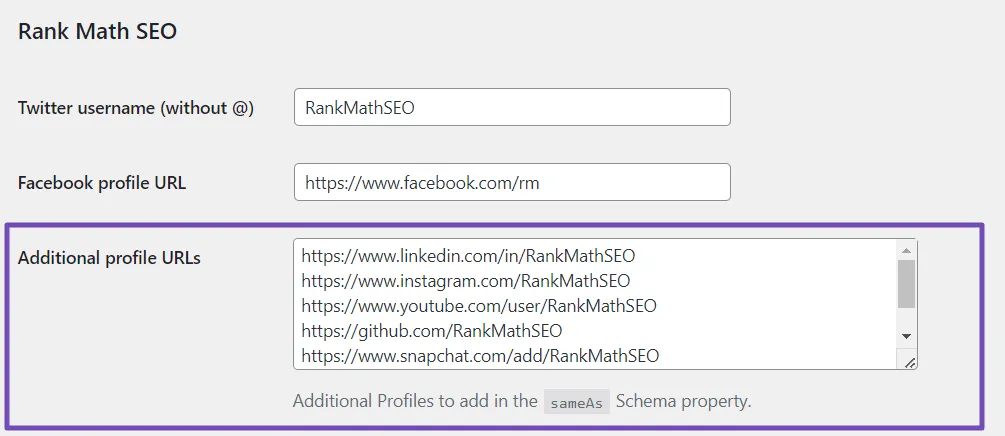
- Schema Overhaul: You must update your Organisation Schema to include sameAs links to entities representing your new position. If you are moving into “Sustainable Tech,” link your brand to the Greenhouse Gas Protocol or B-Corp entities.
- The ‘Entity De-Linking’ Strategy: Use the Search Console to identify which old keywords are still driving the most “Impressions” but low “Conversions.” These are your “Toxic Entities.” You must aggressively prune or rewrite content that anchors you to these old terms.
- Knowledge Graph Seeding: Start a PR campaign not for “Backlinks,” but for “Entity Citations.” Get mentioned in the same paragraph as the leaders in your new category. The goal is to train Google’s Knowledge Vault to see you as a peer to your new competitors.
Technical Checklist for Entity Migration
- Update JSON-LD on all core pages to reflect new knowsAbout and knowsLanguage properties.
- Update Wikidata and Wikipedia entries (if applicable) to reflect the strategic shift.
- Perform a “Citation Audit”: Ensure your NAPs (Name, Address, Phone) are consistent, but more importantly, ensure your “Category Tags” on Google Business Profile match your new position.
The Sunk Cost of a £10k Logo
I once audited a client in Belfast who was trying to move from “Local Printer” to “High-End Packaging Design Agency.”
They had spent £10,000 on a new logo and website, but they refused to stop answering the phone as “[Brand Name] Printing.”
They were terrified of losing the £50 business card orders that had kept the lights on for ten years. The result? Their new high-end leads would see the beautiful website, call the office, hear “Printing!”, and immediately hang up.
The cognitive dissonance was killing their conversion rate.
The most expensive mistake I see founders make is trying to live in two worlds at once. They want the new margins but are too sentimental to kill the old habits.
In our work, we consistently see that the brands that succeed in repositioning are those that have a “Day Zero” — a specific date where the old services are officially killed off.
If you don’t burn the boats, your team will always try to row back to the shore they know.
Overcoming Psychological Resistance to Change
The greatest barrier to brand repositioning isn’t the market; it’s the Endowment Effect within your own team.
Your employees, especially those with 5+ years of service, are emotionally invested in the “Old Way.” They see repositioning as a betrayal of the original mission.
The ‘Identity Crisis’ in Management
When you change your brand’s position, you are essentially telling your sales team that the “Value Proposition” they’ve used for years is now obsolete. This creates a vacuum of confidence. To combat this, you must treat your internal launch with the same rigour as your external marketing.
- The ‘Grieve and Leave’ Workshop: Conduct a session where team members can voice what they loved about the old brand. Acknowledge the “Legacy Value” before explicitly “retiring” it.
- Incentive Realignment: If you are repositioning from “High Volume” to “High Value,” but your sales team is still commissioned on “Total Leads,” they will continue to chase the old, low-value audience. You must update the reward structure to align with the new STP Marketing goals.
- The Internal Brand Bible: Create a living document (using a tool like Notion or Microsoft Loop) that defines the “New Focus.” This isn’t a static PDF; it’s a guide that includes “How we speak now” vs. “How we spoke then.”
We’ve observed that the speed of a successful repositioning is directly correlated to “Executive Decisiveness.” Companies that offer a “Transition Period” to serve both old and new markets simultaneously experience 40% higher staff turnover. Employees need a clear “Line in the Sand.” In our work at Inkbot Design, we recommend a “Symbolic Kill”—an event where old marketing collateral, signage, and even the “old language” are physically or digitally archived to signal that there is no going back.
The Pro-Repositioning Protocol
| Decision Point | The Wrong Way (Amateur) | The Right Way (Pro) | Why It Matters |
| Messaging Focus | “We still do X, but now we also do Y.” | “We solve Y problem for Z people.” | Ambiguity kills authority. |
| Visual Identity | Tweaking the existing logo. | Creating a new brand differentiation strategy. | Signals a clean break. |
| Content Strategy | Generalist advice. | Highly specific brand strategy insights. | Establishes a new entity authority. |
| Customer Feedback | Asking fans what they want. | Testing new offers on a cold audience. | Cold audiences don’t have bias. |
| SEO Focus | Ranking for old keywords. | Mapping new semantic entities. | AI needs clear classification. |
The Day Zero Protocol: An Operational Checklist for Launch
Repositioning fails when it “leaks” out slowly. To change perception, you need a “Pattern Interrupt”—a sudden, coordinated shift that forces the market to take notice. We call this the Day Zero Protocol.
The Pre-Launch ‘Blackout’ (48 Hours Prior)
- Step 1: Archive all legacy social media posts that directly contradict the new position. (Don’t delete; just hide).
- Step 2: Update all employee LinkedIn banners and headlines simultaneously. This creates a “Wall of Change” that signals seriousness to the network.
- Step 3: Deploy the new JSON-LD Schema across the entire site.
The Launch Day Sequence
- The ‘Why’ Manifesto: Release a long-form piece (video and text) from the CEO that explains why the old position was holding the company (and its customers) back.
- The Direct Outreach: Email your top 20% of clients individually before the general blast. Explain how this pivot benefits them specifically.
- The Paid Push: Launch a Search Engine Marketing (SEM) campaign targeting your own brand name with “Brand Name: The New Era of [New Category].” This ensures that anyone searching for your old self immediately sees the new narrative.
The ‘Day Zero’ Psychology
Market perception is “Sticky.” If you change your logo on Monday but your sales deck still uses the old fonts on Tuesday, you have failed the Cognitive Consistency Test. Humans (and AI) look for “Clusters of Evidence.” A successful Day Zero provides so much evidence of the new position that the old one becomes a “Legacy Memory” within 24 hours. This is why we recommend a 100% “Hard Switch” over a 6-month “Soft Rollout.”
The Verdict
Brand repositioning is not a coat of paint; it is a structural renovation.
To succeed in 2026, you must stop treating your brand as a set of static assets and start treating it as a dynamic entity that must be constantly re-classified by both humans and machines.
The contrarian truth remains: you cannot reach a new market while clinging to the sentiments of the old one.
Whether you are using a perceptual map to find a gap or restructuring your STP marketing to target a new segment, the goal is the same — distinction over consensus.
If you’re ready to stop “refreshing” and start dominating a new category, you need a partner who understands the technical and creative grit required to shift perception.
Explore Inkbot Design’s services and read our related posts to start your repositioning journey today.
FAQs
How can I manually check how AI perceives my brand?
The “Incognito AI Test” is the most effective manual audit. Open a fresh, logged-out session of ChatGPT or Gemini and ask: “Recommend the best company for [Your Target Service] that isn’t [Competitor A] or [Competitor B].” If the AI doesn’t mention you, ask: “What is [Your Brand Name] known for?” If the answer focuses on your old services, your Entity Salience is still anchored to the past. Repeat this monthly to track how your new content and PR efforts are shifting the model’s “Brand Memory.”
What is the difference between rebranding and repositioning?
Rebranding is primarily a visual and verbal update of a brand’s identity, such as a logo or colour palette. Repositioning is a strategic shift in a brand’s fundamental value proposition and competitive positioning to change customer perceptions and capture new segments.
Can a small business survive a major repositioning?
Small businesses are often better suited for repositioning than large corporations because they have less “brand baggage” and can pivot quickly. Success depends on the owner’s willingness to sacrifice short-term revenue from legacy clients to secure long-term growth in a more profitable category.
How long does a brand repositioning strategy take to show results?
Initial internal shifts can occur in weeks, but market-wide perception changes typically take 6 to 18 months. In the 2026 AI-driven landscape, this can be accelerated by aggressively updating your digital entity footprint and semantic content to influence generative search results.
What is the biggest risk in brand repositioning?
The primary risk is “Brand Blending,” where a company moves from a unique (but declining) position into a crowded market where they have no distinctive advantage. This often happens when businesses follow trends rather than identifying a unique “Blue Ocean” gap.
Should I change my logo when repositioning?
A logo change is not mandatory, but is highly recommended if the old mark is strongly associated with the previous, undesirable market position. A new visual identity acts as a “pattern interrupt,” signalling to the market that something fundamental has changed within the company.
How does AI impact brand repositioning in 2026?
AI systems like Google’s Gemini and Perplexity categorise your brand based on your digital “entity density.” Repositioning now requires a technical SEO strategy that aligns your brand name with new keywords and associations to ensure AI recommendations match your new goals.
Is it possible to reposition without losing existing customers?
It is possible, but rarely effective. Attempting to keep everyone happy usually results in a diluted message that fails to attract the new target audience. A successful pivot usually involves a 10-20% churn of legacy clients who no longer fit the new model.
What is a perceptual map in brand strategy?
A perceptual map is a visual tool for plotting a brand and its competitors along two axes representing key buying criteria, such as “Price” and “Innovation.” It helps identify “white space” in the market where a brand can move to avoid direct competition.
How do I measure the success of a repositioning campaign?
Success is measured by three key metrics: an increase in average lead value, a shift in “Brand Sentiment” in AI-generated search summaries, and an improvement in conversion rates within the new target demographic compared to the legacy base.