Brand Positioning Strategies: 5 Frameworks to Dominate Your Niche
If you try to be everything to everyone, you end up being nothing to anyone.
It is the oldest cliché in marketing because it is true.
Most small business owners treat branding and positioning as an afterthought—a logo here, a witty tagline there. They assume that if their product is “good,” the market will naturally notice. This is a dangerous fallacy. The market does not care about your product; the market cares about context.
Positioning is that context. It is the deliberate act of designing your company’s offering and image to occupy a distinct place in the target market’s mind.
Without it, you are just another commodity fighting a war on price—a war you will eventually lose to someone with deeper pockets or lower overheads.
This guide strips away the academic fluff. We are examining the mechanics of brand positioning strategies that work effectively for small- to medium-sized businesses (SMBs) in the real economy.
- Positioning creates context; decide who you serve, what unique value you offer, and why customers should believe you.
- Pick a clear lane; avoid "stuck in the middle" by sacrificing breadth for a defensible, specific position.
- Choose one of five frameworks: price, specialist quality, challenger, convenience, or values to differentiate effectively.
- Use JTBD and customer struggles to position for outcomes rather than demographics, emphasising emotional results.
- Defend position with distinctive brand assets, semantic consistency, and topical authority for both humans and AI.
What are Brand Positioning Strategies?
Brand positioning strategies are the tactical frameworks businesses use to differentiate themselves from competitors in consumers’ minds. It is not about changing the product itself, but rather how it is perceived.
At its core, a robust positioning strategy answers three specific questions:
- Who is this for? (Target Audience)
- What value does it provide that others do not? (Differentiation)
- Why should they believe you? (Reason to Believe)
If you cannot answer these clearly, you do not have a brand; you have a business card.
The “Stuck in the Middle” Trap
Michael Porter, the godfather of modern strategy, warned against getting “stuck in the middle.” This occurs when a brand attempts to be both high-quality and low-priced, or exclusive and mass-market, at the same time.
Consultant’s Note: In our audits at Inkbot Design, we frequently see SMBs claiming to offer “luxury service at affordable prices.” This breeds distrust. Consumers know that luxury is expensive. By claiming both, you achieve neither. You must pick a lane.
5 Brand Positioning Strategies for Small Businesses
There is no single “best” way to position a brand, but there are proven paths. The goal is to identify which attribute your competitors are ignoring and claim it for yourself.
1. Price-Based Positioning Strategy
This is the most dangerous game, yet it is also the most common entry point. You position your brand based on the economic value exchange.
- Economy (Low Price): You offer the most affordable option. This requires massive scale to remain profitable (e.g., Ryanair, Walmart). For an SMB, this is usually a suicide mission unless you have a proprietary manufacturing advantage.
- Premium (High Price): You use price as a signal of quality. A higher price point implies superiority.
The SMB Angle:
Avoid the “race to the bottom.” Instead, use Premium Pricing to signal expertise. If you are a consultant, charging double the market rate instantly positions you as a specialist rather than a generalist. It filters out bad clients and attracts those who value results over savings.
Real-World Example:
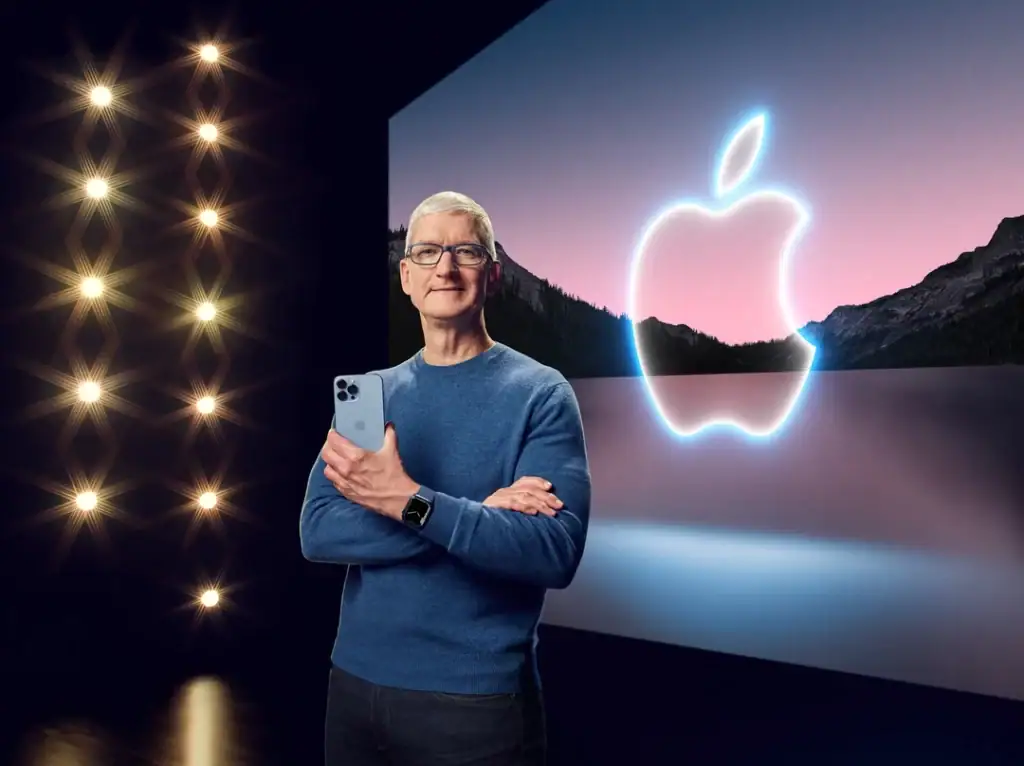
Apple never competes on price. They price their hardware significantly higher than functional equivalents (like Dell or HP). This pricing strategy reinforces their position as a lifestyle luxury brand rather than just a tech manufacturer.
2. Quality-Based Positioning (The “Specialist” Approach)
Beware: “Quality” is subjective. Everyone claims to have high quality. To make this work, you must define what quality means technically.
Does quality mean “durability” (it lasts 50 years)? Does it mean “precision” (accurate to 0.001mm)? Or does it mean “ingredients” (organic, non-GMO)?
For small businesses, Specialisation is the most effective form of quality positioning. Do not be a “Digital Marketing Agency.” Be a “PPC Agency for SaaS Companies.” Deep expertise is the ultimate proxy for quality.
- The Wrong Way: “We offer high-quality dental services.” (Generic).
- The Right Way: “We are the only clinic in London specialising exclusively in nervous patients.” (Specific).
3. Competitor-Based Positioning (The Challenger)
This strategy involves defining your brand directly in relation to a dominant competitor. You acknowledge the market leader and explain why you are the better alternative for a specific segment.
This is often called “De-positioning.” You frame the competitor’s strengths as weaknesses.
The “David vs. Goliath” Tactic:
If your competitor is huge, position them as slow, impersonal, and bureaucratic. Position yourself as agile, personal, and caring.
- Classic Example: Avis vs. Hertz.
In the 1960s, Hertz was the market leader. Avis couldn’t claim to be #1. So they positioned themselves as #2. Their famous tagline: “We’re number two. We try harder.” It turned their smaller size into a benefit (better service). - Modern Example: Liquid Death.
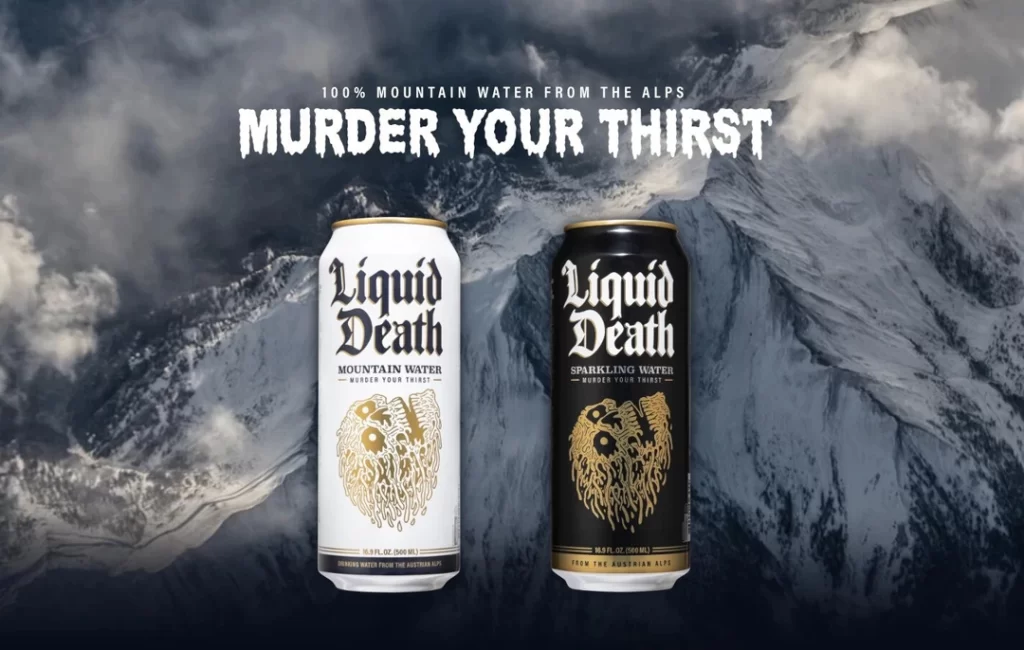
They positioned themselves against traditional “boring” water brands and sugary energy drinks. They used death metal aesthetics to sell… water. They positioned themselves against the category’s culture.
4. Convenience-Based Positioning
In 2026, friction is the enemy. If you can save the customer time or effort, that is a defensible position.
This is not just about location; it is about platform, speed, and ease of use.
- Implementation: Can you offer same-day delivery when competitors take three days? Can you offer a one-click checkout? Can you automate a manual process?
- The SMB Reality: You cannot out-logistics Amazon. However, you can offer mental convenience. For example, a “Done-For-You” service package positions you as the convenient solution compared to a competitor’s “Do-It-Yourself” tool.
5. Values-Based Positioning (Differentiation)
This is increasingly vital for Gen Z and Millennial consumers. It involves aligning your brand with a social, environmental, or ethical cause.
However, this carries risk. It must be authentic, or you will be accused of “Greenwashing” or “Woke-washing.”
The “Tribe” Concept:
You are not just selling a product; you are building a tribe of people who share your beliefs.
- Example: Patagonia.
Their position is environmental activism. When they ran the “Don’t Buy This Jacket” ad, it reinforced their position against consumerism, which ironically drove sales. - Example: Ben & Jerry’s.
They do not just sell ice cream; they sell social justice. Their positioning is so strong that it often overshadows the product itself.

The Jobs to be Done (JTBD) Framework: Positioning for Outcomes
In 2026, the most successful brands have stopped obsessing over demographics and started obsessing over “jobs.” Developed by Clayton Christensen, the Jobs-to-be-Done framework posits that customers don’t buy products; they “hire” them to do a specific job in their lives.
For example, a person doesn’t buy a $5,000 espresso machine because they are a “35-year-old male with high disposable income.” They hire it to “create a professional morning ritual that makes them feel prepared for a high-stakes corporate environment.”
How to apply JTBD to your positioning:
- Identify the Struggle: What is the specific moment of frustration your customer faces?
- Define the “New Me”: How does their life look after hiring your product?
- Identify the Barriers: What is stopping them from switching from their current “solution” (even if that solution is doing nothing)?
Scenario: A local gardening service shouldn’t position itself as “Reliable Lawn Care.” Using JTBD, they might position themselves as “The Saturday Morning Reclaimer”—hired by busy parents to remove the guilt of a messy garden without sacrificing family time. By focusing on the emotional outcome rather than the functional task, they move from a commodity to a lifestyle essential.
B2B vs B2C: Adapting Your Position for the Decision-Maker
Positioning a boutique skincare brand (B2C) requires a vastly different emotional map than positioning a cybersecurity firm for small businesses (B2B). In 2026, the lines are blurring, but the fundamental drivers remain distinct.
The B2B Positioning Matrix
In B2B, you aren’t just positioning for one person; you are positioning for a Decision-Making Unit (DMU). Your strategy must satisfy the “User” (who wants ease of use), the “Champion” (who wants to look good to their boss), and the “Buyer” (who wants ROI and low risk).
| Factor | B2C Positioning Focus | B2B Positioning Focus |
| Primary Driver | Self-expression & Identity | Risk Mitigation & Growth |
| Decision Speed | Impulse or short-term | Rational and long-term |
| Key Entity | The Individual | The Organisation / Industry |
| Example Brand | Lush (Sensory Experience) | HubSpot (Efficiency & Integration) |
The “Safe Choice” Position
For SMBs selling to other businesses, the strongest position is often the Category Expert. While a massive firm like Salesforce positions itself as a “Customer Company,” a small B2B firm should position itself as the “Specialist for [Niche].” In a volatile economy, B2B buyers gravitate toward brands that offer the “shortest path to a guaranteed result.”
The Strategic Framework: How to Build Your Position
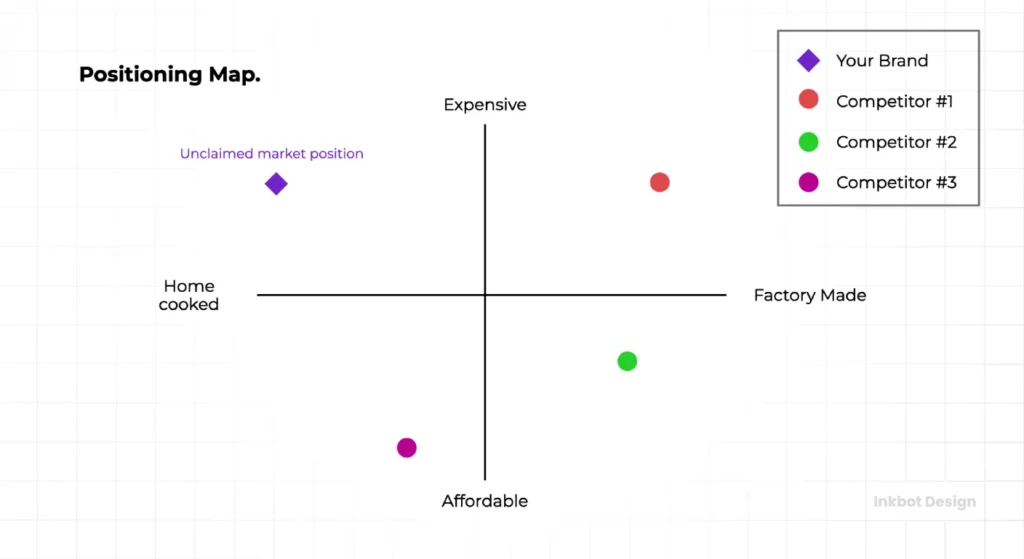
Understanding the strategies is one thing; executing them is another. At Inkbot Design, we use a variation of the Perceptual Mapping technique to find gaps for our clients.
Step 1: Analysing the Competitive Landscape
Before you can move to a new position, you must honestly assess your current standing. A positioning audit isn’t just a look at your website; it’s a deep dive into market perception.
The Audit Checklist:
- Search Sentiment Analysis: Use social listening tools to see what words are most commonly associated with your brand name. Are they the words you want?
- The “Logo Swap” Test: Take your top three marketing assets. Swap your logo for your competitor’s. If the copy still makes sense, you have zero differentiation.
- Customer Interview (The “Magic Wand” Question): Ask ten customers: “If you could change one thing about our industry with a magic wand, what would it be?” Their answers reveal the “white space” for your positioning.
- Points of Parity (POP) Check: Ensure you meet the minimum requirements to even be in the race. If you position yourself as “Luxury” but your packaging feels cheap, your Points of Difference won’t matter.
- LLM Perception Test: Query AI systems (like ChatGPT or Claude) with: “What is [Your Brand] known for compared to [Competitor]?” This reveals how your brand is being categorised in the 2026 information ecosystem.
Step 2: The “Points of Difference” (POD)
What is the one thing you can claim that no one else can?
- Is it a proprietary technology?
- Is it a unique founder story?
- Is it a specific process?
Warning: Do not rely on “Customer Service” as your POD. Good service is an operational requirement, not a strategic differentiator. Your competitor can hire better staff tomorrow and nullify your advantage.
Step 3: Crafting the Positioning Statement
This is an internal document, not a tagline. It guides your marketing decisions.
The Formula:
For [Target Audience], [Brand Name] is the [Frame of Reference] that delivers [Benefit/Point of Difference] because [Reason to Believe].
Example for a B2B Software Company:
“For remote-first creative agencies, FlowChart Pro is the project management tool that eliminates email chains entirely, because it integrates natively with Slack and Zoom.“
See the difference? It is not “the best software for business.” It is surgical.
The “Anti-Positioning” Trap: What to Avoid
In our work developing brand identities, we often have to “un-learn” bad habits that clients have picked up from generic business advice.
1. The “Better” Trap
Stop trying to be “better.” “Better” is a comparison; “Different” is a position. If you say you have “better coffee,” you invite the customer to critique you. If you say you have “the strongest coffee in the world” (Death Wish Coffee), you have created a category.
2. The Focus Group Fallacy
Do not ask your customers where you should position yourself. They do not know. As Henry Ford (allegedly) said, “If I had asked people what they wanted, they would have said faster horses.” Positioning requires leadership, not consensus.
3. Ignoring the “Cost of Retrieval”
If your positioning is complex, you lose.
- Bad: “We are a synergy-driven solutions provider for enterprise architecture optimisation.”
- Good: “We fix broken IT infrastructure.”
The lower the cognitive load (or Cost of Retrieval) for your audience to understand what you do, the higher your conversion rate.
Defending Your Position: Salience and Distinctiveness
In 2026, being “positioned” correctly in a customer’s mind isn’t enough; you must also be Salient. Byron Sharp, author of How Brands Grow, argues that “Mental Availability” (being thought of in a buying situation) is more important than “Brand Love.”
The Power of Distinctive Brand Assets (DBAs)
To defend your position against copycats and AI-generated alternatives, you must invest in Distinctive Brand Assets. These are non-brand-name elements that trigger the brand in the consumer’s mind:
- Colours: Think Tiffany & Co. Blue or Monzo Coral.
- Shapes/Logos: The Apple silhouette.
- Audio: The Netflix “Ta-dum” sound.
If a competitor can copy your “Positioning Statement” but cannot copy your “Vibe” or “Visual Signature,” you have a defensible moat. For small businesses, this means being ruthlessly consistent. If your position is “High-Tech Minimalist,” every invoice, email, and social post must scream “Minimalist.” Any deviation creates Cognitive Dissonance, weakening your market position.
The State of Brand Positioning in 2026
The landscape has shifted. The strategies that worked in 2020 are starting to show signs of strain.
The Death of “Aspirational” Branding
For decades, brands positioned themselves as “aspirational”—showing consumers the perfect life they could have. In 2026, amidst economic volatility and digital fatigue, consumers are cynical. They crave Authenticity and Transparency.
Brands that position themselves as “flawed but real” are winning. The “Building in Public” movement, where founders share their revenue, failures, and struggles, is a powerful positioning tool for SMBs. It creates a human connection that faceless corporations cannot mimic.
The Rise of “Algorithmic Branding”
We are now positioning for algorithms as much as for humans. Large Language Models (LLMs) and search engines favour entities with high “Topical Authority.”
If you position yourself as a generalist, the AI overlooks you. If you position yourself as the semantic authority on a narrow topic (e.g., “Sustainable Bamboo Packaging for Cosmetics”), you become the primary answer in the new search landscape.
Positioning for AI Agents and Answer Engines
In 2026, many customers won’t find you via a list of blue links; they will find you through an AI agent or a voice-activated assistant. These systems rely on Entity Relationships.
To ensure your positioning is “read” correctly by AI:
- Be the “Primary Source”: Publish original data, proprietary frameworks, and unique case studies. AI rewards the “originator” of a concept.
- Clear Categorisation: Don’t be “A business helper.” Be “The #1 Brand Identity Studio for Sustainable Fashion in London.” Specificity is the fuel of modern discovery.
- Semantic Consistency: Use the same terminology across all platforms (LinkedIn, your website, guest posts). If you change your “core benefit” every month, the algorithms will fail to categorise you, and you will disappear from “Best of” AI recommendations.
Category Design: Why Being “Different” Isn’t Enough
While traditional positioning focuses on finding a place within an existing market, Category Design (popularised by Christopher Lochhead) is the art of creating an entirely new category. When you are the creator of a category, you own 76% of the market cap in that space.
Consider Tesla. They didn’t just position themselves as a “Better Electric Car.” They designed the category of “High-Performance Sustainable Transport.” By the time traditional manufacturers like Ford caught up, Tesla had already defined the standards of the category.
Step-by-Step Category Creation for SMBs:
- Name the Problem: Give a name to a problem your customers didn’t know they had (e.g., “The Subscription Fatigue” or “Legacy Software Bloat”).
- Claim the Solution: Position your brand as the only logical answer to that specific problem.
- Define the Category Name: Instead of “Accountant,” perhaps you are a “Fractional Tax Strategist for E-commerce.”
By creating a new category, you bypass the “Price vs Quality” debate entirely. You are no longer compared to others because there are no others—yet.
Comparing Positioning Approaches
Here is a quick reference to illustrate how a generic approach falls short compared to a strategic one.
| Strategy Type | Core Goal | Ideal For | Risk Factor | 2026 Example |
| Category Design | Create a new market | Innovators & Disruptors | High market education cost | Notion (The “All-in-one” Workspace) |
| Challenger (De-positioning) | Attack the leader’s flaw | Aggressive SMBs | Legal/PR backlash | Liquid Death (Water vs Soda culture) |
| Jobs to be Done | Solve a specific struggle | Service businesses | Narrow market reach | Zoom (The “Frictionless Meeting” job) |
| Values-Based | Build a “Tribe” | Lifestyle/D2C brands | Accusations of inauthenticity | Patagonia (Environmental Activism) |
| Hyper-Specialisation | Own a tiny niche | Consultants/Agencies | Niche becomes too small | Inkbot Design (Strategy-led Branding) |
The Verdict
Brand positioning strategies are not a marketing exercise; they are a business strategy.
If you are a small business, you do not have the budget to shout your way to market share. You must whisper the right words to the right people.
- Stop being generic. “Quality” and “Service” are not strategies.
- Make a sacrifice. Decide who you are not for.
- Check your ego. Your brand is a tool to help customers solve a problem, not a monument to your own ego.
If you are struggling to define your position or feel that your visual identity is undermining your strategy, we can help. At Inkbot Design, we specialise in translating complex business goals into clear, profitable brand identities.
Next Step:
Are you ready to stop competing on price? Request a Quote today, and let’s define exactly where you stand.
Frequently Asked Questions (FAQ)
How does “Social Proof” affect brand positioning?
In 2026, social proof (reviews, case studies, user-generated content) is the “evidence” for your positioning. If you position yourself as “The most reliable,” but your Trustpilot is 3.2 stars, your positioning is a lie. Real-world data now overrides marketing copy in the eyes of both users and AI.
What is the “First-Mover Advantage” in positioning?
It is the advantage gained by the first significant occupant of a market segment. However, in modern strategy, the “Fast Follower” often wins by seeing the First Mover’s mistakes and positioning themselves as the “Perfected” version.
Can positioning help with employee recruitment?
Absolutely. This is called Employer Branding. A strong market position attracts talent who believe in that mission. If you position yourself as “The World’s Most Innovative Lab,” you will attract inventors, not bureaucrats.
What is “Brand Dilution”?
This happens when a brand moves into too many categories or uses too many positioning strategies, weakening the core message. It is the result of the “Stuck in the Middle” trap.
Is positioning different for a local business vs a global one?
Yes. Local positioning relies heavily on Geo-specific Authority and community trust. A local plumber shouldn’t try to be “The World’s Best”; they should be “The most trusted emergency plumber in Manchester.”
How do I know if my positioning is working?
You know it is working when:
You stop competing on price.
Your ideal clients find you, rather than you having to chase them.
You can easily explain what you do in one sentence.
Your competitors try to copy you.
What is “Repositioning”?
Repositioning is the process of changing a brand’s market perception. This is necessary when a brand becomes outdated or sales decline. Examples include Old Spice (from grandpa’s aftershave to a cool/viral sensation) and Burberry (from a gangwear association back to luxury).
Can I position my brand based on my founder’s personality?
Yes, this is referred to as a “Founder-led Brand” or “Personal Branding.” It is highly effective for SMBs and consultants because it is unique and hard to copy. However, it makes the business harder to sell later since the value is tied to an individual.
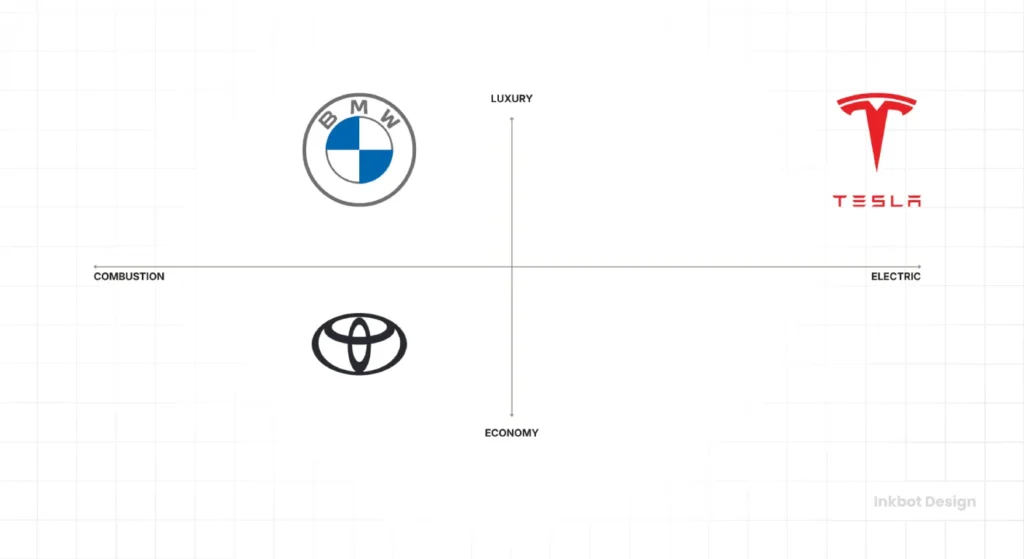
What is a Perceptual Map?
A brand positioning map is a visual chart that plots brands along two axes (e.g., Price and Innovation). It helps identify “white space”—areas where no competitors are currently operating, offering an opportunity for you to enter.
Why is niche positioning better for small businesses?
Niches allow you to focus limited resources. It is cheaper to market to “Left-handed golfers in the UK” than “Golfers.” You can charge a premium for specialisation, and word of mouth spreads faster within tight-knit communities.