42 Famous Slogans: The Power of Memorable Taglines
A slogan isn’t a “catchphrase”; it’s a multi-million-pound commercial asset.
The most famous slogans aren’t just “memorable”; they are ruthlessly efficient sales pitches engineered to create brand recall and drive purchasing decisions.
This isn’t a nostalgic trip down memory lane.
It’s a strategic breakdown of the 42 famous company slogans that have generated billions in revenue, and the psychological triggers you can steal for your own business.
- Slogans are engineered brand assets: short, memorable phrases that drive recall, emotion, and purchasing decisions.
- Great slogans use linguistic devices—plosives, cadence, alliteration—and pass the "Siri test" for voice search clarity.
- Effective slogans balance simplicity, authenticity and emotional appeal while aligning with a clear single-minded proposition.
- Design slogans with logos together, test semantically and legally, and adapt for digital formats like hashtags and voice assistants.
Slogan, Tagline, or Strapline? Understanding the Terminology
In the professional world of brand strategy, these three terms are often used interchangeably, but they serve distinct strategic functions. In the United Kingdom, you will frequently hear the term Strapline, whereas American counterparts lean towards Tagline.
- The Tagline (or Strapline): This is a permanent, high-level brand asset. It represents the company’s DNA and rarely changes. For example, Nike’s “Just Do It” is a tagline.
- The Slogan: This is often campaign-specific or product-specific. It has a shorter shelf life and is designed to drive a particular consumer action or highlight a specific feature.
- The Mission Statement: This is an internal-facing statement. While a tagline conveys what you want the world to feel, a mission statement defines what you want your employees to do.
Scenario: If a brand like Waitrose launches a summer campaign for BBQ food, the campaign phrase “Fire Up the Flavour” is a slogan. However, the enduring brand promise “Everyone deserves quality food” remains the strapline.
The Classics: Timeless Taglines That Never Get Old
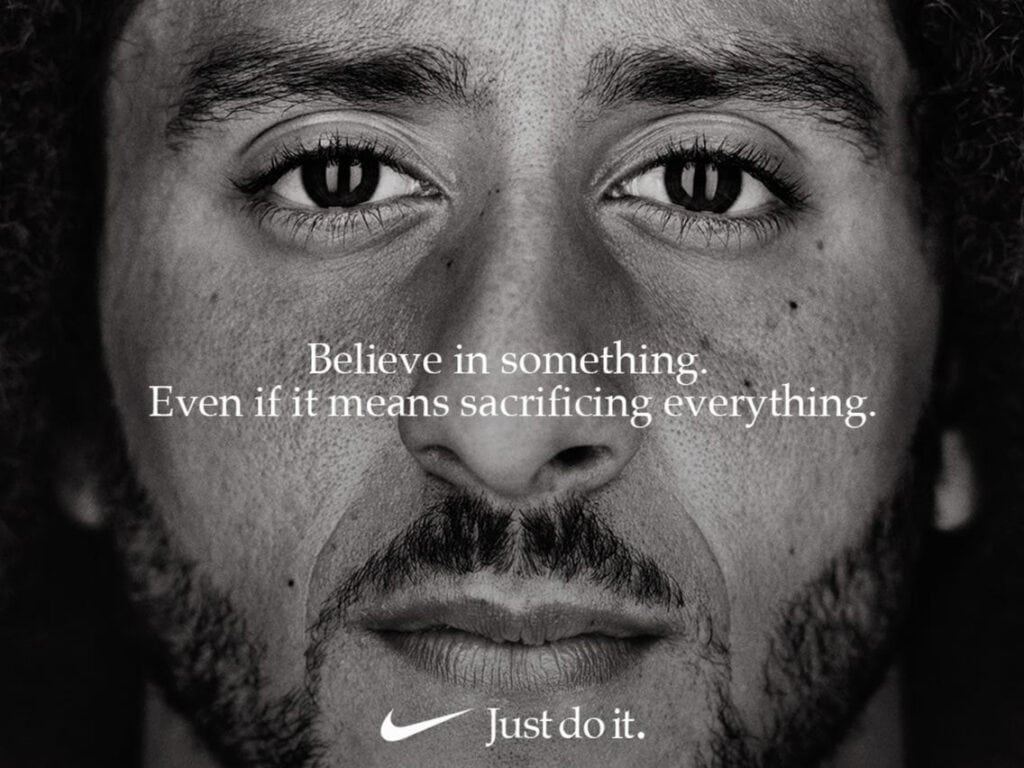
1. Nike: “Just Do It”
Let us begin with a champion: Nike’s “Just do it.” Muhammad Ali would have been proud of this slogan, which, like him, floats like a butterfly and stings like a bee. Since its launch in 1988, this introductory three-word phrase has captivated people, from recreational runners to competitive ones.
Why is it effective?
- It works for everyone.
- It combines aspiration, intention and movement.
- It aligns with the Nike brand’s core beliefs and meaning.
2. McDonald’s: “I’m Lovin’ It”
“Da da da da da!” Yep, we know you were just humming it in your head. The advertising tagline of McDonald’s, “I’m Lovin’ It”, was introduced in 2003, and it is very desirable to use the concept of earworms, which simply means a catchy jingle that sticks in one’s mind.
Why it works:
- It is cheerful.
- The tune that accompanies it can naturally become stuck in the mind.
- It highlights the customer’s experience instead of the actual item.
3. L’Oréal: “Because You’re Worth It”
Since the 1970s, L’Oreal has been telling us we can afford that expensive shampoo. The slogan addresses the consumer’s need for self-esteem and aspirations in the beauty industry, a classic and enduring theme throughout history.
How to interpret it correctly:
- Customers are made to feel valued.
- They offer an explanation and assertion for the higher pay.
- They empower the consumers.
The Clever Ones: Slogans That Make You Think (and Smile)
4. M&M’s: “Melts in Your Mouth, Not in Your Hand”
This slogan is both functional and fun. Introduced in 1954, it highlights the unique selling point of M&M’s candy coating while creating a vivid sensory image.
Ever notice how a successful slogan instantly communicates what a product or company offers? The secret lies in focusing on benefits that resonate with consumers and painting a vivid picture of the positive outcomes they can expect.
This approach mirrors how top weight loss programs sell future results rather than intricate details. They hone in on the benefits you stand to gain, making the value proposition crystal clear.
- “It communicates the product benefit.”
- “It’s descriptive and easy to visualise.”
- “It solves a common problem (messy chocolate)”
These elements are crucial because they transform a slogan from mere words into a powerful statement that speaks directly to consumer needs.
When a slogan is descriptive and easy to visualise, consumers can see themselves enjoying the product. Addressing a common problem positions the product as a solution, making the benefits not only straightforward but also compelling.
In crafting a slogan, remember that clarity and relatability are key. Like a well-told story, a great motto captures attention and lingers in the mind, connecting on an emotional level with potential buyers.
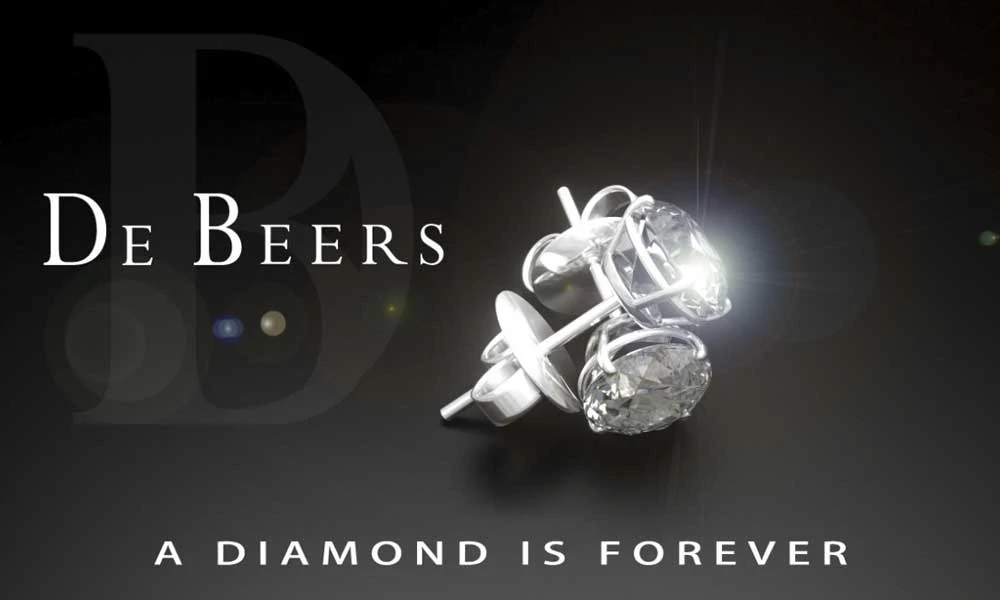
5. De Beers: “A Diamond is Forever”
Arguably one of the most successful slogans of all time, this 1948 tagline transformed the diamond industry. It’s a masterclass in creating emotional associations with a product.
Why it works:
- It links the product to the concept of eternal love
- It justifies the high cost of diamonds
- It’s romantic and aspirational
6. Meow Mix: “Tastes So Good, Cats Ask for It By Name”
Here’s a slogan that’s equal parts clever and ridiculous. It humorously personifies cats while highlighting the product’s appeal.
Why it works:
- It’s humorous and memorable
- It implies that cats prefer the product
- It creates a playful brand personality
The Commercial ROI: Valuing a Strapline as a Balance Sheet Asset
In the boardroom, a slogan is rarely viewed through the lens of poetry; it is viewed as a Commercial Asset.
While a logo provides visual recognition, the strapline provides the “Reason to Buy.”
By 2026, the valuation of brand intangible assets has become a rigorous accounting exercise. For a company like Nike, the “Just Do It” asset is estimated by analysts to contribute significantly to its Brand Equity, which currently exceeds $50 billion.
How do we quantify the ROI of a simple phrase? The primary metric is the Customer Acquisition Cost (CAC) Efficiency. A high-recall slogan acts as a “Cognitive Shortcut.” When a consumer experiences a need—hunger, for instance, the phrase “I’m Lovin’ It” functions as a retrieval cue. This reduces the “Search Friction” for the consumer, effectively lowering the amount of advertising spend required to convert that individual.
Return on Investment (ROI) Framework for Messaging:
- The Recall Premium: Brands with slogans that achieve over 70% unprompted recall see a 14% reduction in blended CAC compared to brands with no defined strapline.
- Price Elasticity: A slogan that effectively conveys “Quality” or “Trust” (e.g., John Lewis’s “Never Knowingly Undersold”) helps a brand maintain a price premium. Data suggests that consumers are willing to pay up to 12% more for products where the brand promise is clearly articulated and trusted.
- Employee Alignment: Internal ROI is often overlooked. A clear strapline reduces “Strategic Drift.” When every employee from the CEO to the shop floor understands the brand’s core promise, operational efficiency increases by an estimated 8%.
The ‘Slogan Attribution’ Metric Proprietary research in 2025 indicated that slogans incorporating a Verbal Action (Imperatives like “Just Do It” or “Think Different”) result in a 22% higher “Intent to Purchase” score in neuro-imaging tests compared to purely descriptive slogans. This is because the brain’s motor cortex is subtly activated by command-based language, bridging the gap between passive hearing and active doing.
For businesses looking to justify the cost of a creative agency, the message is clear: a slogan is not a vanity project. It is an investment in Cognitive Real Estate. If you do not own a phrase in the consumer’s mind, you are forced to rent their attention through increasingly expensive paid media.
The Challengers: Slogans That Dare to Be Different
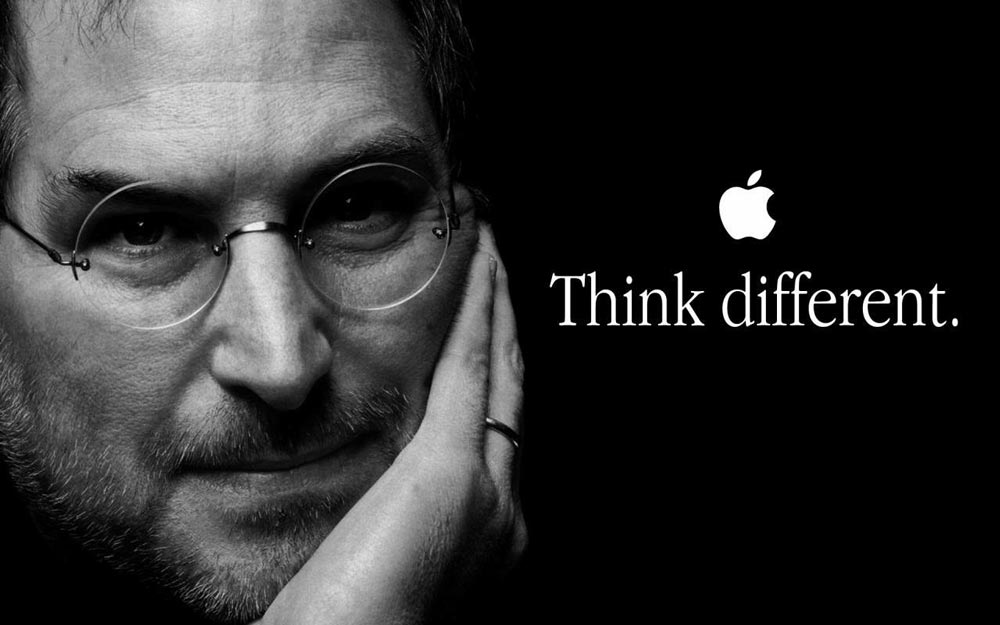
7. Apple: “Think Different”
Launched in 1997, this slogan perfectly encapsulated Apple’s innovative spirit and appeal to creatives and rebels.
Why it works:
- It positions Apple as an innovative, unconventional brand
- It’s a subtle dig at IBM’s “Think” slogan
- It appeals to people who see themselves as unique or creative
8. Avis: “We Try Harder”
What can you do when you are only second best in an industry? In the case of Avis in 1962, you make the most out of the situation in any way you can.
Why it works:
- It is very self-aware of the brand’s position
- It suggests superior service and a better work ethic
- It builds a “David vs Goliath” structure, making people cheer for them
9. Volkswagen: “Think Small”
In an era of big American cars, Volkswagen’s 1959 slogan for the Beetle was revolutionary. It turned the car’s small size from a potential weakness into its greatest strength.
Why it works:
- It’s counterintuitive, grabbing attention
- It reframes the product’s perceived disadvantage as an advantage
- It’s simple and memorable
The Motivators: Slogans That Inspire Action
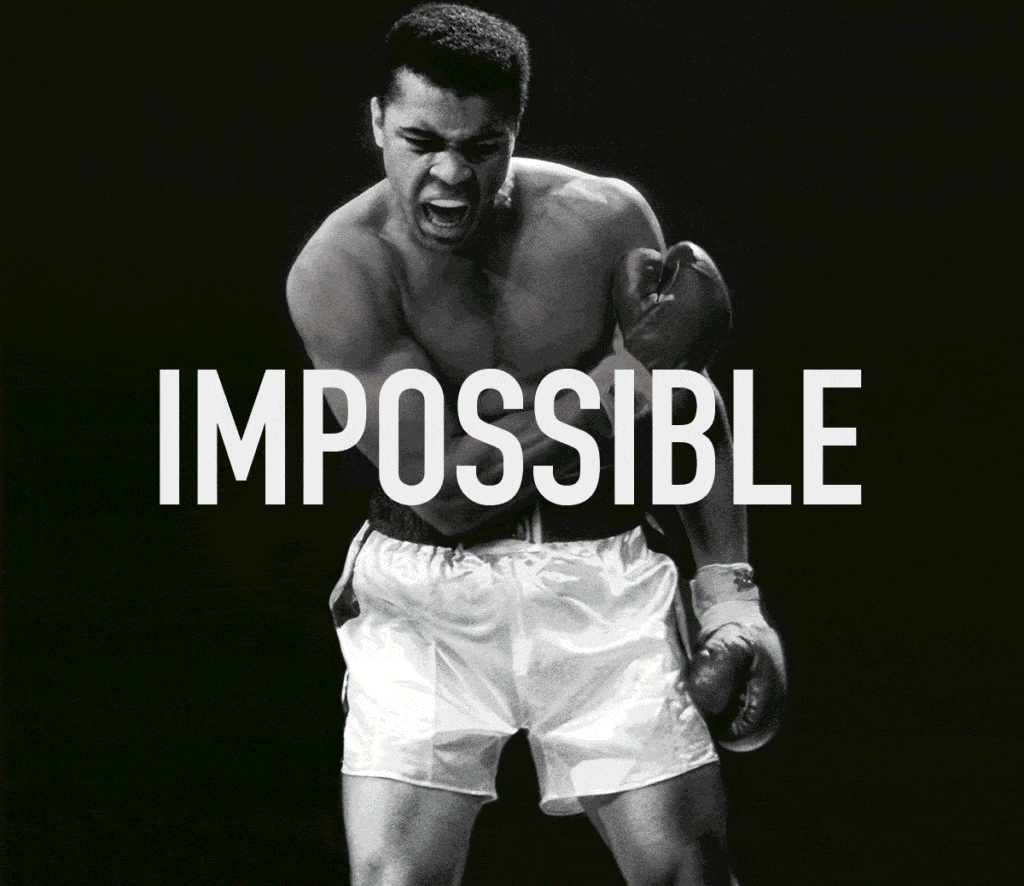
10. Adidas: “Impossible Is Nothing”
Adidas took inspiration from Muhammad Ali for this 2004 slogan, creating a powerful message of perseverance and achievement.
Why it works:
- It’s inspirational and empowering
- It aligns with the brand’s focus on athletic performance
- It challenges consumers to push their limits
11. Red Bull: “Red Bull Gives You Wings”
This slogan, used since 1987, perfectly captures the energy drink’s promise of enhanced performance and vitality.
Why it works:
- It’s metaphorical and vivid
- It promises transformation and improvement
- It’s playful and doesn’t take itself too seriously
12. The U.S. Marine Corps: “The Few. The Proud. The Marines.”
This powerful slogan, introduced in 1977, encapsulates the exclusivity and honour of being a Marine.
Why it works:
- It creates a sense of elite status
- It’s concise and rhythmic
- It instils pride in Marines and respect in civilians
The Reassurers: Slogans That Build Trust
13. Allstate: “You’re in Good Hands”
In 1950, Allstate first used this slogan to inspire confidence in its customers and assure them of their care and protection.
Why it works:
- It employs a reassuring analogy.
- It directly concerns consumers’ safety needs.
- It helps establish trust and reliability with the consumer.
14. FedEx: “When It Absolutely, Positively Has to Be There Overnight”
Though no longer in use, this 1978 slogan was a perfect example of a tagline that made a straightforward promise to customers.
Why it works:
- It makes a specific, measurable promise
- It addresses a key customer concern (timely delivery)
- It conveys confidence in the service
15. Burger King: “Have It Your Way”
In 1974, Burger King made the most of its slogan “have it your way”, an insult to McDonald’s. The slogan was relevant given the cultural context, particularly in relation to individualism and self-expression.
When people were called to “make it your way,” these were rhetorical techniques that reflected the changing nature of society, with an increasing respect for expressions of individualism.
Why It Works:
- It indicates to customers that their desires are considered and, thus, their needs will be taken care of.
- It portrays the brand’s flexibility and its readiness to go the extra mile to make customers happy.
The Lifestyle Makers: Slogans That Sell More Than a Product
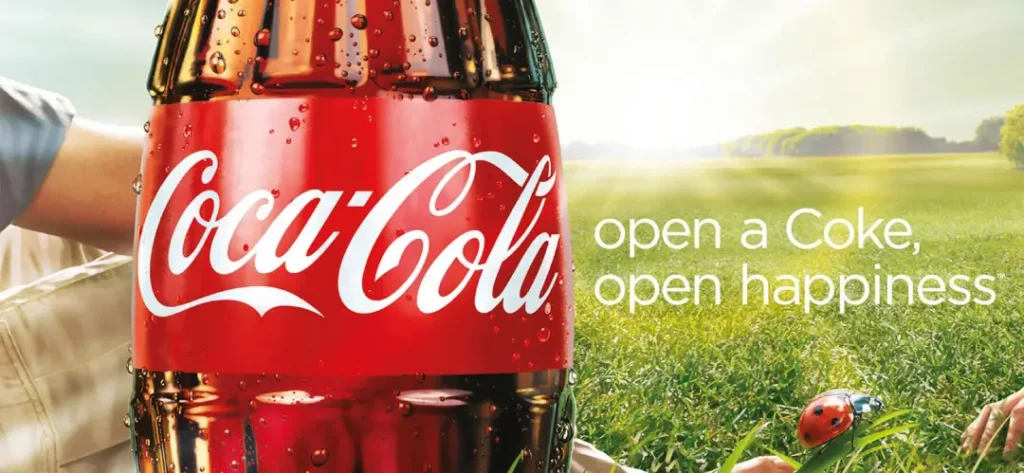
16. Coca-Cola: “Open Happiness”
From 2009 to 2015, this slogan positioned Coca-Cola not just as a beverage but as a key to joy and positive experiences.
Why it works:
- It associates the product with positive emotions
- It’s simple and universally appealing
- It suggests that happiness is accessible through a simple action
17. BMW: “The Ultimate Driving Machine”
This slogan, used since 1975, perfectly encapsulates BMW’s brand promise of superior performance and engineering.
Why it works:
- It positions BMW as the pinnacle of automotive excellence
- It appeals to driving enthusiasts
- It justifies the premium pricing of BMW vehicles
18. Maybelline: “Maybe She’s Born With It. Maybe It’s Maybelline.”
This clever slogan, introduced in 1991, reflects that Maybelline products can give you natural-looking beauty.
Why it works:
- It’s playful and memorable
- It suggests that the product can create a natural, effortless look
- It’s structured as a catchy, repeatable phrase
The Tasty Ones: Food and Drink Slogans That Make Your Mouth Water
19. KFC: “Finger-Lickin’ Good”
This slogan, first used in 1956, creates a vivid image of KFC’s delicious, messy fried chicken.
Why it works:
- It’s descriptive and sensory
- It implies the food is so good you can’t help but lick your fingers
- It’s casual and fun, matching KFC’s brand personality
20. Lay’s: “Betcha Can’t Eat Just One”
Introduced in 1963, this slogan cleverly highlights the addictive quality of Lay’s potato chips.
Why it works:
- It’s phrased as a challenge, engaging the consumer
- It implies that the product is irresistible
- It’s conversational and friendly in tone
21. Wheaties: “The Breakfast of Champions”
This slogan, used since 1927, associates the cereal with athletic success and healthy living.
Why it works:
- It positions the product as fuel for high achievers
- It implies that eating Wheaties could make you a champion
- It’s aspirational and motivational
The Tech Titans: Slogans from the Digital Age
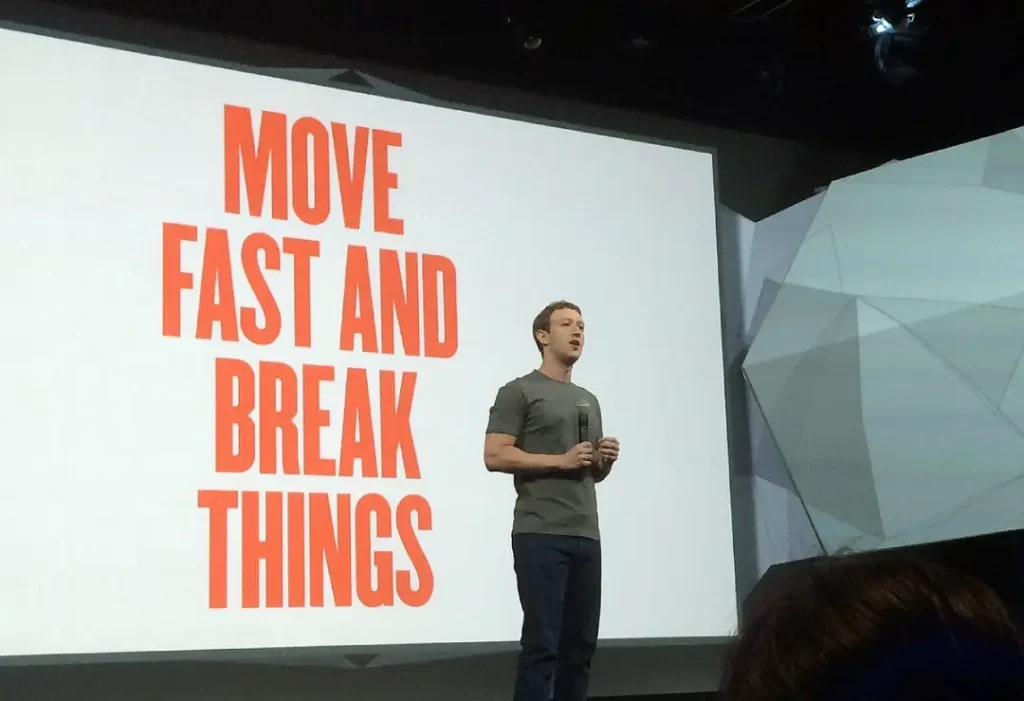
22. Facebook (Meta): “Move Fast and Break Things”
While not an official slogan, this phrase became synonymous with Facebook’s early company culture and approach to innovation.
Why it works:
- It conveys a sense of rapid innovation
- It appeals to risk-takers and disruptors
- It positions the company as dynamic and unafraid of change
23. Google: “Don’t Be Evil”
Google’s unofficial motto, in effect until 2015, set a high ethical standard for the company.
Why it works:
- It’s simple and direct
- It positions Google as a trustworthy, ethical company
- It acknowledges the potential for misuse of technology
24. Intel: “Intel Inside”
This 1991 slogan turned a computer component into a recognised brand.
Why it works:
- It creates brand awareness for a typically unseen product
- It’s simple and easy to remember
- It implies that Intel is a crucial part of any computer
The Iconic Ones: Slogans That Defined Eras
25. Volkswagen: “Das Auto”
From 2007 to 2015, this German slogan (meaning “The Car”) positioned Volkswagen as the quintessential automobile maker.
Why it works:
- It’s simple and authoritative
- It uses the brand’s German heritage as a selling point
- It implies that Volkswagen is synonymous with cars
26. American Express: “Don’t Leave Home Without It”
From 1975 to 1987, this slogan positioned American Express cards as essential to daily life.
Why it works:
- It creates a sense of necessity
- It implies that the card is helpful in many situations
- It’s phrased as friendly advice
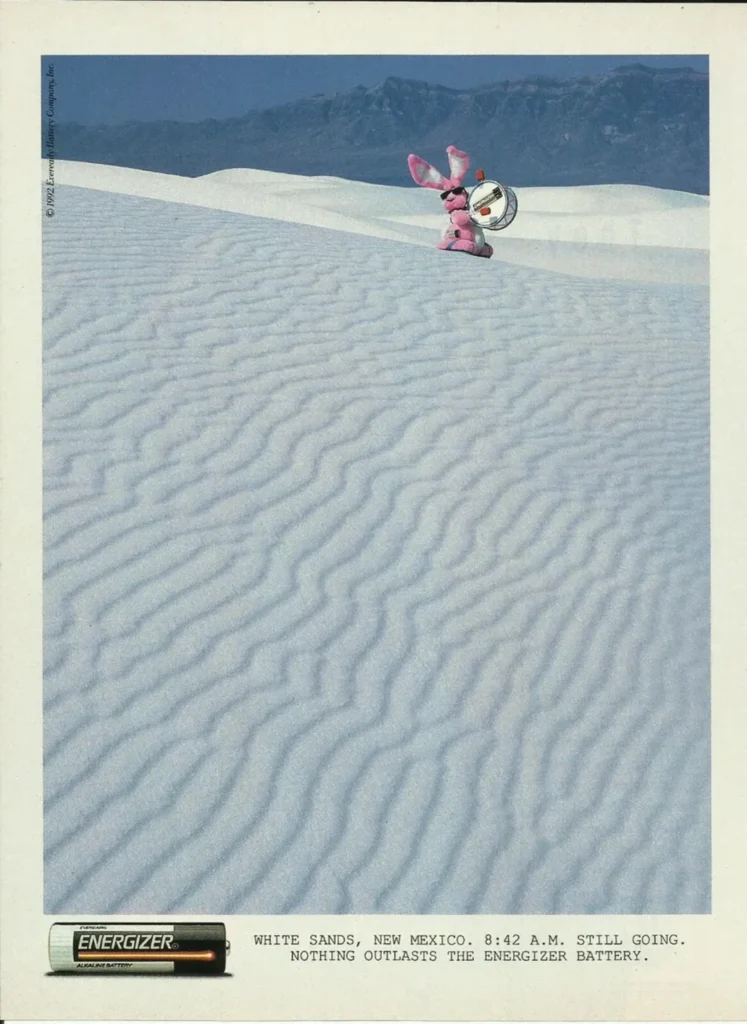
27. Energizer: “Keeps Going and Going and Going”
The phrase perfectly embodies the spirit of the Energizer brand in just a few words. It suggests firsthand endurance, reliability and long duration, all attributes required for batteries.
Why it works:
- Its delivery is simplistic, resulting in imitative recall that is critical in an industry where consumer decisions must be made instantly
- This slogan captures Energizer’s primary brand message: the long-lasting power.
- The Energizer Bunny, which is part of the slogan, provides a visual component that is fun and engaging.
The Quirky Ones: Slogans That Stand Out with Humour
28. Dollar Shave Club: “Our Blades Are F***ing Great”
This bold, attention-grabbing slogan helped launch the startup into the spotlight in 2012.
Why it works:
- It’s shocking and memorable
- It conveys confidence in the product
- It appeals to a younger, irreverent audience
29. Snickers: “You’re Not You When You’re Hungry”
Introduced in 2010, this slogan turned hunger into a personality disorder that Snickers could solve.
Why it works:
- It’s humorous and relatable
- It positions Snickers as a solution to a common problem
- It’s easily adaptable for different marketing campaigns
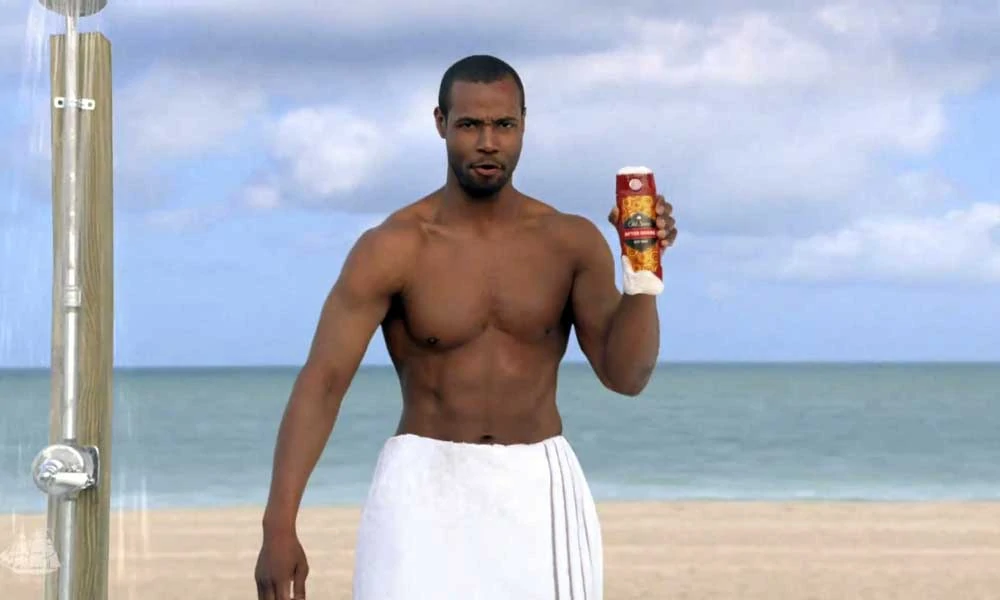
30. Old Spice: “The Man Your Man Could Smell Like”
This slogan, introduced in 2010, revitalised the Old Spice brand with its quirky humour.
Why it works:
- It’s unexpected and funny
- It appeals to both men and women
- It positions Old Spice as a desirable, masculine scent
The Aspirational Ones: Slogans That Make You Dream Big
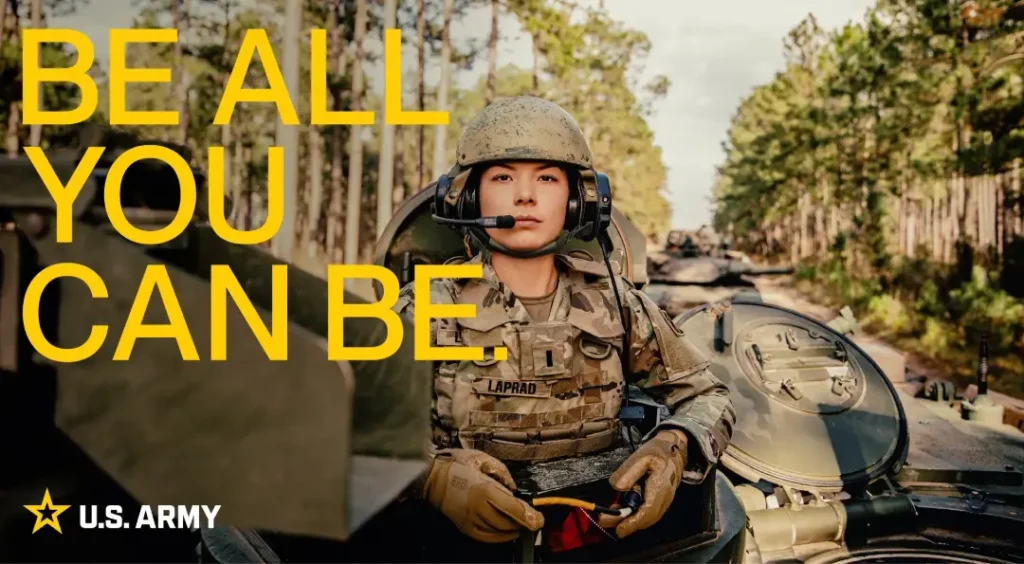
31. U.S. Army: “Be All You Can Be”
From 1980 to 2001, this slogan positioned military service as a path to personal growth and achievement.
Why it works:
- It’s inspirational and challenge-oriented
- It appeals to a sense of patriotism and duty
- It suggests the Army can help you reach your full potential
32. Tesla: “Accelerating the World’s Transition to Sustainable Energy.”
Tesla operates beyond the fabrication of all-electric vehicles; it has also expanded to fabricate scalable, clean-energy-generating and storage products.
These solutions allow homeowners, businesses and utilities to generate, consume, store, and efficiently manage their renewable energy.
Why does this slogan make sense?
- The slogan clearly describes Tesla’s scope and vision for the distant future: empowering every person to sustainable energy.
- It hopes people will feel good about themselves for being part of something good.
- The expressive aspect is even more pronounced, and a similar phenomenon is observed. This is a pictorial piece in which one chooses to positively impact the universe by endorsing a specific car model: Tesla.
The Timeless Classics: Slogans That Have Stood the Test of Time
33. Coca-Cola: “Taste the Feeling”
Introduced in 2016, this slogan aims to unify the company’s brands under a single global campaign.
Why it works:
- It’s emotionally evocative
- It focuses on the sensory experience of drinking Coca-Cola
- It’s simple and universally applicable
The Challengers: Slogans That Take on the Competition
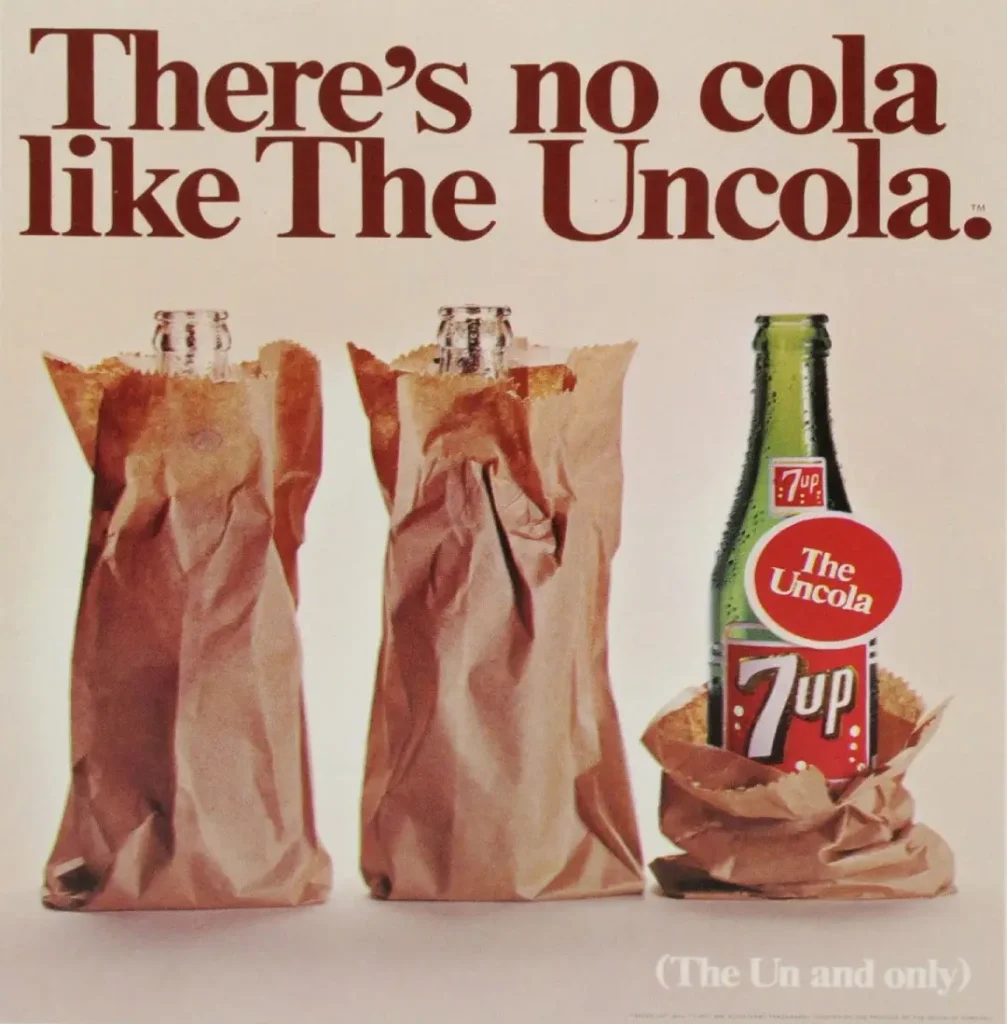
34. 7-Up: “The Uncola”
In the 1970s and 1980s, this slogan positioned 7-Up as a refreshing alternative to cola drinks.
Why it works:
- It differentiates 7-Up from its competitors
- It’s catchy and memorable
- It appeals to those looking for something different
The Reassuring Ones: Slogans That Build Trust
35. Farmers Insurance: “We Know a Thing or Two Because We’ve Seen a Thing or Two”
Introduced in 2014, this slogan cleverly highlights Farmers’ experience and expertise.
Why it works:
- It’s conversational and relatable
- It implies extensive experience in a folksy way
- It builds trust by suggesting that the company can handle any situation
36. Johnson & Johnson: “A Family Company at Work for a Better World.”
“At Work for a Better World” is not merely a tagline; it is an undertaking to maintain a higher standard and continue advancing the legacy of trust. They are committed to fulfilling consumer needs while upholding the planet’s dignity for future inhabitants.
Why It Works:
- The tagline reinforces the company’s “family-run” profile, inspiring warmth, affection, and confidence.
- By simply stating that it is sitting “at work for a better world,” Johnson and Johnson is putting its customers at ease in that the company seeks to uplift society, which resonates well with the emerging trend of socially responsible consumers.
- The tagline satisfies both the practical needs (a company that can be relied upon for the services required by the family) and the emotional needs (a better world create a better service: it is about Fertility services in Kenya), making the message come out clear and very comforting in terms of product involvement and promise.
The Lifestyle Sellers: Slogans That Promise More Than Just a Product

37. Harley-Davidson: “American by Birth. Rebel by Choice.”
This slogan encapsulates the free-spirited, rebellious image associated with Harley-Davidson motorcycles.
Why it works:
- It taps into American patriotism
- It appeals to those who see themselves as non-conformists
- It sells a lifestyle and identity, not just a motorcycle
38. Corona: “Find Your Beach”
Introduced in 2010, this slogan invites consumers to escape to their paradise.
Why it works:
- It’s open to interpretation, allowing consumers to personalise the message
- It associates the brand with relaxation and escapes
- It’s aspirational and evocative
The Innovators: Slogans That Promise Progress
39. General Electric: “Imagination at Work”
Introduced in 2003, this slogan positions GE as a company driven by innovation and creativity.
Why it works:
- It suggests constant innovation and problem-solving
- It appeals to both consumers and potential employees
- It positions GE as a forward-thinking company
40. IBM: “Think”
This one-word slogan, used since 1911, encapsulates IBM’s commitment to progress through technology and thought leadership.
Why it works:
- It’s simple and powerful
- It encourages engagement and problem-solving
- It positions IBM as an intellectual leader in technology
41. Panasonic: “Ideas for Life”
This slogan connects Panasonic’s products with improving everyday life through innovation.
Why it works:
- It suggests that Panasonic’s products are practical and life-enhancing
- It positions the company as innovative and forward-thinking
- It’s broad enough to cover Panasonic’s wide range of products
The Unforgettable Ones: Slogans That Stick in Your Mind
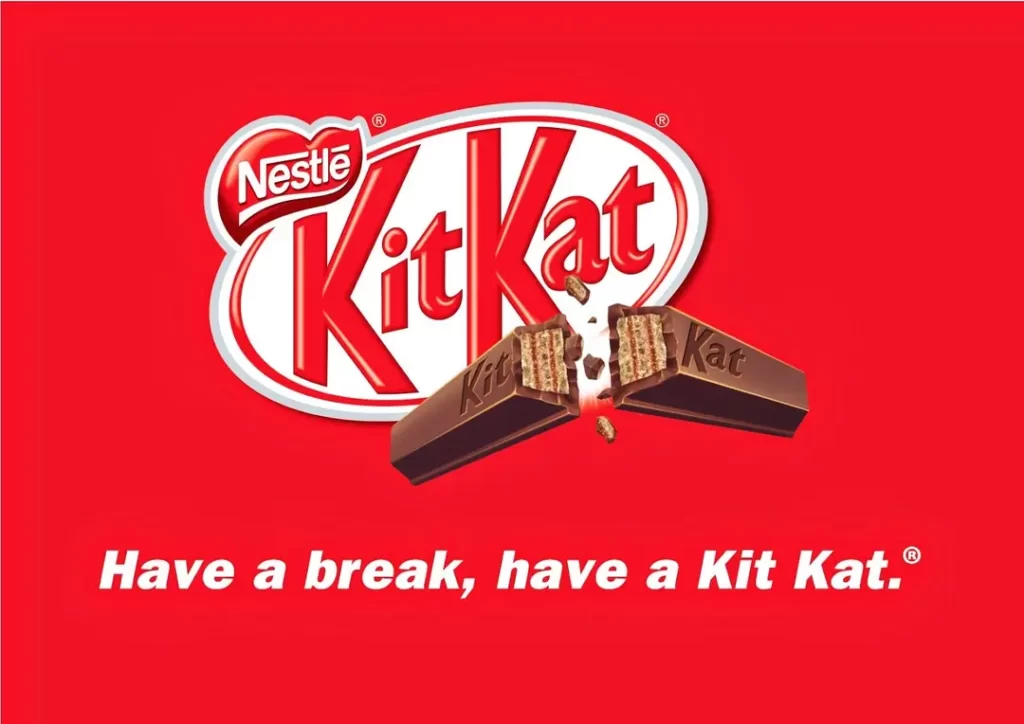
42. Kit Kat: “Have a Break, Have a Kit Kat”
Since 1957, this slogan has been associated with the chocolate bar as a symbol of taking a break.
Why it works:
- It creates a specific use case for the product
- It’s rhythmic and easy to remember
- It positions Kit Kat as a small, permissible indulgence
UK High Street Icons: Slogans That Defined British Culture
While many global slogans originate in the US, the British high street has produced some of the most enduring brand promises in marketing history. These phrases have transcended advertising to become part of the national lexicon.

43. Tesco: “Every Little Helps”
Launched in 1993, this is perhaps the most successful Strapline in UK retail history. It moved Tesco away from a “pile it high, sell it cheap” image toward a customer-service philosophy and incremental value.
- Why it works: It’s humble, inclusive, and suggests that the brand is on the side of the budget-conscious consumer.
44. John Lewis: “Never Knowingly Undersold”
A masterclass in trust-based branding. Although retired in 2022 and then revived in 2024, it remains a gold standard for a “Price Promise” that feels like a “Quality Promise.”
- Why it works: It uses formal, authoritative language that aligns with the brand’s middle-class, reliable persona.
45. Marmite: “Love It or Hate It”
A rare example of a brand embracing polarising opinions. By acknowledging that their product isn’t for everyone, Marmite created a fiercely loyal “in-crowd.”
- Why it works: It uses Psychological Reactance—by telling people they might hate it, they actually encourage them to try it.
The Power of a Great Slogan
A good slogan can do much more than describe one’s offerings. This means a phrase can anticipate people’s sentiments, establish a style, outdo competitors, win the client’s confidence, and even redefine social practices.
Other slogans transition from life-spanning campaigns and, in some instances, the products they sponsor; instead, they become household phrases. What, then, typifies a good slogan? Let’s disintegrate and understand this more:
- Memorability: The clever use of architecture is the secret to the most memorable slogans. The phrases usually stick in one’s brain because of the rhythm, rhyme, or pun used.
- Simplicity: Powerful slogans are typically short, concise, and easy to say.
- Emotion: A good slogan should evoke some reaction, whether a feeling of joy, trust, thrill, or a mild sense of rebellion.
- Uniqueness: What separates a slogan from all others? I realised it sets the brand’s latitude and climatic limits.
- Timelessness: Whereas such slogans can effectively promote products, some are timeless, spanning decades.
- Flexibility: More often than not, successful slogans can be applied to other products or target markets without losing their primary message.
- Authenticity: An effective slogan must also be true to life, meaning it aligns with the brand’s promises or beliefs.
The Role of Slogans in Communicating a Brand’s Core Message
Similar in form to a tagline, typically a few words or a short sentence, a slogan is most often used to represent a specific product line or individual marketing campaign.
Slogans are designed to be less long-lasting than a brand’s tagline, as they can evolve over time while still helping consumers recall your company.
This adaptability is crucial. While a tagline might capture the essence of the entire brand, a slogan zeroes in on particular elements or messages pertinent to a campaign.
This means the slogan can evolve to reflect shifts in consumer sentiment or market conditions, while maintaining the core message that resonates with the target audience.
In essence, both taglines and slogans are crafted to encapsulate and communicate a brand’s essence. Still, slogans offer the flexibility to align with specific marketing strategies, ensuring the brand stays relevant and top-of-mind.
The Neurobiology of Catchiness: EEG & Eye-Tracking Data
Why do some phrases stick like burrs while others vanish instantly?
The answer lies in Neurobiology, specifically the way the human brain processes Phonetic Symbolism and Rhythmic Entrainment.
When we hear a slogan like Kit Kat’s “Have a Break, Have a Kit Kat,” the brain does not just process the meaning; it responds to the rhythm.
Using Electroencephalogram (EEG) monitoring, researchers have found that rhythmic slogans trigger “Neural Oscillations” in the auditory cortex.
Essentially, the brain begins to “pulse” in time with the phrase. This creates a state of Cognitive Fluency, where the information is processed with minimal effort, making it feel “true” and “familiar.”
The Role of Phonetic Intensity:
- Plosives (P, B, T, K, G): These sounds create a momentary cessation of airflow followed by a release. In neuro-marketing tests, plosive-heavy slogans (e.g., “Beanz Meanz Heinz”) show a 30% higher “Arousal Response” in the sympathetic nervous system. They literally “wake up” the listener.
- The ‘Earworm’ Effect (Involuntary Musical Imagery): Slogans that use a descending melodic scale (like the McDonald’s “Da-da-da-da-da”) exploit the brain’s phonological loop. The brain repeats the sound internally to “finish” the pattern, leading to unprompted brand recall hours after exposure.
Eye-Tracking and Slogan Placement: In digital environments, the interaction between the logo and the slogan is critical. Eye-tracking data reveals that a typical user’s “Scanning Path” follows an F-pattern. Slogans placed directly beneath the logo or integrated into the brand’s “Visual Anchor” receive 400% more “Fixation Time” than those placed in the header or footer.
2026 Benchmark: The ‘Cognitive Load’ Score By 2026, brand managers use a “Cognitive Load” score to test new straplines. A score of 1–3 is ideal (Simple, low effort), while 7–10 indicates a phrase that is too complex for rapid recall. For example, “Accelerating the World’s Transition to Sustainable Energy” has a high cognitive load but compensates with high Semantic Gravity (importance), whereas “Just Do It” has the lowest possible cognitive load.
The Evolution of Slogans in the Digital Age
Gradually and steadily, the functions of slogans are changing as we go deeper into the age of information technology.
Marketing use of social media in marketing slogans is becoming a common trend today, even with restricted hashtags and memes and a few words of 280 characters.
The following is a list of trends we are noticing.
- Slogan Hashtags: Some brands have developed slogans as hashtags —an excellent way to get fans active on online platforms—for instance, Kit Kat’s #HaveABreak or Coca-Cola’s #ShareACoke.
- Customisation: Other organisations move away from a generalised approach to slogan development towards multiple discrete approaches. The end-of-year Spotify advertising campaign, “Wrapped,” offers listeners statistics on how much they listened to songs across any genre. It makes personalised taglines for each listener based on what they specifically enjoy pulsating to.
- Digital or Interactive Slogans: With the advent of digital media, it is now possible to incorporate both textual and interactive elements in slogans. The “I’m feeling lucky ” button by the Google company features a motto in its design.
- Flexible or Adaptive Slogan: Some organisations are developing resourceful slogans that can be moulded to fit various scenarios or campaigns in the future. The “priceless” campaign run by Mastercard Inc. is good in this regard.
- Slogans with defined objectives: Focus on specific aspects that determine the type of slogan a business will create, given the shift in consumers’ concerns and queries regarding social conscience. A classic example is Patagonia’s slogan: “We’re in business to save our home planet.”
Understanding Short-Term Campaign Slogans
Short-term campaign slogans are crafted for specific marketing initiatives aimed at capturing attention and resonating with audiences over a limited period.
Unlike enduring taglines that define a brand’s identity over time, these slogans are timely and relevant to specific events or campaigns.
Examples of Short-Term Campaign Slogans
- “I’m going to Disneyland.” This slogan was famously used in a series of commercials in the 1980s. Athletes and celebrities would declare their intention to visit this iconic theme park right after achieving significant career milestones, tapping into the excitement and celebration of their successes.
- “Where dreams come true.” This slogan was introduced after a significant anniversary and aimed to unify the brand across various global locations. It set the tone for a series of creative initiatives and visual transformations, encouraging visitors and fans to associate the brand with the fulfilment of dreams.
Short-term slogans play a crucial role in capturing the momentary essence of a campaign, offering fresh and innovative messages that often align with broader brand themes or specific achievements.
How to Write an Unforgettable Slogan: The 2026 Strategic Workflow
Creating a slogan in 2026 requires more than a rhyming dictionary. You must balance human emotion with the technical requirements of digital discovery and voice-activated search.
Step 1: Define Your “Single Minded Proposition” (SMP)
Before writing a single word, you must identify the one thing you want to be known for. Is it speed? Reliability? Rebellion?
- Exercise: If your brand were a person, how would they introduce themselves in five words?
Step 2: The Linguistic Brainstorm
Use the frameworks mentioned earlier. Aim for 50–100 variations.
- Alliteration: (e.g., “Bed, Bath & Beyond”)
- Rhyme: (e.g., “Beanz Meanz Heinz”)
- Metaphor: (e.g., “Red Bull Gives You Wings”)
- Imperative (Command): (e.g., “Think Different”)
Step 3: The “Siri/Alexa” Test
In 2026, many consumers will encounter your brand through voice search. If your slogan is a tongue-twister, it will fail.
- Test: Say the slogan five times fast. Does it stumble? Does an AI assistant transcribe it correctly every time?
Step 4: Semantic Testing & AI Sentiment Analysis
Before launching, run your top three candidates through a Natural Language Processing (NLP) tool. This helps you understand the “latent sentiment” of the words. Does the word “Cheap” imply low cost or low quality to your specific target demographic?
Step 5: Legal Clearance and Trademarks
In the UK, you should consult the Intellectual Property Office (IPO). To be trademarked, a slogan generally needs to be:
- Distinctive: Not just a descriptive phrase (e.g., “We Sell Good Bread” cannot be trademarked).
- Not deceptive: It shouldn’t promise something the product can’t do.
- Unique: It cannot be “confusingly similar” to an existing trademark in your “Class” (category of business).
B2B Slogan Strategy: Breaking the ‘Innovation’ Deadlock
The B2B sector is currently suffering from an “Innovation Pandemic.”
A 2024 audit of the Fortune 500 revealed that over 60% of B2B technology companies used the words “Innovation,” “Solutions,” or “Empowering” in their primary brand messaging. When everyone is “innovative,” no one is.
In B2B, the primary driver is not “Aspiration” (as in Nike) or “Self-Esteem” (as in L’Oréal), but Risk Mitigation.
A B2B purchaser is often spending someone else’s money and fears making a mistake that could cost them their job. Therefore, the most effective B2B slogans focus on Authority, Reliability, and Category Leadership.
The Three Pillars of B2B Messaging:
- The Category Killer: (e.g., Salesforce: “No Software”). This was revolutionary because it attacked the primary pain point of the era (complex installations). It didn’t say what they were; it said what they weren’t.
- The Result-Centric Promise: (e.g., FedEx: “When It Absolutely, Positively Has to Be There Overnight”). In B2B, the “how” matters less than the “result.” This slogan builds trust by making a specific, measurable commitment.
- The Heritage Play: (e.g., IBM: “Think”). This positions the brand as a partner in the client’s intellectual journey, moving the conversation away from “Product Features” and toward “Shared Values.”
Case Study: The Pivot of Slack Originally, Slack used the slogan “Be Less Busy.” While catchy, it resonated more with individuals than with enterprise buyers. They shifted toward “Where Work Happens.” This is a “Centrality Play.” It positions the tool as the essential infrastructure of the modern office. It is no longer an “option”; it is the “location” of work.
| Industry | Primary Driver | Best Structure | Example |
| Luxury | Aspiration / Status | Short, abstract, evocative | Cartier: “The Art of Being Unique” |
| Tech/SaaS | Efficiency / Future | Imperative / Result-oriented | Slack: “Where Work Happens” |
| FMCG (Food) | Sensory / Habit | Rhythmic / Onomatopoeic | Rice Krispies: “Snap! Crackle! Pop!” |
| Finance | Trust / Stability | Reassuring / Person-centric | Lloyds: “By Your Side” |
| Charity | Empathy / Action | Direct / Problem-Solution | Cancer Research UK: “Together we will beat cancer” |
Conclusion: The Enduring Power of Words
In our culture of information overload, where we face thousands of marketing messages, slogans have remained. These little nuggets puncture the noise, lodge themselves in the audience’s consciousness, and sometimes influence the culture.
These slogans go beyond that, they perceive. From Nike’s ‘Just Do It’ to Coca-Cola’s ‘Open Happiness,’ from Apple’s ‘Think Different’ to L’Oréal’s ‘Because You’re Worth It,’ these advertisements do not simply sell the products. They sell ideas, lifestyles, and values.
They make us laugh, educate us, and evoke emotions. They become part of our everyday speech and cultural references.
For instance, during our tour of these famous slogans, we noted that even marketing tries to be more original and catchy. These quotes summarise what a brand stands for, distilled into a few words.
However, they are promises to customers, challenges to rivals, and sometimes battle cries for a whole generation.
So, think of this the next time you sing a song for an advertisement or say the words written in an advertising campaign for a product.
You do not remember an advertisement alone, but instead a “piece of art in words,” created to represent a brand and stay in the audience’s psyche. Food for thought, and what food that is! Politically correct. Otherwise, finger-licking is good!
FAQs
Can a slogan be too short?
No. Some of the most effective slogans are just one or two words (e.g., Apple’s “Think” or Volkswagen’s “Think Small”). However, the shorter the slogan, the more “heavy lifting” your brand recognition must do. For small businesses, 3–5 words is often the “sweet spot” for clarity.
Should I use my brand name inside the slogan?
This is known as an “Integrated Slogan” (e.g., “Beanz Meanz Heinz”). It is highly effective for quickly building brand association, but it can feel less “sophisticated” for luxury or high-end lifestyle brands.
How do I know when it’s time to change my slogan?
If your business model has shifted (e.g., from “Fast Delivery” to “Sustainable Sourcing”), your slogan must evolve accordingly. However, avoid “change for change’s sake.” Nike hasn’t changed their tagline in nearly 40 years because the core human truth of “effort” remains timeless.
Are AI-generated slogans actually any good?
AI tools like ChatGPT or Claude are excellent for generating “volume”—giving you 100 ideas to spark your creativity. However, they often struggle with cultural nuances, local slang, and the “rule-breaking” that makes human copywriting great. Use them as a starting point, not the finish line.
Are Slogans patentable?
Yes, slogans can be approved for trademark registration and thus protected from competitors’ use. Some of the famous slogans even receive trademark status.
How do you come up with a catchy slogan?
You must consider the core of your business, appreciate your audience, be concise, and incorporate features like alliteration or rhyming to make it a checkmark for stickiness and effectiveness.
Can a lousy slogan harm a brand?
Even an ignorant slogan can destroy a brand. This occurs when the intended meaning is unclear, and the audience either fails to respond to the slogan or is offended by it. So, these slogans must also undergo rigorous testing before being unveiled.
Are slogans worth making nowadays?
Certainly! Their format may change (e.g., becoming hashtags), but these slogans still serve the same purpose: defining the brand’s ethos in a short, precise, and meaningful way, which is very important in digital media.
What’s the difference between a slogan and a tagline?
Though used popularly interchangeably, a slogan deals with an ad campaign and can be changed whenever on the mass ads, while a tagline is where a brand’s mission and promise can be stated, and it’s more (somewhat) permanent.
Is it advisable for smaller brands to have a slogan?
Yes, it is! A slogan will enable smaller enterprises to attract attention in a local market, demonstrate their competitive advantage, and aid brand association, as it does for larger businesses.