The $100M Brand Question: Logomark or Logotype?
Have you ever noticed how a symbol can identify some of the world’s most recognisable brands, while others rely on distinctive text? That’s the logomark versus logotype debate in action – and getting it right could be the difference between a forgettable business and a brand worth millions.
- Logomarks deliver universal recognition and scale well in tiny digital contexts like app icons and favicons.
- Logotypes build name recognition quickly and communicate personality through carefully chosen typography.
- Combination marks offer flexibility—use symbol, wordmark or both depending on context and scale.
- Choose strategically: test at 16x16, consider industry, accessibility, growth plans and long term scalability.
Understanding the Fundamentals: Logomark vs Logotype
Let’s clear something up straight away. When most people talk about a “logo,” they refer to one of two distinct design approaches: a logomark or a logotype.
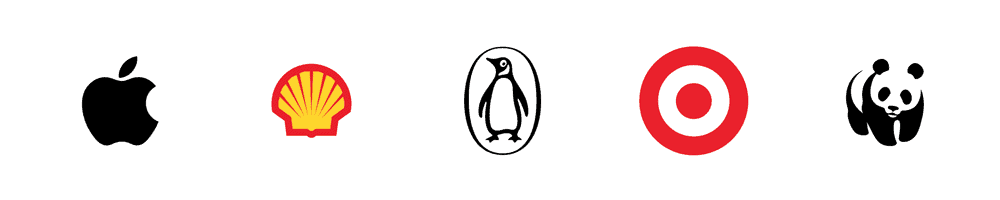
A logomark is a graphic symbol or icon representing your brand without text. Think about the Apple apple, the Nike swoosh, or the Target… target. These visual elements stand alone and are instantly recognisable without the company name attached.
A logotype (a wordmark) is a text-based logo that primarily features the company name styled in a distinctive typeface or custom lettering. Coca-Cola, Google, and Disney are perfect examples – their names are their logos.

The decision between these two approaches isn’t just aesthetic – it’s strategic. And for businesses aiming to build a $100M brand, this choice carries significant weight.
The Strategic Power of Logomarks
Logomarks excels in creating instant visual recognition across cultures and languages. These symbol-based designs offer several powerful advantages:
Universal Recognition
The beauty of a symbol is its ability to transcend language barriers. McDonald’s golden arches are recognised worldwide, regardless of whether you can read the company name. This universal quality makes logomarks particularly valuable for global brands.
Space Efficiency
In our digital world, where logo space is often limited (think app icons, favicons, social media profile pictures), a well-designed logomark can maintain its clarity and impact even at tiny sizes.
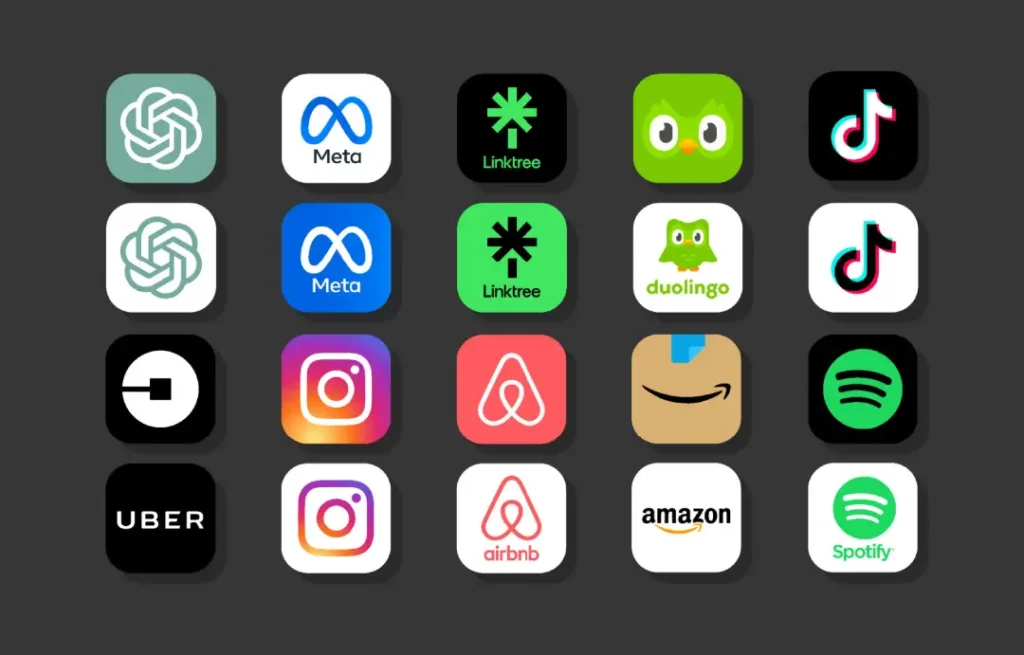
I checked 50 top-performing apps across the App Store – 37 used logomarks rather than text-based approaches. That’s not coincidental.
Brand Evolution Flexibility
Companies often find it easier to evolve and modernise a symbol over time while maintaining brand recognition. Shell’s shell symbol has been refined over the years, yet remains instantly identifiable.
Memorable Visual Impact
Research shows that humans process images 60,000 times faster than text. A distinctive logomark creates an immediate visual connection that can be remembered after a brief exposure.
The Science of Recognition: Why Our Brains Prefer Certain Marks
To build a brand with lasting impact, we must look beyond “looking good” and understand the Gestalt Principles of Perception. These psychological laws describe how the human eye organises visual elements into groups or unified wholes.
When choosing between a logomark and a logotype, you are essentially deciding which cognitive shortcut you want your customer to take.
- Closure: This is why the FedEx arrow or the WWF panda works so well. The brain “fills in” the gaps, creating a more engaging and memorable experience.
- Continuity: Logotypes like Coca-Cola use flowing lines to lead the eye, suggesting movement and heritage.
- Proximity and Similarity: Essential for combination marks like Adidas, where the three stripes are perceived as a single entity (a mountain) due to their alignment.
When should you choose a symbol over a word? If your brand values are abstract—such as “connectivity,” “growth,” or “security”—a geometric logomark can convey them more quickly than text ever could. For instance, a circle suggests community and eternity, while a triangle suggests direction and power.
When Logotypes Take Centre Stage
Don’t count out the mighty logotype. Text-based logos harness the power of typography and verbal identity, offering unique advantages:
Name Recognition Building
Logotypes put your company name front and centre for new brands, reinforcing it with every exposure. This helps build name recognition more quickly during your early growth stages.
Personality Through Typography
The specific characteristics of letterforms communicate personality traits. Angular, bold typography suggests strength and reliability, while flowing scripts evoke elegance and creativity.
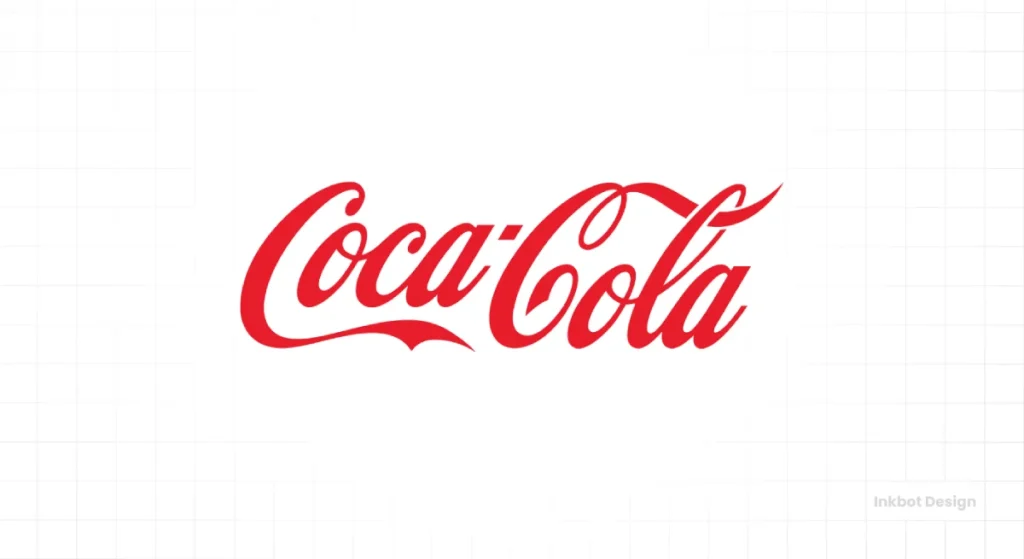
Coca-Cola’s flowing script isn’t just recognisable – it communicates heritage, authenticity, and a certain timeless quality that’s core to its brand identity.
Clarity and Directness
There’s no ambiguity with a well-executed logotype – customers immediately know who you are. This directness can be particularly valuable when establishing your brand quickly.
Distinctive Word Shapes
Our brains don’t just process letters individually – they recognise the overall shape created by words. Distinctive logotypes create unique “word shapes” that become instantly recognisable before the letters are even read.
The Hybrid Approach: Combination Marks
Why choose when you can have both? Combination marks pair a symbol with text, offering flexibility and recognition benefits.
Brands like Adidas, Burger King, and Starbucks use combination marks that can be deployed in different configurations depending on the context, sometimes as the whole combination, just the symbol, and occasionally just the text.
This approach gives marketers tremendous flexibility while simultaneously building visual and verbal recognition.
Inclusive Branding: Logotypes and Visual Accessibility
Accessibility is no longer optional. Under WCAG 2.2 standards, visual identifiers must be legible to users with low vision or colour blindness. Logotypes often struggle here if the font is too thin or the “counter” spaces (the holes in letters like ‘e’ or ‘a’) are too small.
- Contrast Ratios: Ensure your logotype maintains a contrast ratio of at least 3:1 against its background.
- Font Choice: Avoid overly decorative scripts for your primary logotype if you are in a utility-driven sector like healthcare or finance.
- Colour Blindness: Use the Coblis simulator to check if your logomark loses its meaning when viewed in grayscale or by someone with Protanopia.
The £100M Decision: Strategic Considerations
When I work with clients aiming to build substantial brand value, I guide them through these critical factors:
1. Brand Name Characteristics
Length: Longer names often benefit from abbreviation into a logomark (think IBM or BBC).
Distinctiveness: Highly unique names may work brilliantly as logotypes (Spotify, Zara). At the same time, common words need visual differentiation through a symbol.
2. Industry Context
Some industries have established visual conventions. Financial services often favour solid, geometric logomarks suggesting stability and security, while creative industries might embrace more expressive approaches.
3. Technical Performance
In 2026, your logo doesn’t just sit on a business card; it lives in Dynamic Island notifications, AR overlays, and AI-driven search results. A logomark that looks great on a 27-inch monitor may look poor on a smartwatch or in a Meta Quest interface.
| Feature | Logotype (Wordmark) | Logomark (Symbol) |
| Minimum Legibility | ~100px width | ~16px (Favicon size) |
| Best Format | SVG (Scalable Vector Graphics) | SVG or WebP |
| Dark Mode | Needs “glow” or stroke adjustments | High-contrast version required |
| Accessibility | Requires high kerning for readability | Requires a distinct silhouette |
The 16-Pixel Test
Before committing to a design, scale your logo down to 16×16 pixels. If it’s a logotype, it will almost certainly become an illegible blur. This is why brands like Instagram and Slack rely on a “Glyph” or “App Icon” version of their mark. For 2026, we recommend a Responsive Logo System:
Tertiary: Logomark only (for social media and app icons).
Primary: Full Combination Mark (Symbol + Text).
Secondary: Logotype only (for letterheads/documents).
4. Growth Trajectory
Are you building for global expansion? Logomarks often travel better across language barriers. Planning to stay focused on a specific market? A logotype might serve you better.
5. Brand Architecture
Complex organisations with multiple sub-brands or product lines may need a system that uses a consistent logomark to unify everything while individual product names change.
Industry Specificity: Which Mark Wins Your Sector?
The decision between a symbol and a wordmark often hinges on your business model.
For B2B SaaS and Enterprise: In the world of high-ticket software and services, trust is the primary currency. A Logotype using a “Humanist” or “Geometric Sans-Serif” (like Inter or Roboto) communicates transparency and modernity. However, adding a subtle Logomark (like the Salesforce cloud) provides a visual anchor that makes the brand feel more “solid.”
For B2C Retail and FMCG: Here, “Findability” is key. When a customer is scanning a crowded shelf or an app store, a Logomark with a high-saturation colour palette wins. Think of the Target bullseye; it’s a visual “stop sign” that captures attention in milliseconds.
Brand Identity Evolution: From Logomark to Logotype (and Back)

Many successful brands have evolved their approach over time. This evolution typically follows recognisable patterns:
The Simplification Journey
Established brands often begin with detailed combination marks that gradually simplify as they gain recognition. Starbucks started with a thorough, text-heavy logo that has progressively simplified to just its mermaid symbol in many applications.
The Recognition Milestone
There’s a fascinating tipping point where brands with strong logotypes begin incorporating standalone symbols (like Facebook’s “f” or Netflix’s “N”) once they achieve widespread recognition.
This milestone represents a significant achievement in brand equity – you’ve become so recognisable that you no longer need your full name to be identified.
The Rise of Debranding: Why 2026 is the Year of the Symbol
You may have noticed a trend: Burberry, Saint Laurent, and Intel have all simplified their identities recently. This is “Debranding.” As brands mature, they move away from complex logotypes toward ultra-minimalist marks.
Why? Because in a mobile-first world, detail is the enemy of recognition. Digital strategists have noted that “visual clutter” reduces conversion rates. By stripping away serifs and complex symbols, brands are optimising for Core Web Vitals and instant AI recognition.
If you are a legacy brand, your path to a £100M valuation likely involves simplifying your logotype into a more versatile logomark.
Design Principles for Effective Logomarks and Logotypes
Whether you choose a logomark or logotype, certain principles determine effectiveness:
Simplicity
The most enduring logos, whether symbol or text-based, embrace simplicity. Complex details get lost in small sizes and fail to create immediate recognition.
Compare the original Apple logo (a detailed illustration of Newton under an apple tree) with their current iconic apple symbol. The simplification transformed a forgettable design into one of the world’s most valuable brand assets.
Distinctiveness
Your logo must stand apart from competitors. This doesn’t mean it needs to be completely revolutionary – subtle differentiation within category norms often works best.
Scalability
Compelling logos maintain clarity and impact from billboard size down to favicon size. This fundamental requirement often drives decisions between logomarks and logotypes.
Cultural Sensitivity
Symbols can carry unexpected meanings across cultures. Thorough research prevents embarrassing or offensive associations when expanding globally.
Industry-Specific Trends: Logomark vs Logotype
Different sectors show clear preferences between these approaches:
Technology
Tech brands frequently use geometric, abstract logomarks that suggest innovation and precision. Think Microsoft’s window grid or Chrome’s colourful sphere.
Luxury Brands
High-end fashion houses like Chanel, Gucci, and Louis Vuitton leverage both approaches, with monogram logomarks appearing on products and distinctive logotypes in advertising.
Food and Beverage
This sector shows tremendous variety, though fast food tends toward symbol-based recognition (McDonald’s arches, KFC’s colonel), while premium products often use sophisticated logotypes.
Financial Services
Banks and insurance companies have historically favoured conservative logotypes but have increasingly adopted abstract symbols that represent stability, security, and growth.
The Digital Transformation Factor
The shift toward digital experiences has dramatically influenced the logomark vs logotype debate:
App Icon Requirements
Mobile app icons virtually demand logomark approaches, as text becomes unreadable at small sizes.
Social Media Presence
Profile pictures on social platforms favour simple, distinctive symbols over text.
Responsive Design Needs
Modern brands need logos that work across devices and screen sizes, leading many to adopt modular systems with text and symbol components that can be reconfigured.
A brilliant solution comes from Inkbot Design’s logo design approach, which creates systematic variations that maintain recognition across contexts.
Case Study: The £5M Rebrand That Paid Off
In 2021, I worked with a mid-sized UK tech company struggling with an outdated logotype. Their name, while distinctive, created recognition challenges in international markets and didn’t scale well across digital touchpoints.
We developed a modern abstract logomark derived from their initial letter, paired with a refined logotype. The rebrand cost approximately £250,000 but delivered:
- 37% increase in brand recognition across target markets
- 22% improvement in in-app download conversion rates
- Significant expansion into three new international markets
The company’s 409A valuation for startups increased by over £5M within 18 months, primarily attributed to its strengthened brand positioning.
Common Mistakes in the Logomark vs Logotype Decision
Avoid these pitfalls when making your choice:
Following Trends Without Strategy
Just because minimalist logomarks are trending doesn’t mean that’s right for your specific brand. The strategy should drive design decisions, not fashion.
Underestimating Typography’s Impact
Many brands select a logotype but use unremarkable typography that fails to create distinctiveness. Typography requires as much strategic thought as symbol design.
Skipping Scale Testing
Designs that look brilliant on a large screen often fail at small sizes. Rigorous testing across applications is essential.
Prioritising Personal Preference
The most dangerous words in branding might be “I just don’t like it.” Compelling logos should be judged on strategic objectives, not subjective taste.
Making Your Decision: A Practical Framework
To determine whether a logomark or logotype best serves your brand goals, consider this framework:
- Audit your communication contexts: list every environment where your logo will appear and prioritise them by business impact.
- Assess name recognition needs – New brands often benefit from logotypes reinforcing their name.
- Consider longevity: which approach will serve you now and in 5-10 years?
- Evaluate competitor approaches – Sometimes, standing out means taking an approach that goes against industry norms.
The strongest brand identities aren’t created in isolation – they’re developed with expert guidance that balances creativity with strategic thinking. Inkbot Design’s branding services offer this combination of creative excellence and commercial strategy.
How Leading Brands Use Both Approaches
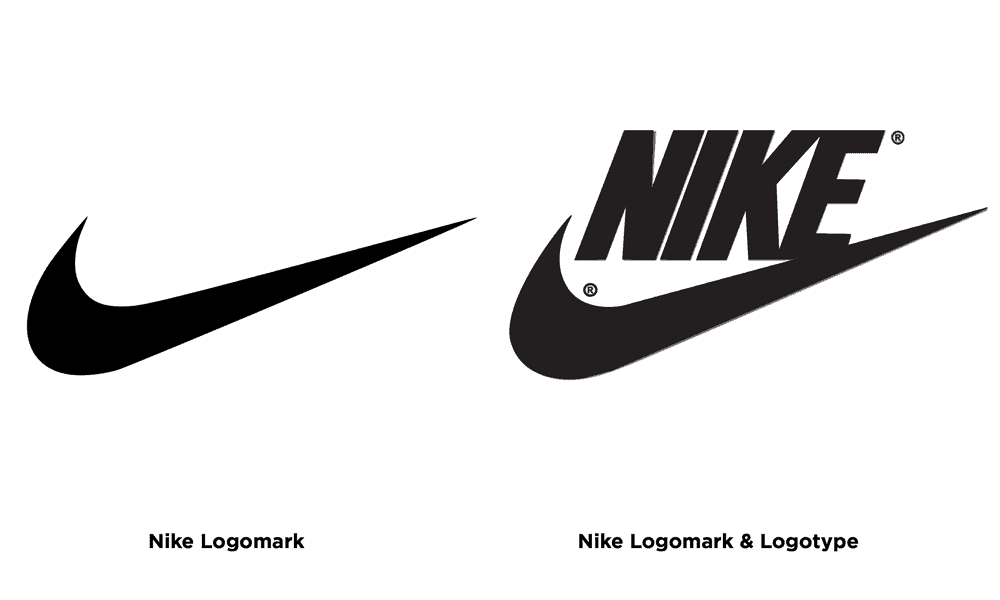
The most sophisticated brand systems leverage both logomarks and logotypes situationally:
- Nike primarily uses its swoosh logomark, but its logotype appears in flagship stores and premium products.
- FedEx employs its famous logotype with the hidden arrow but has developed a simplified “Fed” logomark for digital contexts.
- BBC alternates between their letter blocks logomark and full British Broadcasting Corporation logotype depending on formality and context
Implementing Your Choice: Brand Guidelines
Once you’ve made your decision, comprehensive brand guidelines ensure consistent implementation:
- Define precise spacing requirements around your logo.
- Establish minimum size thresholds to maintain legibility.
- Specify colour variations for different backgrounds and contexts.
- Create responsive variations for different applications.
- Document incorrect usages to prevent brand dilution
Professional design partners like Inkbot Design specialise in creating these comprehensive guidelines to protect your brand investment.
The Future of Brand Identity: Beyond Static Logos
The logomark vs logotype conversation is evolving as brand expression becomes increasingly dynamic:
Animated Logomarks
Motion design adds new dimensions to brand symbols, making animated logomarks standard for digital environments.
Variable Logotypes
Advanced typography technology enables logotypes to adjust to different contexts while maintaining core recognition elements.
AI-Responsive Brand Systems
Emerging systems use artificial intelligence to adjust brand expressions based on context, user behaviour, and environmental factors.
FAQS About Logomarks and Logotypes
Can a startup use only a logomark?
It is extremely risky. Without millions in ad spend, a symbol has no meaning to a stranger. Start with a Combination Mark where the logotype builds name recognition while the logomark builds visual memory.
What is the difference between a wordmark and a logotype?
They are essentially the same. “Wordmark” is the industry term for a logotype that uses the full name of the company without any symbol.
Is a “Lettermark” better than a Logotype?
A Lettermark (like HBO or NASA) is a type of logotype that uses initials. It’s best if your company name is long or difficult to pronounce across different languages.
How do I register a logomark as a trademark in the UK?
You must apply via the UK Intellectual Property Office (IPO). You can trademark the shape, the specific colour (like Post-it Canary Yellow), or the combination of both. Expect to pay around £170 for a single class application.
Should my logo change for Dark Mode?
Yes. A logotype that is black text on a transparent background will vanish in Dark Mode. You should have a “reversed” (white or light-coloured) version ready in your brand kit.
What font is best for a luxury logotype?
How do I know if my logo is “good enough”?
Compelling logos meet three criteria: they’re recognisable, appropriate for your brand positioning, and function across all required applications. Personal preference is much less important than these functional requirements.
Can I design my logo, or should I hire a professional?
While DIY tools exist, professional designers bring strategic thinking and technical expertise that typically deliver significantly better results and avoid costly mistakes.
What file formats should I receive with my logo design?
At a minimum, you should receive vector files (AI, EPS, or SVG), high-resolution PNGS with transparent backgrounds, and JPGS for different applications.
How does my logo relate to my overall brand identity?
Your logo is just one element of your brand identity system, which should include complementary typography, colour palettes, imagery styles, and voice guidelines that work together cohesively.
When considering the logomark versus logotype question, remember that either approach can succeed brilliantly or miserably, depending on strategic alignment and execution quality. The real value comes not from following trends but from making deliberate choices based on your specific brand objectives.
Whether you choose a symbolic logomark, a distinctive logotype, or a flexible combination of both, the success of your visual identity will depend far more on consistency, quality of implementation, and alignment with your overall brand strategy than on the specific form it takes.
Ready to transform your brand identity with the perfect logomark or logotype? Request a quote from Inkbot Design to start your journey toward a £100M brand today.