Brand Development Strategies: Crafting An Identity
You’re bombarded with brand messages everywhere you look these days. On billboards, social media, TV commercials — it never stops. And with so much noise, it’s more complicated than ever for companies to cut through and truly connect with their audience.
But getting branding right has never been more crucial. An authentic, well-defined brand that resonates emotionally is a powerful asset in today’s crowded marketplace. It builds trust, differentiation, and long-term customer loyalty.
So, how do you develop a brand identity that sticks? One that aligns with your core values and unique personality as a business? Where do you even start?
I’ll take you through the brand development process in this comprehensive guide. We’ll cover research, positioning, brand architecture, visual identity, content strategy, and more—everything you need to craft a standout brand that represents the heart and soul of your company.
Are you ready to stop blending in and start forging real connections? Let’s dive in.
- Branding is essential for differentiation, emotional connection, and long-term customer loyalty in a saturated market.
- A strategic brand development process encompasses research, positioning, identity, and messaging to effectively convey a brand's essence.
- Internal brand experience is crucial; employees must embody brand values to ensure consistency and authenticity in customer interactions.
- Brand development requires ongoing commitment, creative bravery, and alignment across the organisation for lasting impact and growth.
Why Brand Development Matters

“Brand is just a logo and some colours, right?”
Oh, if only it were that simple! Branding extends far beyond surface-level visuals. A brand is the entire perceived personality, vision, and values surrounding a product or company. It’s what people feel and associate when they interact with you.
A strategic brand development process lays the foundation for:
- Differentiation in a saturated market
- An emotional connection that builds loyalty
- Increased value perception and pricing power
- Internal cohesion around your company’s mission and culture
- Scalability as you expand products/services or locations
Without those core brand identity elements, you’re just another face in the crowd. And we both know you’re too special for that!
Step 1: Brand Research & Discovery
The brand development journey typically begins with thorough research. You can’t define your brand identity without first understanding your business DNA, audiences, and competition inside out.
I recommend starting with a brand audit to assess your current situation. This typically includes:
- Reviewing existing brand assets (logos, colours, taglines, etc.)
- Analysing your website and digital presence
- Internal interviews to grasp the company culture and values
- External interviews or surveys with target customers
- Social listening to see how people perceive your brand today
- Competitive analysis of other major players in your space
The goal is to uncover critical insights like:
- What makes your brand different or better? Where are the opportunities?
- How do customers currently view you versus your competitors?
- What brand attributes or personality traits resonate most?
- What emotions or deeper needs is your product/service fulfilling?
Don’t cut corners here. This foundational discovery lays the groundwork for authentic brand positioning that clicks.
A Few Research Tips
When interviewing employees or customers, never just read from a list of dry questions. Have a casual conversation and let people open up naturally.
For example: “What first came to mind when you heard our company name?” Or “If our brand were a person, how would you describe their personality?”
Ask follow-up questions to get people to elaborate and give specific examples. Those little, colourful anecdotes are pure gold for fleshing out your brand’s core identity.
During the research process, note any recurring words, phrases, or sentiments you keep hearing pop up. Those reinforce which specific traits should be part of your brand’s DNA.
And, of course, back your findings with solid data wherever possible. Website analytics, customer surveys, sales numbers, and more add crucial quantitative muscle.
Step 2: Defining Your Brand Positioning & Architecture
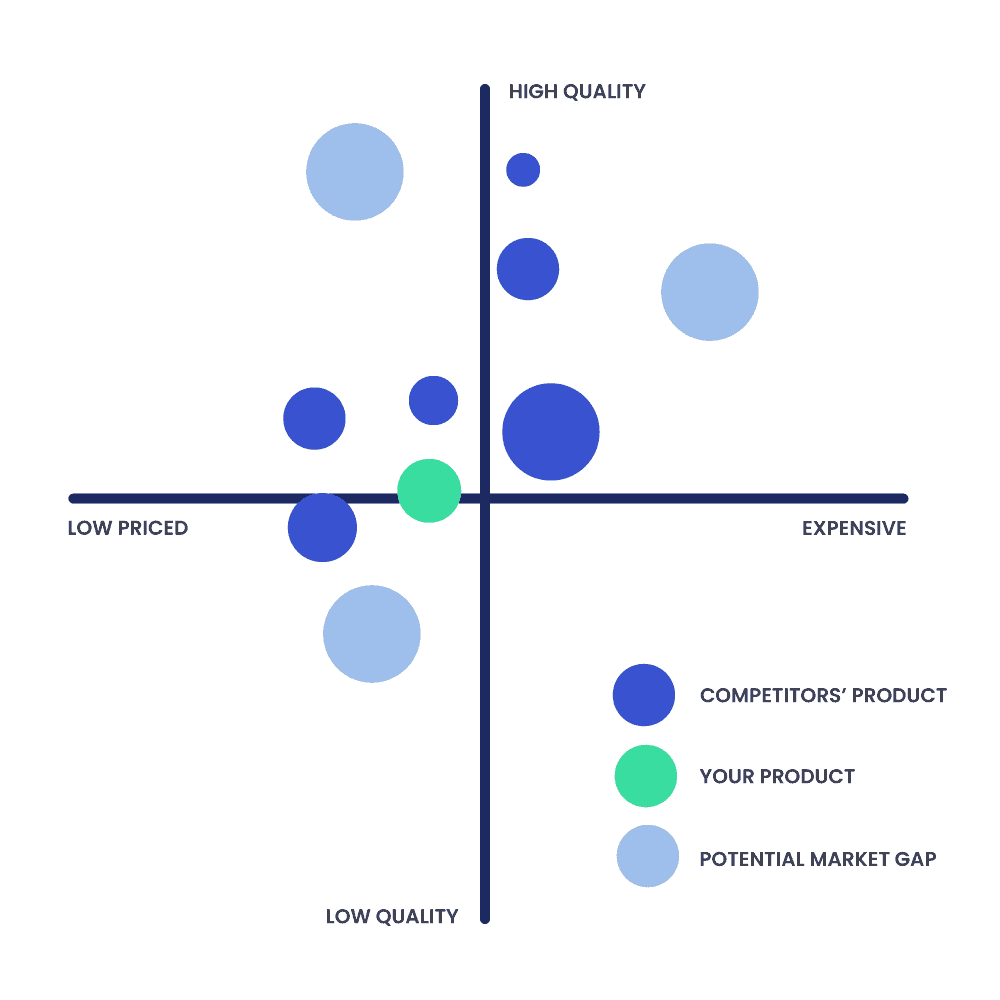
With those juicy insights from the discovery phase, we’re ready to define the overarching brand strategy and positioning.
Brand Positioning
Brand positioning guides the rest of your messaging and identity development. It determines what you want to be known for and who you want to appeal to most.
What space in the market do you want to own? How do you want to be differentiated?
Distil those critical ideas into a simple 1-2 sentence positioning statement. For example:
“XYZ is the affordable, eco-friendly solution for busy city parents looking for no-fuss, nutritious meal options.”
This precise positioning steers your entire brand identity and messaging moving forward.
Brand Hierarchy & Architecture
Next, map out your specific brand hierarchy and product/sub-brand architecture. This clarifies how your master brand relates to any:
- Product categories
- Sub-brands (if applicable)
- Service/solution offerings
- Geographic locations
Will you have a unified, monolithic brand? An endorsed brand architecture? Or is it a more pluralistic portfolio approach with individual sub-brands?
These brand architecture decisions get complex quickly, especially for larger companies. My advice? Keep it as simple and streamlined as possible.
Clearly define the role of your master brand and how sub-brands relate to/extend that core identity. Too much overlap or brand fragmentation creates a messy, inconsistent experience.
Step 3: Brand Identity & Messaging
Your positioning statement is like a compass. It guides you in the right direction, but doesn’t bring the brand to life.
With core ideas agreed upon, it’s time to get funky and bring them to fruition!
Brand identity encompasses everything that represents your company, both tangibly and intangibly. Key components:
- Brand Essence: 3-5 words or traits that capture the brand’s essence. (e.g. “playful, inclusive, imaginative”)
- Brand Story: A concise narrative that condenses your purpose and point of view into something emotionally compelling
- Brand Voice & Tone: Specific guidelines for how you sound as a brand. This includes language, writing style, humour, etc.
- Visual Identity: Logo design, colour palette, typography… all things visual identity
- Content Guidelines: Consistent themes and talking points throughout the content creation
This part can be tricky. You want to create something memorable and unique, aligning with your core values—avoiding anything generic or forced.
When done well, these elements become tools for consistently delivering the customer experience you’re looking for.
Leveraging Brand Archetypes
To shortcut the emotional connection, many successful strategists utilise the framework of Jungian Archetypes. Identifying which of the 12 primary archetypes your brand embodies can clarify your psychological appeal:
- The Creator: Innovation and vision (e.g., Apple, Lego).
- The Jester: Humour and living in the moment (e.g., Old Spice, Dollar Shave Club).
- The Sage: Wisdom and truth-seeking (e.g., Google, BBC).
- The Caregiver: Service and protection (e.g., Volvo, UNICEF).
Aligning your visual identity and tone of voice with a specific archetype ensures your brand “feels” right to the human subconscious.
Brand Archetype Explorer
Answer 3 questions to discover the psychological profile that will help you connect authentically with your audience.
Brand Naming Strategy
Brand naming strategy deserves special mention, whether you’re naming a new product, service or company.
A name is arguably the most visible and valuable brand of ammunition. It has to check many boxes, like:
- Memorable and distinct, without being too wacky
- Domain availability and searchability
- Trademark eligibility with no legal conflicts
- Global resonance that translates well across cultures/languages
- Future-proof flexibility as your brand evolves
- Authentic connection to your brand essence and story
There’s an art and science to developing name options and running the legal/linguistic checks. It’s an area worth getting professional consulting — names matter that much.
Brand Identity Spotlights
At this stage, most brand agencies create sample creative identity concepts. These flesh out how the big-picture brand strategy could come to life in visuals, messaging and more.
Creating a few distinct identity “spotlights” is highly valuable. It provides leadership teams with something concrete to evaluate and pressure-test the direction before committing too far down a path.
Spotlights roll the brand’s positioning, personality traits, voice/tone, and visual elements into sample logos, brand colours, mock content, package designs, ad concepts, and more. It brings the brand to life through immersive, real-world applications.
The feedback and refinement on these initial identity spotlights keep you headed in the right direction before broader creative rollout and launch preparation.
Step 4: Creative Expression & Content Strategy

With all those foundational brand identity pieces in place, the fun starts! (For us branding geeks, at least.)
It’s time to turn that strategy into a consistent, cross-channel brand experience that engages audiences across every touchpoint. The critical, creative expression channels:
- Brand Websites: The core digital hub where branded content lives and the critical identity elements shine through design, UX, multimedia assets and more.
- Marketing & Advertising: On and offline ads and campaigns that drive awareness of the brand and promote offerings in an unmistakable branded way.
- Social/Digital: Active community management, content, and brand engagement through owned digital platforms like social media.
- Branded Environments: Brand identity is translated into physical manifestations like offices, retail locations, event activations, and more, where people can immerse themselves in the brand IRL.
- Employee Brand Experience: The brand must be deeply embedded in the internal company culture, and employees must have a positive experience with aspects such as workspaces and company communications. More on this below…
Your brand identity guidelines on each channel should dictate how the brand story is communicated and how visual identity elements are applied—everything from written copy to design aesthetics, motion graphics, and photography styles.
Of course, each channel has unique requirements for different kinds of branded content and creative assets. An overarching content strategy outlines:
- Brand content pillars and topics to cover
- Formats, channels, and distribution plan
- Editorial guidelines and governance processes
- Goals, metrics, and measurement approach
Whether it’s long-form blog articles, Instagram stories, corporate event videos, or sales presentations, your content should reinforce the defined brand identity. The look, feel, messaging, and personality consistently shine through.
But that doesn’t mean things get stale or one-note, either. You can explore new ideas and take fresh angles within your brand’s guardrails. Think of your brand as having one crystal clear point of view…with infinite ways to express it interestingly.
Brand Development in 2026: The AI & Agile Revolution
The days of static, 50-page brand PDF guidelines are behind us. In 2026, brand agility and Generative AI are the new standards. To dominate your market, you must integrate modern tools that allow your identity to live, breathe, and adapt in real-time.
Top Tools for the Modern Brand Stack:
| Tool Category | Recommended Entity | Use Case |
| Visuals & Ideation | Midjourney v7 / Adobe Firefly | Rapid prototyping of mood boards and logo concepts. |
| Voice & Copy | Jasper / ChatGPT Enterprise | Ensuring brand voice consistency across all written touchpoints. |
| Asset Management | Frontify / Brandfolder | Cloud-based, dynamic brand guidelines accessible to all stakeholders. |
| Social Listening | Brand24 / Sprout Social | AI-driven sentiment analysis to track brand reputation. |
The Rise of Sonic Branding
With the explosion of voice search and smart speakers, your brand needs to be heard, not just seen.
Think of the Netflix “Ta-dum” or the Intel chimes.
Developing a unique sonic logo is now a non-negotiable part of the sensory branding experience, ensuring you’re recognisable even when screens are off.
The Internal Brand Experience Matters
Avoid the mistake of focusing solely on external branding efforts. An even more critical audience? Your very own employees!
No matter how brilliantly you’ve defined the brand, you can’t bring it to life without engaging the internal team and living those brand values daily. Brand experience has to start from the inside out.
The internal communications, training, work environment, meetings, and overall company culture should all consistently reinforce key brand components like:
- Brand Story and Mission: Why employees’ work matters and where the organisation is headed
- Brand Values and Behaviours: The expected attitudes and actions that reflect the brand
- Brand Voice: Guidelines for how the brand should communicate, even in meetings or Slack
- Visual Identity: Consistent applications like branded digital touchpoints, office branding, swag, and more
When employees tap into the authentic brand DNA and what makes your organisation unique, everything from hiring to innovation gets elevated.
They innately make on-brand decisions and deliver superior branded customer experiences. The culture embodies the brand, and the external outputs follow.
Brand Development Isn’t a Quick Fix
As you’ve probably gathered by now, thoughtful brand development that resonates isn’t a cursory box to check. It’s a comprehensive, ongoing process of continuity stressed.
You can’t just slap a new logo, fresh website, and some updated colours on things and poof; you’re an iconic brand now!
Authentic brand building is a challenging yet deeply rewarding endeavour. It takes:
- Deep Self-Awareness: Honest introspection into your authentic core identity
- Consumer Empathy: Understanding audiences’ emotional needs and drivers
- Courageous Decisions: Clearly defining what you want to stand for and sticking to it
- Creative Bravery: Distinct visual and messaging expression that creates differentiation
- Organisational Alignment: Commitment from to bottom to embed the brand holistically
It’s normal for brand development journeys to unfold over 6-12+ months when done correctly. Changes that are fundamental and far-reaching take time to happen.
However, the long-term payoffs are immense for organisations willing to put in the hard work upfront.
Fundamental Brand Development Principles To Live By

Before wrapping up, here are some fundamental principles I believe are essential for successful brand development:
Keep It Simple
Resist the urge to be all things to all people. A focused brand positioning is more compelling than a generic, diluted one.
Stay Authentic
Don’t follow trends or try to fabricate an identity that isn’t grounded in truth. Be honest about your brand’s core strengths and personality.
Make It Meaningful
Customers buy into brands that stand for something bigger than just functional benefits. Connect with shared values and higher-level needs.
Foster Consistency
While creativity keeps brand expressions fresh, all touchpoints should have a clear through line and consistency.
Evolve Proactively
As markets or your brand mature, proactively evolve your identity, rather than letting it become stale or irrelevant. But evolve with intention, not randomly.
Obsess Over Stakeholder Buy-In
You can have a brilliant brand strategy, but it’s powerless unless you get buy-in and passionate adoption across the organisation.
Follow principles like these, and you’ll be well-equipped to breathe life into a captivating, one-of-a-kind brand that lasts.
Closing Thoughts On Crafting A Standout Brand
I know it’s an extensive and complex process that involves numerous strategic and creative considerations. But I hope this guide clarifies the critical components of developing a best-in-class brand identity.
From architecting a positioning rooted in customer insights, defining the brand essence and story, expressing it creatively yet consistently across channels, and fostering internal brand love as ambassadors.
When all the interdependent pieces come together harmoniously, that’s when real brand magic happens.
Your company’s brand becomes a priceless centrepiece for marketing, culture, innovation, and overall business growth. It’s the gravity from which everything orbits and gains energy.
Best of all, branding showcases what makes your organisation unique and forges deeper connections that customers care about.
So what are you waiting for? If your brand doesn’t yet inspire rave reviews and enduring loyalty, take the initiative to create something unforgettable. Your business deserves that unfair advantage!
Frequently Asked Questions (Brand Strategy 2026)
What is the difference between brand identity and brand image?
Brand identity is how you intend to be perceived (controlled by you via logos, messaging, and values). Brand image is how the market actually perceives you (controlled by the customer). An effective strategy aims to close the gap between the two.
How does brand equity impact company valuation?
Strong brand equity enables companies to charge premium prices, reduce customer acquisition costs (CAC), and enhance stock valuation. According to 2025 financial data, intangible brand assets can account for over 20% to 30% of a company’s total market value.
What are the components of a ‘Living Brand’ in 2026?
A ‘Living Brand’ moves beyond static logos. It includes dynamic visual assets (logos that adapt to dark mode or animation), sonic branding (audio identity), and conversational AI interfaces that speak in the brand’s unique persona.
How often should we perform a brand audit?
In fast-moving markets, a light brand health check is recommended quarterly, with a deep-dive brand audit conducted annually. This ensures your positioning remains relevant amidst changing consumer trends and competitor moves.
What metrics should we use to measure the success of brand development?
Some key performance indicators to watch include brand awareness levels, perception metrics from market research, share of voice/search trends, qualitative customer feedback, employee satisfaction & pride, and ultimately. Business performance indicators, such as sales growth, price premiums, customer acquisition/retention rates, and revenue/profit lift, correlated with the brand’s influence.