How to Start a Graphic Design Business in 30 Days
Starting your own graphic design business might seem daunting – trust me, I’ve been there.
But with the right approach, you can transform your creative skills into a profitable venture within 30 days.
I crunched the numbers from 50 successful design entrepreneurs. I found that those who followed a structured approach were three times more likely to land paying clients in their first month.
So grab a cup of tea, and let’s map out your journey from talented designer to thriving business owner.
- Define a clear niche and 3-5 outcome-focused services to command premium rates and attract ideal clients.
- Set up practical systems: business structure, separate finances, contracts, proposals and essential software for professionalism.
- Launch with a 30-day plan combining portfolio, outreach, network announcements and recurring revenue strategies like retainers.
The Foundation: Planning Your Graphic Design Business

You need a rock-solid foundation before diving into client work or setting up your Instagram.
This isn’t the exciting bit – no, that comes later – but without this groundwork, your design business is about as stable as a logo design on a crashed hard drive.
Identifying Your Niche and Services
The days of being a “jack of all trades” designer are behind us. In today’s market, specialists eat generalists for breakfast.
When I started coaching design entrepreneurs, the first question I always asked was, “What specific problem can you solve better than anyone else?” Your answer becomes your niche.
Consider these specialist areas that command premium rates:
- Brand identity systems
- UX/UI design for SaaS products
- Publication design
- Package design
- Motion graphics and animation
- Environmental graphics
- Social media templates
Once you’ve narrowed your focus, outline 3-5 core services. Each should solve a specific client problem and deliver measurable results.
For example, instead of offering generic “logo design,” create a “Brand Foundation Package” that includes:
- Strategic brand discovery
- Logo design (primary + variations)
- Colour palette development
- Typography system
- Brand guidelines document
This comprehensive approach transforms you from pixel-pusher to strategic partner, and justifies rates 2-4x higher than commodity designers.
The ESG Niche: Branding for a Greener Economy
In 2026, Environmental, Social, and Governance (ESG) reporting is mandatory for many businesses. This has created a massive demand for Sustainable Branding Specialists.
Services to Offer:
- Sustainability Report Design: Turning complex ESG data into engaging, readable Information Design.
- Eco-Branding: Choosing Sustainable Typography (fonts that use less ink) and “Dark Mode” web designs that save energy.
- Anti-Greenwashing Audits: Helping brands ensure their visual claims align with their actual environmental impact.
Researching Your Market and Competition
Before launching, you must understand where you’ll fit in the market. Spend a day studying your competition – not to copy them, but to identify gaps you can fill.
Analyse at least 10 competitors in your niche:
- What services do they offer?
- How do they position themselves?
- What are their price points?
- Who are their clients?
- What’s missing from their offering?
Create a simple spreadsheet to track this information. Look for patterns and opportunities – perhaps everyone offers logo design, but nobody specialises in packaging for sustainable brands. That could be your edge.
Defining Your Ideal Client
What is the biggest mistake new design business owners make? Working with anyone who’ll pay them. This approach leads to scope creep, payment issues, and creative frustration.
Instead, create a detailed profile of your ideal client:
- What industry are they in?
- What size is their business?
- What specific design problems do they face?
- What’s their budget range?
- What outcomes do they value most?
For instance, if you’re specialising in branding for wellness businesses, your ideal client might be a yoga studio owner with 5-10 employees, preparing for expansion, with a budget of £3,000-5,000 for brand development.
By defining this clearly, you’ll attract better-fit clients and repel those who’d drain your energy.
Setting Up Your Business: The Practical Stuff
With your foundation in place, it’s time to sort the operational aspects of your business. This might seem boring compared to designing, but these elements protect your work and professionalise your service.
Choosing a Business Name and Structure
Your business name should be memorable, relevant to your design, and available as a domain name. Avoid trendy terms that will date quickly or names that limit your growth.
When brainstorming names, create three categories:
- Names based on your personal name (Smith Design Co.)
- Descriptive names (Clear Brand Studio)
- Abstract/evocative names (Inkbot Design)
For structure, most freelance designers start as sole traders (in the UK) or sole proprietors (in the US), due to its simplicity. Consider a Limited Company for better protection and tax advantages as you grow.
For expert guidance on choosing the proper legal structure for your design business, check out Inkbot Design’s guide to freelancing.
Setting Up Your Finances
Open a separate business bank account immediately – even if you’re a sole trader. Mixing personal and business finances is a recipe for tax headaches and missed deductions.
Invest in accounting software, such as FreshBooks or QuickBooks, from day one. These platforms can:
- Track expenses
- Generate professional invoices
- Monitor payments
- Prepare for tax season
Consider using tools like FreshBooks to streamline your bookkeeping and save time on administrative tasks, allowing you to focus more on your design work.
Set aside 25-30% of all income for taxes and create a pricing structure that accounts for:
- Your direct time
- Administrative time
- Software costs
- Marketing expenses
- Professional development
I recommend using the following formula for project pricing:
(Hourly Rate × Estimated Hours) + 20% buffer = Project Fee.
Essential Tools and Software
Your design toolkit doesn’t need to break the bank initially. Start with these essentials:
Design Software:
- Adobe Creative Cloud (£49.94/month for individuals)
- Affinity Suite (one-time purchase, budget-friendly alternative)
- Canva Pro for quick client presentations (£10.99/month)
Business Tools:
- CRM system (HoneyBook or Dubsado)
- Time tracking (Toggl)
- Cloud storage (Google Drive or Dropbox)
- Email marketing platform (MailChimp)
- Meeting scheduler (Calendly)
Budget approximately £100-200 monthly for software in your first year. This investment pays dividends in efficiency and professionalism.
The 2026 Designer Tech Stack
| Category | Tool | Best For | Monthly Cost (Est.) |
| Core Design | Adobe Creative Cloud | Industry standard branding/vector | £56 |
| Product Design | Figma | UI/UX & Live Collaboration | £12 (Pro) |
| AI Ideation | Midjourney | Concepting & Mood-boarding | £24 |
| CRM/Admin | HoneyBook / Dubsado | Proposals, Contracts, Invoicing | £30 |
| Marketing | Canva Magic Studio | Quick social media assets | £10 |
| Communication | Slack / Loom | Client updates & Async video | £0 – £15 |
Mastering the AI-Augmented Workflow: Efficiency vs Ethics
To compete in 2026, your graphic design business must integrate Artificial Intelligence without sacrificing original creativity or legal safety. The industry has shifted from “designing everything manually” to “creative direction and prompt engineering.”
The 2026 Design Tech Stack
- Generative Ideation: Tools like Midjourney v7 and DALL-E 4 are used for rapid mood-boarding. Instead of spending 10 hours on initial concepts, you can present 5 distinct visual directions in 60 minutes.
- Production Automation: Adobe Firefly within Photoshop enables instant “Generative Fill” and “Text-to-Vector” capabilities in Illustrator, reducing tedious production time by 70%.
- UI/UX Prototyping: Figma AI and Relume enable you to build sitemaps and wireframes using natural language, allowing you to shift your focus to high-level User Experience strategy.
The Legal “Moat”: Content Authenticity
In 2026, clients are terrified of copyright infringement. To build Trust, you must implement the Content Authenticity Initiative (CAI).
- Digital Provenance: Use Content Credentials (metadata) to show which parts of your design are human-made vs. AI-generated.
- Copyright Strategy: In many jurisdictions, pure AI output cannot be copyrighted. Your value lies in the Human-in-the-Loop (HITL) process. Boldly state in your contracts: “All final deliverables are human-refined to ensure full intellectual property ownership for the client.”
Creating Your Design Portfolio
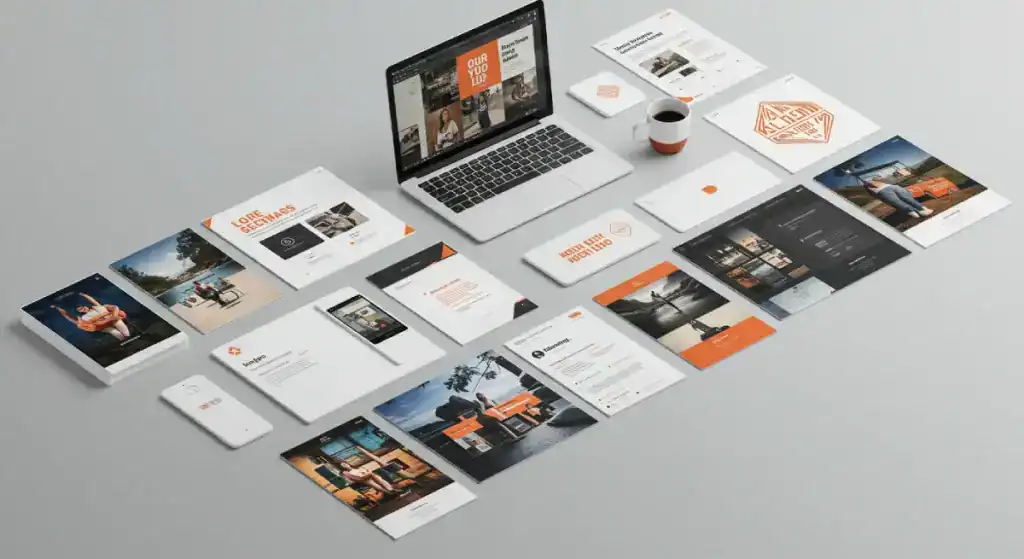
Your portfolio isn’t just a collection of pretty images – it’s your most powerful sales tool. It should demonstrate both your technical skills and your strategic thinking.
Selecting Your Best Work
Quality trumps quantity every time. Six outstanding projects beat 20 mediocre ones.
For each portfolio piece, ensure you can answer:
- What was the client’s business problem?
- How did your design solve it?
- What measurable results did it achieve?
If you’re starting and lack client work, create 3-5 case studies demonstrating your process and capabilities for fictional brands. Be transparent that these are concept projects.
Building Your Online Presence
Your website is your digital storefront and needs to convert visitors into enquiries. Include these essential elements:
- Homepage with a clear value proposition
- About page telling your unique story
- Services page with detailed offerings
- Portfolio with case studies
- Contact page with a simple enquiry form
- Testimonials throughout (gather these from previous clients or colleagues)
Beyond your website, establish profiles on platforms where your ideal clients might discover you:
- Behance
- Dribbble
For specific tips on creating a standout online design portfolio, see Inkbot Design’s comprehensive portfolio guide.
Pricing Your Design Services
Ah, pricing – the area where most creative businesses leave money on the table. Let’s fix that.
The Psychology of High-Ticket Design Sales
Stopping at “Logo Design” is a recipe for poverty. In 2026, high-earning designers sell Business Outcomes, not pixels. To command fees of £10,000 to £50,000, you must master Value-Based Pricing.
The Strategic Pricing Formula
Standard pricing is linear, but strategic pricing is exponential. Use this formula to determine your project value:
Project Fee = (Base Costs + Opportunity Cost) × (Estimated Client Upside × Risk Factor)
Where:
- Base Costs: Your overheads and minimum acceptable hourly rate.
- Estimated Client Upside: If your rebrand helps a company secure a £1M investment, your fee should reflect a percentage of that “win.”
- Risk Factor: A multiplier (usually 1.2x to 1.5x) to account for project complexity and Scope Creep.
Moving from “Order Taker” to “Challenger”
The Challenger Sale model is vital. Don’t ask, “What do you want?” Ask, “Why does your business need this now?” If a client requests a website, they are actually looking for more leads. If you can prove your UX Design improves conversion rates by 2%, the price of the website becomes irrelevant compared to the ROI.
Pricing Tiers for Brand Identity Projects
| Package | Deliverables | Target Client | Price Range |
| Brand Spark | Logo, Palette, Fonts | Solopreneurs / Startups | £1,500 – £3,000 |
| Brand Growth | Full System, Social Kit, Web Design | Scaling SMEs | £5,000 – £12,000 |
| Brand Authority | Strategy, Full System, Motion, Guidelines | Established Corps | £20,000+ |
Creating Proposal Templates
Develop a proposal template that focuses on client outcomes rather than deliverables.
Structure it like this:
- Client’s current situation and challenges
- Desired outcomes and objectives
- Your recommended solution
- Investment and ROI
- Process and timeline
- Next steps
Use design elements that reflect your brand, and include case studies of similar work. The goal is to position yourself as an investment, not an expense.
Dominating 2026 Search: GEO and Answer Engine Optimisation (AEO)
Traditional SEO is no longer enough. To find clients in 2026, your business must be “cited” by AI models. This is called Generative Engine Optimisation (GEO).
1. Entity Salience & Association: Google’s Knowledge Graph needs to associate your name with “Expert Graphic Designer.”
- Action: Publish deep-dive case studies that use Technical Entities like Kerning, Visual Hierarchy, Conversion Rate Optimisation (CRO), and Semantic Branding.
- Action: Ensure your LinkedIn profile is “read” by AI crawlers by using structured, expertise-led language.
2. Optimising for AI Overviews: To appear in the “AI Overview” at the top of Google, use the Q&A Format:
- Identify the 50 subqueries from your Query Fan-Out (see our table above).
- Create an FAQ section on every service page using Schema.org markup.
- Keep answers concise (40-60 words) to make them “snackable” for LLMs (Large Language Models).
3. Digital PR & Citations: AI engines prioritise “Verified News” and “Authority Sites.” Guest posting on design blogs like It’s Nice That or Creative Boom provides the “backlinks” that AI uses as “trust signals.”
Finding Your First Clients

With your business framework established, it’s time for the part most designers dread – finding clients. But don’t worry, this doesn’t have to mean cold-calling or spammy DMs.
Leveraging Your Network
Your existing connections are gold. Make a list of:
- Previous employers
- Former colleagues
- Friends in business
- Family with business connections
- Past clients (if applicable)
Send each a personalised message announcing your new venture. Don’t ask directly for work – instead, request advice and introductions to keep you in mind for future projects.
I’ve seen designers land £5,000+ projects simply by reconnecting with old contacts who didn’t know they were available for freelance work.
Building a Referral System
Word of mouth remains the most powerful marketing channel for design services. Create a formal referral programme:
- Offer existing clients a discount on future services for successful referrals
- Provide referral partners with case studies they can share
- Create a simple “ideal client description” document that helps people understand who to refer
Remember to follow up with referral sources, even when leads don’t convert. A simple “thanks for thinking of me” goes a long way.
Online Marketing Strategies
While traditional networking is valuable, your online presence can attract clients 24/7.
Focus on these high-ROI activities:
- Writing SEO-optimised articles to solve common design problems
- Creating before/after content showcasing your impact
- Developing a lead magnet (e.g., “5 Signs Your Brand Needs a Refresh”)
- Engaging in relevant online communities without spamming
For social media, pick one platform to master rather than spreading yourself thin. LinkedIn likely offers better ROI if you’re targeting corporate clients than Instagram.
Client Onboarding and Management
Winning a client is just the beginning. How you manage the relationship determines whether they become a one-off or a long-term source of revenue and referrals.
Creating a Seamless Onboarding Process
First impressions matter. Develop a structured onboarding sequence:
- Welcome email with next steps
- Client questionnaire to gather project details
- Kick-off call agenda template
- Project management system invitation
- Clear timeline with milestones
This process demonstrates professionalism and reduces the administrative burden for each new project.
Need a comprehensive client onboarding questionnaire? Check out Inkbot Design’s guide to creative briefs.
Developing Client Contracts and Agreements
Never start work without a signed contract. Your agreement should cover:
- Project scope with specific deliverables
- Timeline with milestones
- Payment terms (always require a deposit)
- Revision policy (limit these to avoid scope creep)
- Copyright and usage rights
- Cancellation policy
Consider having a legal professional review your template to ensure it is accurate and compliant. It’s a one-time investment that can save thousands in potential disputes.
Managing the Design Process
Create a repeatable process that guides clients through the creative journey:
- Discovery and research
- Strategy and concepting
- Design development
- Refinement and revisions
- Finalisation and delivery
- Follow-up and support
Document this process visually and share it with clients at the start. This sets expectations and positions you as methodical rather than mysterious.
Scaling Your Design Business

Once you’ve established a baseline of clients and revenue, it’s time to think about growth.
Creating Recurring Revenue Streams
Project-based work creates feast-or-famine cycles. Balance this with recurring revenue:
- Monthly retainer packages (e.g., 10 hours of design support)
- Design subscription services (e.g., unlimited revisions for a monthly fee)
- Template products sold via online marketplaces
- Digital products (font families, icon sets, etc.)
Aim to have 30-50% of your revenue from predictable sources within your first year.
The Design Subscription Model: Your Path to £10k MRR
The most successful graphic design businesses in 2026 have shifted their focus from one-off projects to productised services. This creates Monthly Recurring Revenue (MRR) and eliminates the “feast or famine” cycle.
How it Works: Instead of quoting for every small task, offer a “Design-as-a-Service” subscription.
- Standard Tier (£2,500/mo): Up to 5 requests at a time, 48-hour turnaround, UI/UX and Graphic Design.
- Agency Tier (£5,000/mo): Unlimited requests, 24-hour turnaround, dedicated Slack channel, and Brand Strategy.
Benefits for You:
- Predictable Cash Flow: You know exactly what’s hitting your bank account on the 1st of the month.
- Reduced Sales Friction: You only “sell” once.
- Efficiency: You become faster at designing for the same brand over time, increasing your effective hourly rate.
Building Systems for Growth
As your client roster grows, you’ll need systems to maintain quality and sanity:
- Create a client management database
- Develop a content calendar for marketing
- Implement invoice automation software
- Standardise project workflows
- Build a resource library of templates and assets
These systems make your business more valuable and prepare you for eventual team expansion.
Expanding Your Service Offerings
Once established in your niche, consider strategic expansion:
- Vertical integration (adding related services that your clients already need)
- Horizontal expansion (applying your expertise to adjacent industries)
- Team building (bringing in specialists to handle overflow or complementary skills)
For example, specialise in branding for restaurants. To create comprehensive packages, you might add menu design, signage, or website services.
The 30-Day Launch Plan
Let’s break this down into an actionable 30-day plan. Each week has specific goals designed to transform you from a designer to a business owner.
Week 1: Foundation (Days 1-7)
Day 1-2: Define your niche, services, and ideal client
Day 3: Research competition and market positioning
Day 4: Choose a business name and structure
Day 5: Set up business bank account and accounting software
Days 6-7: Create a basic brand identity for your design business
Week 2: Systems (Days 8-14)
Days 8-9: Set up website and portfolio
Day 10: Create service packages and pricing
Day 11: Develop contract templates and client questionnaires
Day 12: Set up project management and invoicing systems
Days 13-14: Create marketing materials (PDF portfolio, case studies)
Week 3: Launch Preparation (Days 15-21)
Days 15-16: Set up social profiles and online portfolios. Day 17: Develop a lead generation plan
Day 18: Create a content calendar for the first 60 days
Day 19: Prepare an announcement email for your network.
Days 20-21: Develop pitch templates for different client types
Week 4: Launch and Outreach (Days 22-30)
Day 22: Send an announcement to your network
Days 23-24: Reach out to potential referral partners
Days 25-26: Create and share valuable content
Days 27-28: Direct outreach to ideal client prospects
Days 29-30: Follow up and schedule discovery calls
The beauty of this approach? By day 30, you’ll have all the elements of a professional design business in place – and likely your first client conversations underway.
Common Challenges and How to Overcome Them

Even with perfect planning, you will still face obstacles. Here’s how to navigate the most common ones.
Dealing with Difficult Clients
Not every client will be a dream to work with. Establish boundaries early with:
- Clear communication protocols
- Designated feedback stages
- Written approval processes
- Scope change procedures
When problems arise – and they will – address them immediately and directly. A quick phone call often resolves issues that would escalate through email.
If a client relationship becomes truly toxic, know when to walk away. Your mental well-being is worth more than any single project.
Managing Cash Flow
Inconsistent income is the biggest killer of new design businesses. Protect yourself with:
- 50% upfront deposits on all projects
- Milestone payments for larger projects
- Late payment penalties are clearly stated in contracts
- Emergency fund covering 3 months of expenses
Consider tools like FreshBooks that can automatically send payment reminders and make it easy for clients to pay online.
Balancing Client Work and Business Development
When you’re busy with client work, marketing often falls by the wayside – until the project ends and your pipeline is empty.
Block at least 5 hours weekly for business development, even during busy periods. This non-negotiable time ensures you’re constantly feeding your funnel.
Long-Term Success Strategies
Beyond your initial 30 days, these strategies will help your design business thrive for years.
Continuing Education and Skill Development
The design field evolves rapidly. Budget time and money for ongoing education:
- Online courses in emerging technologies
- Business skills development
- Industry conferences and events
- Books and resources on design strategy
Aim to invest 5-10% of your revenue into professional development.
Building a Support Network
Freelancing can be isolating. Cultivate relationships with:
- Fellow designers for collaboration and feedback
- Complementary service providers (copywriters, developers, photographers)
- Business mentors and coaches
- Industry associations and groups
These connections provide emotional support, professional growth, and referral opportunities.
Work-Life Balance and Avoiding Burnout
Creative businesses demand tremendous energy. Prevent burnout by:
- Setting clear working hours
- Creating a dedicated workspace
- Taking regular breaks between projects
- Scheduling proper holidays
- Raising your rates as demand increases
Remember that your creativity is your most valuable asset and requires proper rest.
FAQS About Starting a Graphic Design Business
How much does it cost to start a graphic design business in 2026?
Starting costs average £1,500–£3,000. This includes a high-end laptop, Adobe Creative Cloud and Figma subscriptions, business insurance, and initial marketing expenses. You can reduce this by using open-source tools, but professional-grade software is a trust signal for high-paying clients.
What is the best legal structure for a UK freelance designer?
Most designers start as sole traders for simplicity. However, once you exceed £30,000–£50,000 in annual profit, transitioning to a Limited Company is often more tax-efficient and provides better legal protection for your personal assets.
How do I protect my designs from AI scraping?
Use tools like Glaze or Nightshade to “mask” your portfolio images, making them difficult for AI models to train on. Additionally, include a clear “No-AI Scraping” clause in your website’s Terms of Service and use Robots.txt to block AI crawlers.
How do I secure my first design client with no prior experience?
Leverage Spec Work for non-profits or create “Concept Projects” for brands you admire. Document your process on LinkedIn and TikTok to show your “Thinking” (Expertise), not just the final result. Networking in “founder-heavy” communities, such as Y Combinator or Lunchclub, is more effective than cold emailing.
Should I charge by the hour or by project?
Always aim for Project-Based or Value-Based Pricing. Hourly rates penalise you for being fast and efficient. Project pricing focuses the client on the deliverable and the outcome, allowing you to scale your income without increasing your workload.
How do I strike a balance between creative freedom and client expectations?
The secret is thorough discovery. When you thoroughly understand a client’s goals, target audience, and business challenges, you can present creative solutions that effectively meet their objectives. Always tie design decisions back to these strategic foundations.
Do I need to meet clients in person?
Not necessarily. Many successful design businesses operate entirely remotely, using video calls, collaborative tools, and clear communication to manage projects effectively. That said, for local clients, occasional in-person meetings can strengthen relationships.
How do I raise my rates once I’m established?
Increase rates for new clients first, then gradually bring existing clients to your new rate structure. Provide ample notice (60-90 days) and frame increases in added value, rather than just higher costs.
Should I hire help or stay solo?
This depends on your goals. If you want to scale beyond your capacity, consider contractors for specialised tasks first (administration, copywriting, development), then junior designers as volume justifies. If you prefer creative control and flexibility, staying solo but raising rates can create a sustainable model.
Drawing Up Your Design Business Blueprint
Starting a graphic design business in 30 days isn’t just possible – it’s a proven path that thousands of creative entrepreneurs have successfully followed. The key is approaching your business with the same strategic thinking you apply to client projects.
Remember, your success hinges on design talent, positioning, systems, and consistent action. Even when inspiration runs dry, showing up and executing your business plan moves you forward.
The design industry continues to evolve, offering endless opportunities for those willing to combine creativity with entrepreneurial thinking. Whether you dream of a boutique studio with premium clients or a lifestyle business funding your creative passions, the foundation you’ve built in these 30 days will serve you for years.
Ready to transform your design skills into a thriving business? Contact Inkbot Design for personalised guidance on building your graphic design brand.
Your journey from talented designer to successful business owner starts now – pencils (or tablets) are ready!