AI Lacks Curiosity: 5 Areas Where Human Creativity Wins
Everyone is using ChatGPT these days to build the same soulless brands.
There’s one way you can stand out in 2026. And it’s the itch you can’t scratch.
- Curiosity is a billable, human-only asset that reveals true intent beyond AI's surface-level outputs.
- Cultural friction and sensory nuance thrive on human curiosity; AI averages out the weird and visceral.
- Strategy requires sacrifice and ethical judgement; humans choose what not to do, AI only adds options.
The Death of the “Good Enough” Approach
We are reaching, or have reached, the tipping point.
It’s 2026, and the infinite answer machine of AI isn’t just a tool; it’s the concrete that holds the creative industries together.
We saw it at the Super Bowl already. The AI wasn’t just a gimmick in advertising; it was the engine that built them.
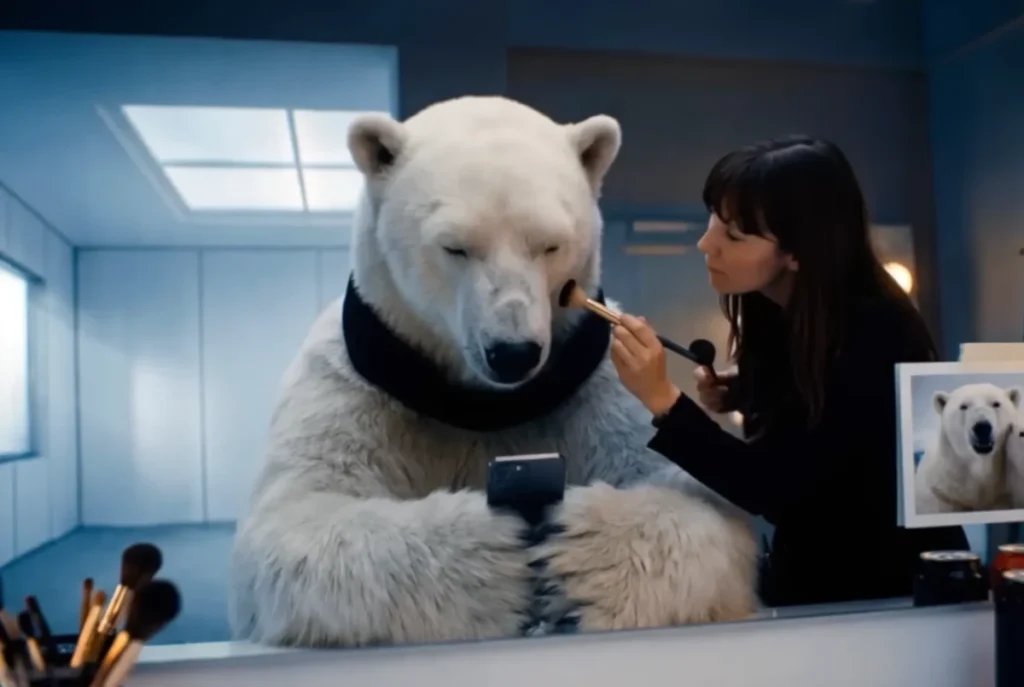
In branding, it’s dropped the barrier for entry to basically zero to get that polished look.
If you want a logo design that looks like a Fortune 500 tech firm, click, click, click, and you have it in less than 30 seconds.
Need a marketing strategy? Need one that sounds like a Harvard professor wrote it? It’s just one prompt away.
But there’s a problem.
And it’s a massive, expensive and hope-crushing one.
When EVERYONE has access to the same “infinite information” pool, everyone starts sounding and looking the same.
It’s the “Grey Goo” of Branding.
Technically perfect—maybe. Aesthetically on point? Sure.
But most importantly, utterly forgettable.
AI Lacks Curiosity.
The CEO of Perplexity recently pointed out that AI can simulate and answer, but it doesn’t want to know anything specifically. It doesn’t have that human itch.
It doesn’t lie awake at night wondering why that client wanted that specific shade of orange in their logo, or why that luxury watch brand suddenly seems scared to be seen as too expensive.
What this means now is that curiosity isn’t just a great personality trait; it’s the only billable asset that hasn’t (yet) been automated by the machine.
If you aren’t scratching the itch the machine can’t feel, you’re a glorified (or secret) prompt engineer. And trust me, the machines are getting better at it quicker than you are.
The 5 Gaps AI Can’t Close.

Curiosity isn’t just like a toddler on a sugar high, asking “why this?”, “What’s that?”, “What does this do?”
Curiosity is a disciplined pursuit of the meaningful gap.
Jeff Bullas’s recent analysis touched on the taxonomy of curiosity—epistemic, perceptual, specific, and diversive—but it missed the fundamental tension we face in the studio every day: the gap between data and intent.
Here are the five gaps where human curiosity outmuscles the machine in 2026:
1. The Intent Gap (Why are we actually doing this?)
AI is really good at ‘Designing for Intent’ if the intent is clearly stated.
But clients rarely know their true intent. They say they want a ‘modern website,’ but they actually want to feel relevant again because a younger competitor just stole the spotlight.
AI can’t sense the subtext of a trembling hand during a discovery session.
It can’t feel the ego in the room.
Curiosity allows us to poke at the bruise until the real problem surfaces.
2. The Cultural Friction Gap
AI is built on consensus. It averages out the internet to give you the most likely ‘correct’ answer.
But great design usually lives in the friction—the weird, the niche, and the counter-intuitive.
In 2026, we’re seeing a rebellion against algorithmic perfection, a trend Canva calls ‘Imperfect by Design’.
Human curiosity seeks out the ‘uncanny’ and the ‘liminal’ because it feels something.
AI avoids those because they are statistical outliers.
3. The Ethical Weight Gap
AI has no skin in the game.
It doesn’t care if your rebranding project accidentally alienates your core demographic or uses imagery that carries a heavy historical subtext in a specific region—say, North Belfast.
Consequences haunt human curiosity.
It asks, ‘What happens if we’re right?’ and ‘Who does this hurt?’
The machine predicts the next token.
4. The Sensory’ Itch’ Gap
We’re seeing a massive shift toward multimodal experiences—voice, haptics, and sensory textures.
AI can describe a ‘luxury feel’, but it doesn’t know the visceral satisfaction of a heavy cardstock or the specific frequency of a notification sound that doesn’t annoy the user.
Human curiosity is rooted in the body. It’s perceptual.
5. The Strategy-as-Sacrifice Gap
AI is an additive machine. It gives you more options, more variations, more data.
Strategy, however, is about sacrifice. It’s about deciding what not to do.
Genuine curiosity leads you to the one thing that matters, allowing you to cut away the unnecessary.
AI struggles to kill its darlings because it doesn’t have any.
Curiosity as a Billable Asset

Look, I’m not a cheerleader for ‘human-only’ design.
That ship sailed years ago.
At Inkbot Design, we use AI every single day. We use it to ‘red team’ our thinking and to generate 900 variations of a layout in ten minutes just to see what fails.
But we don’t bill for the variations. We bill for the curiosity that led us to reject 899 of them.
If you’re a designer, stop trying to compete with the machine’s output. You’ll lose.
Instead, start billing for your ‘Discovery’ phase as if it were the most valuable part of the project—because it is.
In 2026, 85% of companies are using autonomous AI agents to do ‘real work’. If your work is just ‘delivering an asset’, you are replaceable by an agent that costs $20 a month.
If your work is ‘identifying the problem that the client didn’t know they had’, you are indispensable.
Aravind Srinivas was right when he said the edge lies in ‘problem identification’. The machine can solve the puzzle, but it can’t tell you whether it’s worth solving.
My advice?
Be the person who asks the question that makes the room go quiet.
Don’t just ask ‘What colour should the logo be?’
Ask: ‘If this brand died tomorrow, would anyone actually notice?’
Ask: ‘Are we building this for the customer, or to satisfy the CEO’s mid-life crisis?’
That’s the kind of curiosity that builds brands people actually care about. It’s messy, it’s uncomfortable, and it’s allergic to the ‘smooth’ answers AI loves to provide.
Strategic Takeaways
- Graphic Designers: Your value has shifted from ‘making things look good’ to ‘making things mean something’. If you can’t explain the why behind a design choice without using buzzwords, you’ve already lost to the algorithm. Focus on custom typography and expressive systems that AI still struggles to imbue with genuine ‘intent’.
- Business Owners: Stop hiring for ‘AI fluency’ and start hiring for ‘strategic scepticism’. You need people who can look at a perfectly polished AI output and ask, ‘Yes, but is it true?’ or ‘Does this actually align with our 2026 growth strategy?’ Productivity is now a commodity; judgment is the new gold.
FAQs
Is AI ever going to be curious?
No. Curiosity requires a sense of lack—an awareness that you don’t know something and that it matters that you don’t know it. AI doesn’t ‘know’ anything; it just predicts sequences. It doesn’t have a soul to satisfy or a reputation to protect. It’s a calculator on steroids.
Won’t AI just get better at asking questions, too?
It already has. It can generate 50 questions about your business in two seconds. But it doesn’t know which of those questions is the dangerous one. It doesn’t know which question will make a client fire you or make a customer love you. That choice requires taste, and taste is a human monopoly.
I’m a small business owner. How do I ‘use’ curiosity?
Stop accepting the first answer your tools give you. If you use ChatGPT or Claude to write a marketing plan and it looks ‘fine’, it’s probably useless. It’s generic. Use your curiosity to find the ‘information gap’—what is everyone else in your industry not saying? That’s your hook.
Does this mean I should stop using AI for branding?
Nope. Use it for the grunt work. Use it to find patterns in 10,000 customer reviews. Use it to see what your competitors are doing. But don’t let it drive the bus. Use the machine to clear the road so your curiosity can actually go somewhere interesting.
What’s the biggest mistake designers make with AI in 2026?
Letting the tool dictate the aesthetic. Because AI is trained on what already exists, it naturally leans toward ‘the average’. If you don’t have the curiosity to push past the first three pages of results, you’ll end up with a brand that looks like every other ‘modern, minimalist, eco-friendly’ startup in the world. Boring.
Can I bill for ‘thinking time’ in an AI world?
You have to. If you bill by the hour for production, you’re dead. You need to bill for the outcome and the strategy. Your value is in the ‘Curiosity Frameworks’ you apply—like Socratic clarity or Red Teaming. Clients aren’t paying for the logo; they’re paying for the certainty that it’s the right solution.
Is curiosity actually trainable?
Totally. It’s a muscle, not a magic spell. Start by noticing when you’re bored. Boredom is just curiosity that’s lost its way. When you see something that looks ‘good enough’, ask yourself: ‘What’s the one thing about this that feels slightly off?’ Then pull that thread.
What is ‘Agentic AI’ and why should I care?
It’s AI that doesn’t just talk; it does. In 2026, agents can handle your scheduling, your basic layout production, and even your initial market research. This is excellent news—it means you have more time to spend on the high-level, curious questioning that actually moves the needle for your business.
What’s the one thing AI will never replace?
The ‘Itch’. That feeling in your gut when a project is 90% there, but something isn’t clicking. AI will tell you the project is mathematically perfect. Your curiosity is what tells you it’s still missing the spark. Trust the itch.