Brand Awareness: A Guide to Building Mental Availability
If people don’t know you exist, they cannot buy from you. It is a brutal, binary reality that kills more businesses than bad product design ever will.
We see it constantly. A client approaches us with a “conversion problem.” They have tweaked their landing page colours, A/B tested their button copy, and aggressively optimised their checkout flow. Yet, their sales remain flat. Why? Because they do not have a conversion problem, they have an obscurity problem.
You cannot convert traffic that isn’t there.
Brand awareness is often dismissed by “growth hackers” and performance marketers as a superficial concept. They call it a vanity metric. They are wrong.
Brand awareness is the foundational layer of economic value. It is the mechanism that creates brand equity—the intangible asset that allows you to charge a premium over a generic competitor.
Without awareness, you are a falling tree in the forest. With it, you are the default choice. This guide is not about getting more “likes” on Instagram. It is a forensic breakdown of how to build, measure, and monetise mental availability.
- Awareness is foundational; without it, brands remain obscure and cannot convert potential customers.
- Mental availability equals probability your brand is recalled at the buying moment; aim to be top-of-mind.
- Build distinctiveness: own a colour, clear logo at small sizes, and memorable assets to trigger recall.
- Measure awareness with share of search, brand listening, surveys and platform brand-lift studies.
- Prepare for AI: earn digital PR, entity density and reviews so LLMs recommend your brand.
What is Brand Awareness?
Brand Awareness is the extent to which a potential customer can recognise or recall your brand under different conditions. It is the measure of your brand’s existence in the mind of the consumer.
It is not simply “people knowing your name.” It is the probability that your brand comes to mind when a specific purchase decision arises.
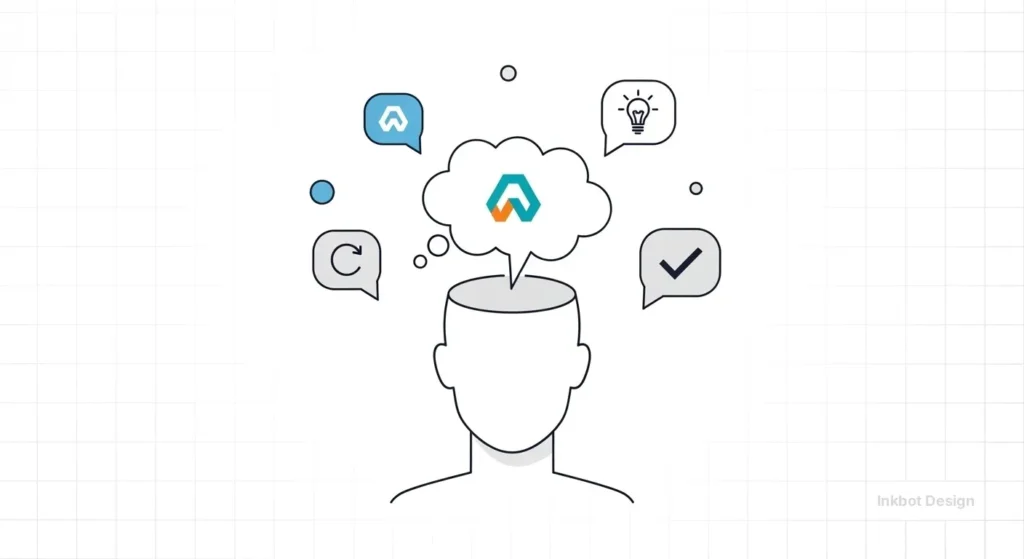
The Three Core Components
- Brand Recognition (Aided): The ability of a consumer to confirm prior exposure to the brand when given a cue (e.g., seeing your logo on a shelf). This is vital for point-of-purchase decisions.
- Brand Recall (Unaided): The ability of a consumer to retrieve your brand from memory when given a product category (e.g., “Name a luxury watch brand” -> “Rolex”). This is the gold standard of awareness.
- Top-of-Mind Awareness (TOMA): The very first brand that pops into a consumer’s head. Being TOMA correlates heavily with market share dominance.
The Holy Grail: Proprietary Eponyms
The ultimate level of awareness is achieving status as a proprietary eponym.
This occurs when your brand name replaces the generic term for the product itself—think “Hoover” for vacuum cleaners, “Jacuzzi” for hot tubs, or “Google” for web search engines.
When you reach this stage, you have effectively removed the purchase decision from the equation; you are the category.
Mental Availability Calculator
Are you building a “Brand” or just a Logo? Assess your awareness strategy and generate targeted buying triggers (CEPs) for your industry.
💡 Recommended “Category Entry Points” for You
Stop marketing “features.” Start marketing these specific moments to build habit-forming awareness:
Need to build distinctive assets that stick?
Request a Brand QuoteThe Financial Mechanics: Why Obscurity is Expensive
Why does this matter to your bottom line? Because of a concept known as Mental Availability.
Coined by the Ehrenberg-Bass Institute, Mental Availability refers to the probability that a buyer will notice, recognise, and think of your brand in a buying situation.
If you are a B2B software provider, you might think you need to target everyone. You don’t. According to data from the LinkedIn B2B Institute, 95% of your potential buyers are out-of-market at any given time. They are not ready to buy.
If you focus solely on “performance marketing” (capturing the 5% who are ready to buy now), you are fighting a costly and arduous battle for a small slice of the pie.
Brand awareness targets the 95%. It plants the seed so that when they do enter the market six months from now, you are the only option they consider.
The Cost of Retrieval
The human brain is lazy. It uses “System 1” thinking (fast, intuitive) for most decisions. If your brand requires “System 2” thinking (slow, deliberate effort) to be found, you will lose the sale.
- Low Awareness: The customer must conduct a Google search, read reviews, and compare specifications. High friction.
- High Awareness: The customer types your URL directly. Zero friction.
Consultant’s Note: We often audit businesses spending £10,000/month on Google Ads for generic keywords. The cost per click (CPC) is astronomical. Meanwhile, competitors with high brand awareness are getting traffic for free because people are searching for their name, not their category.
Benchmarks: What Does “Good” Awareness Cost in 2026?
Budgeting for mental availability requires realistic expectations. Below are the 2026 industry averages for Cost Per Mille (CPM) and aided recall lift targets across major channels.
| Industry | Average CPM (Programmatic) | Target Recall Lift (6 Months) | Primary Awareness Channel |
| B2B SaaS | £35 – £60 | +12% | LinkedIn / Niche Podcasts |
| Ecommerce | £8 – £15 | +25% | TikTok / Instagram Reels |
| FinTech | £40 – £80 | +10% | Newsletters / Display |
| Local Services | £15 – £25 | +40% (Local) | Hyper-local SEO / Maps |
| Luxury Goods | £50+ | +15% | Influencer / PR Events |
Pro Tip: Do not compare your B2B metric to a B2C viral hit. Context is the only metric that matters.
The Psychology of the Purchase: Keller’s Model
To understand how to influence consumer behaviour, we must examine the relevant academic frameworks.
The most robust model is Kevin Lane Keller’s Customer-Based Brand Equity (CBBE) model, often visualised as a pyramid.
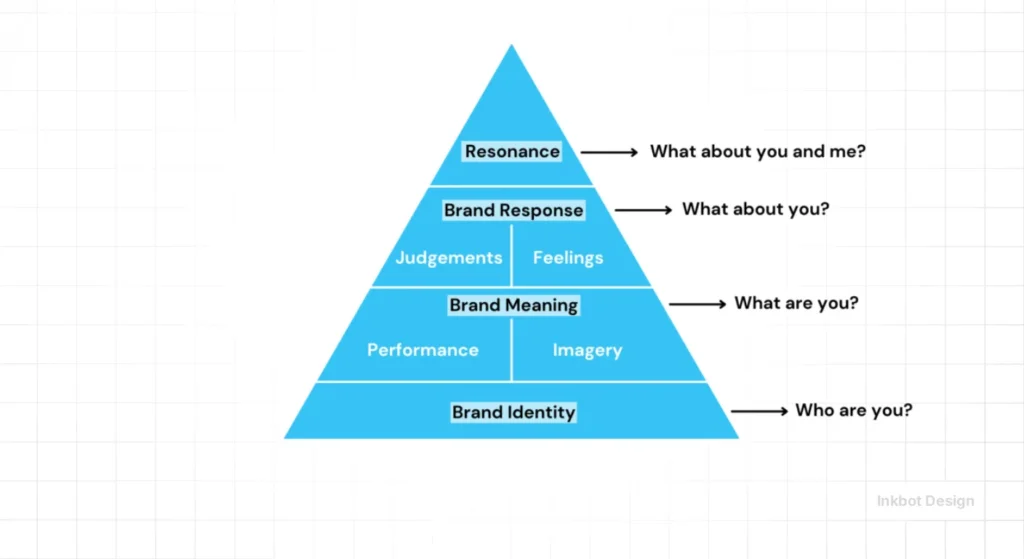
According to Keller, you cannot build a relationship (Resonance) without first establishing Identity (Salience). The hierarchy of effects dictates that a consumer must pass through specific stages before a sale occurs:
- Salience (Awareness): Do I recognise you?
- Performance & Imagery: What does your product do, and what is your brand image?
- Judgments & Feelings: How do I respond to you?
- Resonance (Loyalty): Do I connect with you?
Most failed branding campaigns try to skip straight to “Loyalty” or “Feelings” without first establishing the base of the brand awareness pyramid. You cannot be loved if you are not known.
Tactical Execution: How to Build Awareness (The “How-To”)
You do not need a Super Bowl budget. You need discipline and a diverse mix of media. Here is how to execute a modern advertising strategy that covers both digital and physical realms.
1. Visual Anchors & Distinctive Assets
Before you spend a penny on ads, lock down your visuals.
- Logo: Must be legible at 16 pixels high (favicon size).
- Colour: Own one colour. Think Tiffany Blue or Cadbury Purple.
- Brand Characters: Consider using a mascot. From the Michelin Man to the CompareTheMarket meerkats, brand characters are statistically more effective at creating memory structures than celebrities because they don’t age, and they don’t get into scandals.
2. Digital Dominance
You must be visible where your customers spend their time.
- PPC Advertising & Remarketing: Utilise PPC advertising not only for conversions, but also for increased visibility. Even if they don’t click, they see your name. Combine this with remarketing campaigns on the Google Display Network to follow users who have visited your site, reinforcing your presence at a low cost.
- Social Selling: On platforms like LinkedIn, social selling isn’t about spamming DMs; it’s about consistent visibility in the feed.
- Content Strategy: Use guest blogging on high-authority industry sites and LinkedIn publishing to demonstrate thought leadership. This borrows the authority of the host platform and transfers it to you.
3. The “Social” Engine
Social media networks are crowded, so you need to be disruptive.
- Social Media Contests: These can artificially inflate your reach. However, be careful—you want to attract qualified leads, not just freebie hunters.
- Influencers: Partner with micro-influencers who have high trust with their audience. This functions as a modern form of word-of-mouth marketing.
4. Offline & Physical Visibility
Do not neglect the real world.
- Car Wraps: If you have a fleet, use it. Car wraps turn your logistics cost into a moving billboard. It is high-frequency, local exposure.
- Sponsorships: You don’t need to sponsor the PGA Tour or the Valspar Championship to get noticed. Sponsoring local events or industry-specific conferences can yield higher relevance than national TV spots.
Deep Dive: The Science of ‘Category Entry Points’ (CEPs)
To build effective awareness, you must understand Category Entry Points (CEPs).
Most businesses try to “own” a vague concept like “Quality” or “Innovation.” This is a waste of time. Nobody wakes up at 2 AM thinking, “I need some innovation.”
They wake up thinking: “I’m hungry, and I need something fast that won’t make me feel guilty.”
That specific situation is a CEP.

Mapping Your CEPs
To build awareness that converts, you must link your brand to specific retrieval cues.
- Time: “Need a break? Have a KitKat.”
- Location: “Thirsty on a flight?”
- Emotion: “Worried about data security?”
- Social Setting: “Impressing the in-laws?”
If you successfully build brand awareness, your brand becomes the automatic response to these specific cues.
Real-World Evidence: Case Studies
Theory is fine, but let us look at the receipts.
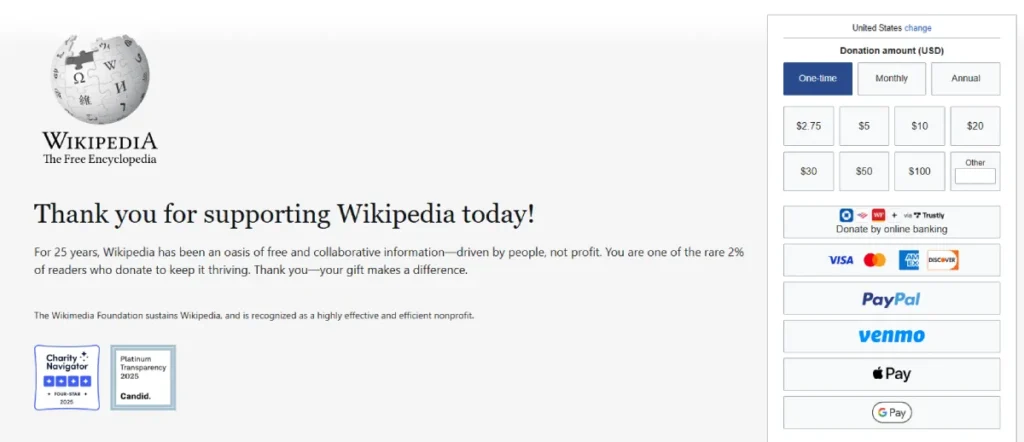
The “Survival” Awareness: Wikimedia Foundation
Consider the Wikimedia Foundation.
Their product, Wikipedia, is ubiquitous. It has essentially 100% brand recall for information search. Yet, they still run massive fundraising banners.
Why? Because even a non-profit needs to trigger a purchase decision (or, in their case, a donation).
They know that without constant reminders (Salience), people take the service for granted. Their brand awareness strategy is existential—if they drop out of mind, they run out of cash.
The “Low Spend” Anomaly: Trader Joe’s
Trader Joe’s rarely uses traditional advertising campaigns. You won’t see them running TV spots like Verizon or Coca-Cola. Instead, they rely on product exclusivity and the in-store experience to drive word-of-mouth marketing.
Their “Fearless Flyer” newsletter and unique private-label products create a cult-like following. This proves you can build massive awareness without massive media spend if your product is distinct enough.
The Failure: Tropicana (2009)
In 2009, Tropicana decided to “modernise” its packaging. They removed the iconic orange with the straw in it—their most distinctive brand asset.
The Result: Consumers walked down the juice aisle, scanned the shelf, and did not see the brand. They thought the shop had stopped stocking Tropicana.
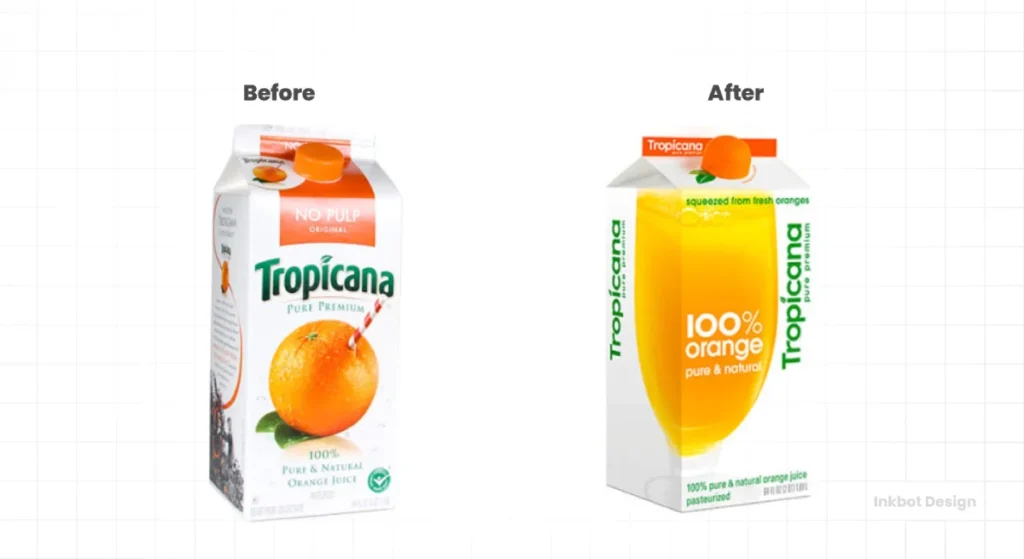
The Cost: Sales plummeted by 20% over a two-month period. They lost over $20 million in revenue and had to revert to the old design immediately.
The Lesson: Brand awareness relies on visual cues. If you change your cues, you reset your awareness to zero.
Measuring the Unmeasurable: Tools & KPIs
The biggest lie in marketing is that brand awareness cannot be measured. It can, and it must be. If you cannot measure it, you cannot manage it.
1. Share of Search (The Proxy for Market Share)
Les Binet has demonstrated that Share of Search correlates incredibly closely with Share of Market.
- The Metric: How many people search for “Your Brand” vs. “Competitor Brand” on Google?
- The Tool: Google Trends.
2. Brand Listening & Sentiment
You need to track brand mentions across the web, even when you aren’t tagged.
- Mention: Excellent for tracking web and social mentions.
- Brandwatch / Meltwater: Enterprise-level tools for deep analysis of consumer engagement and sentiment.
- Sprout Social: Good for tracking social media posts and engagement metrics.
3. Survey Data
For direct measurement, you need to ask people.
- Attest: A consumer research platform that allows you to run scalable brand tracking surveys to measure unprompted recall.
- Google Analytics: Monitor “Direct” traffic and referral traffic.
4. Platform Metrics
- Instagram Insights: Don’t Just Look at Likes. Look at “Reach” and “Saves.”
- Facebook Ads Manager: Utilise “Brand Lift” studies to measure the recall lift between the exposed and control groups.
5. Share of Model
While Share of Search proxies market share, Share of Model (SoM) proxies cultural relevance. In 2026, a consumer’s first touchpoint is often an AI agent, not a search bar. Share of Model measures the frequency and sentiment with which your brand is cited by Large Language Models (LLMs) like Gemini, ChatGPT, and Claude when prompted with category queries.
To calculate your approximate SoM, we use the Citation Frequency Formula:
SoM = (Brand Citations in Category Prompt Outputs / Total Citations of Top 5 Competitors) x 100
Why it matters: If an LLM doesn’t “know” you, it cannot recommend you. Optimising for this is called Generative Engine Optimisation (GEO). To improve your SoM:
- Corroboration: Ensure your brand data appears on reliable “seed” sources (Wikidata, Crunchbase, G2).
- Sentiment Co-occurrence: Publish content where your brand appears alongside positive modifiers (e.g., “reliable,” “fast,” “innovative”).
The State of Brand Awareness in 2026: The AI Shift

As we move through 2026, the definition of “awareness” is shifting again due to the emergence of Generative AI.
In the past, awareness meant being in a human’s mind. Now, it also means being in an LLM’s (Large Language Model) training data.
When a user asks an AI, “What is the best CRM for small businesses?”, the AI retrieves brands based on their “semantic authority.” If your brand is not mentioned in reputable publications, reviews, and discussions, you are invisible to the AI.
Brand Awareness in 2026 requires:
- Digital PR: Getting cited by high-authority domains.
- Entity Density: Ensuring your brand name is semantically associated with your product category keywords across the web.
- Review Volume: High volumes of customer reviews to feed the algorithms.
The Verdict
Brand awareness is not about vanity; it is about validity. It is the process of moving your business from “Who are they?” to “Oh, them.”
If you neglect it, you are doomed to compete on price, incurring higher acquisition costs for every single customer until your margins are eroded. If you invest in it, you build a moat that protects your pricing power and ensures long-term survival.
Do not be invisible.
Next Steps
Are you ready to stop being the market’s best-kept secret?
- Audit your assets: Is your brand identity consistent enough to be memorable?
- Measure your baseline: Check your KPIs, Share of Voice, and backlinks.
- Get professional help: If you need to build a brand that sticks, request a quote from Inkbot Design. We build brands that work.
Frequently Asked Questions (FAQ)
What is the difference between brand awareness and brand recognition?
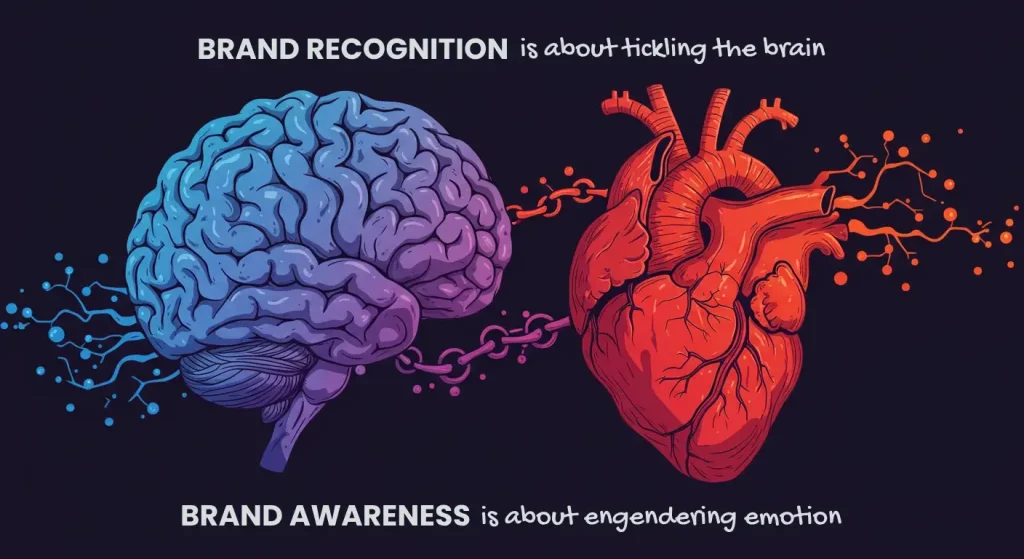
Brand recognition is a passive process; it’s the ability to identify a brand when you see it (e.g., on a shelf). Brand awareness is the broader umbrella term that includes recognition, but also recall (remembering a brand without seeing it) and top-of-mind dominance.
How long does it take to build brand awareness?
It is a long-term play. While a viral campaign can spike awareness in days, lasting mental availability typically takes 6 to 12 months of consistent advertising and marketing activity to stick in the consumer’s long-term memory.
Is brand awareness a vanity metric?
No. While “likes” can be vanity metrics, true brand awareness (share of mind) is a leading indicator of market share. Data shows that brands with a high share of search consistently capture higher market share in the following quarters.
How can small businesses build brand awareness with no budget?
Focus on distinctiveness and consistency. Use the same colour and tone across every touchpoint. Leverage brand ambassadors and organic social media, and focus on delivering a remarkable product that drives word-of-mouth marketing.
What is ‘Share of Search’ and why does it matter?
Share of Search is the percentage of organic search queries for your brand compared to your competitors. It matters because it is a proven proxy for market share. If more people search for you, you are winning the mental battle.
Does rebranding help or hurt brand awareness?
It is risky. Radical rebranding can destroy awareness if you remove “distinctive assets” (like Tropicana did). However, a strategic refresh that improves legibility and consistency can enhance brand trust and visibility in the long term.
How does content marketing improve brand awareness?
Educational content solves user problems, creating a positive association with your brand. By answering questions relevant to your industry, you enter the consumer’s mind as a helpful authority before they are even ready to make a purchase.
What are Category Entry Points (CEPs)?
CEPs are the specific cues (times, places, emotions) that trigger a thought of buying. For example, “watching a film” is a CEP for popcorn. Building awareness involves linking your brand to these specific moments, not just general concepts.
Can you measure ROI on brand awareness campaigns?
Yes, but not immediately. You measure it through “Brand Lift” (surveys), increases in direct traffic, improved click-through rates on performance ads (because people recognise you), and long-term reduction in Customer Acquisition Cost (CAC). Check our guide on branding ROI.
How does AI affect brand awareness in the future?
AI tools act as gatekeepers. If your brand lacks a strong digital footprint and authoritative citations, AI models won’t recommend you. Future awareness strategies must focus on “Generative Engine Optimisation” (GEO) to ensure visibility in AI answers.