10 Strategies for Building Brand Awareness: 2026 Playbook
People confuse “being seen” with “being remembered.”
They think a viral TikTok is a brand strategy. It isn’t. It’s a distraction.
If your audience doesn’t link that content to your specific brand assets, you’ve just paid for someone else’s entertainment.
The stakes are high. According to 2025 research, companies with strong brands deliver total shareholder returns that are 74% higher than those of their peers.
Ignoring the mechanics of brand awareness isn’t just a marketing oversight; it’s a fiduciary failure.
- Mental Availability: Prioritise being remembered at the moment of need, not chasing likes or viral moments.
- Distinctive Brand Assets: Build consistent sensory cues (colours, logo, audio) that trigger instant recognition.
- Category Entry Points (CEPs): Map 5–7 CEPs and link your brand to those exact situations through consistent advertising.
- 60:40 Rule: Allocate roughly 60% to long‑term brand building and 40% to short‑term activation for sustained growth.
- Share of Search & AI Entity: Track Share of Search and establish clear entity signals (PR, Schema, citations) for AI recommendations.
What is Brand Awareness?

Building brand awareness is the strategic process of increasing the probability that a brand will be retrieved from a consumer’s memory during a buying situation.
It is not about “likes”; it is about Mental Availability.
- Brand Salience: The “bigness” of a brand in a consumer’s mind.
- Distinctive Assets: The sensory cues (logos, colours, fonts) that trigger brand recognition.
- Category Entry Points (CEPs): The specific cues or situations that lead a consumer to think of a category (e.g., “I’m hungry and in a rush”).
The Psychology of Awareness: Why “Cognitive Fluency” Wins
Building brand awareness is essentially an exercise in reducing friction in the human brain. Psychologists call this Cognitive Fluency.
When a consumer recognises a brand instantly, their brain releases a small amount of dopamine because the “processing” is easy. This ease of processing is often mistaken for “trust” or “liking.”
To achieve this, you must master the Fluency Heuristic. This is the mental shortcut that leads people to prefer things that are easy to understand and familiar.
In the UK market, where consumers are increasingly cynical about “over-promised” marketing, being the most “familiar” option is often more profitable than being the “best” option.
Strategic Framework: The Recognition Ladder
- Visual Fluency: Use consistent Distinctive Brand Assets (colours, shapes).
- Linguistic Fluency: Use a consistent brand voice and simple, rhythmic messaging (alliteration and rhymes actually boost brand recall).
- Conceptual Fluency: Ensure your brand “fits” the category entry point perfectly.
| Asset Type | Primary Psychological Trigger | 2026 Best Practice |
| Colour Palette | Emotional association | Stick to 2 dominant, high-contrast colours across all UI/UX. |
| Typography | Brand personality | Use custom fonts to avoid the “generic web” look. |
| Sonic Brand | Instant subconscious recall | A 2-second “audio logo” for podcasts and video content. |
| Brand Character | Relatability & memory | Humanise the brand with a consistent spokesperson or mascot. |
10 Strategies for Building Brand Awareness
1. Master the Science of Distinctive Brand Assets (DBAs)
If I stripped your logo off your website, would your customers still know it’s you? Most SMBs fail this test. They use generic stock photography and safe, uninspired colour palettes.
A brand identity must be built on distinctive assets that are unique and famous.
Research from the Ehrenberg-Bass Institute shows that brands that consistently use distinctive assets grow faster because they reduce consumers’ cognitive load.
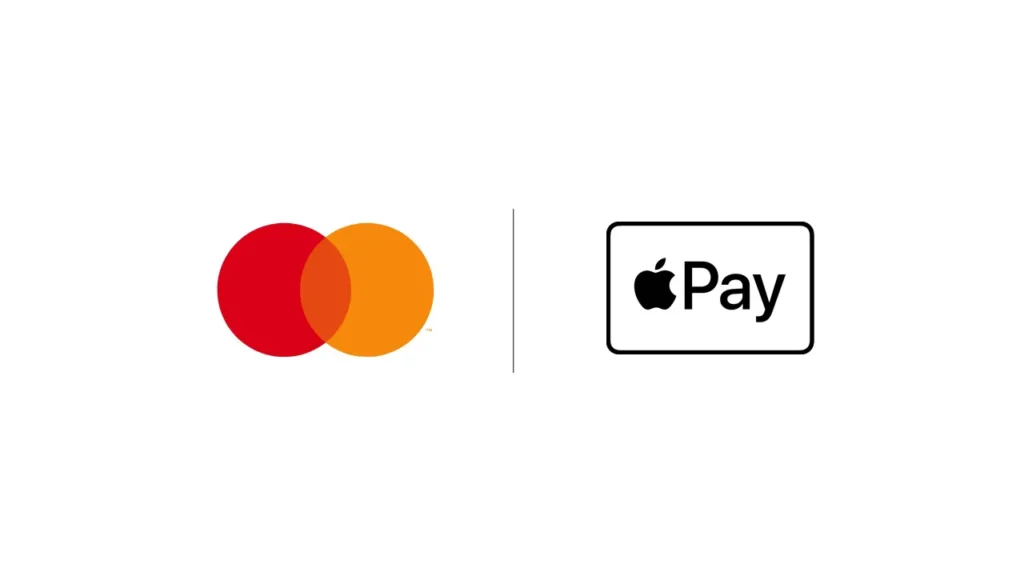
Real-World Example: Consider Mastercard.
They removed their name from their logo, relying entirely on the intersecting red and orange circles. This is the pinnacle of a distinctive asset. They’ve invested decades into making those two shapes synonymous with “payment.”
To build brand awareness in 2026, you must audit your assets.
Are you using a specific “brand voice” that sounds like a human and not an AI? Is your use of colour consistent across every touchpoint? If not, you are leaking brand equity every single day.
Mapping Your Category Entry Points (CEPs): When Do Customers Think of You?
Mental availability matters only if it occurs at the right time. A Category Entry Point (CEP) is the internal or external cue that a consumer experiences before they enter the market.
Common CEP categories include:
- Time: “It’s 11:00 AM, I need a snack.”
- Location: “I’m at the airport, and I forgot my headphones.”
- Emotion: “I feel overwhelmed by my taxes.”
- Social context: “I need to impress my new boss at dinner.”
The Strategic Playbook: To build brand awareness that converts, identify the 5-7 most common CEPs in your industry and “link” your brand to them through consistent advertising.
Mini Case Study: Monzo Bank
Monzo didn’t just market “a bank account.” They linked their brand to specific “pain point” CEPs:
- CEP: “I’m on holiday and don’t want to be charged for using my card.”
- CEP: “I need to split a dinner bill with friends easily.”
- CEP: “I want to see exactly where my money went today.”
By dominating these specific situations, they built massive brand awareness in the UK without needing the billion-pound budgets of HSBC or Barclays.
2. Prioritise Mental Availability Over “Engagement”
Engagement is a vanity metric that has led many UK businesses off a cliff. High engagement on a post does not correlate with market share growth. Mental Availability does.
Mental availability is about being thought of when the need arises. If you run a plumbing business in London, you don’t need people to “engage” with your memes; you need them to think of your name when their pipe bursts at 3:00 AM.
This requires mapping your brand salience to specific Category Entry Points.
3. Apply the 60:40 Rule of Brand vs. Activation
One of the most dangerous trends in the last decade is the obsession with “performance marketing.”
Businesses want an immediate return on every pound spent. But branding ROI doesn’t work that way.
The seminal work by Les Binet and Peter Field for the IPA shows that, for optimal growth, the average business should allocate roughly 60% of its budget to long-term brand building and 40% to short-term sales activation.
| Aspect | Brand Building (Long-term) | Sales Activation (Short-term) |
| Primary Goal | Create mental brand equity | Convert existing demand |
| Metric | Salience, Share of Search | Clicks, Conversions, ROAS |
| Media Type | Broad reach (Video, OOH) | Targeted (Search ads, Email) |
| Duration | 6+ months | 0-3 months |
| Impact | Increases price elasticity | Drives immediate volume |
If you skew too far into activation, you will see a “performance plateau.” You’ll run out of people to convert because you haven’t been “filling the funnel” with brand awareness.
4. Use Share of Search (SoS) as Your Guide

In 2026, tracking “brand awareness” through expensive surveys is outdated for most SMBs. The most accurate, real-time proxy for brand health is Share of Search.
Share of Search is your brand’s search volume divided by the total search volume for all brands in your category. Research suggests that SoS is a leading indicator of market share. If your SoS is rising, your market share will likely follow.
You can measure this using Google Trends or tools like MyTelescope. If you want to measure brand awareness effectively, stop looking at “impressions” and start looking at how many people are actually typing your name into a search bar.
5. Beyond Search: Positioning Your Brand in the 2026 AI Ecosystem
In 2026, “building brand awareness” isn’t just about what humans see; it’s about what AI models “know.”
Systems like ChatGPT, Claude, and Google Gemini generate recommendations based on the strength of your brand’s “Entity” within their training data.
If you aren’t a clearly defined entity, AI assistants will treat you as a generic commodity or, worse, ignore you entirely. You must move from “keywords” to “contextual associations.”
How to build “Entity Awareness” for AI:
- Digital PR and Citations: Aim for mentions in authoritative UK publications like The Guardian, Campaign, or Wired UK. These provide the “high-signal” data AI needs to verify your brand’s authority.
- Structured Data Mapping: Use Schema.org markup to explicitly tell search engines that “Brand X” is an “Organisation” that provides “Service Y” and is founded by “Person Z.”
- Co-occurrence Strategy: Ensure your brand name appears in the same paragraph as the top-tier entities in your niche. If you are a fintech brand, your name should frequently appear alongside “Financial Conduct Authority” or “Open Banking.”
When should you use this? This technical branding is essential if your business relies on being “the recommended choice” in a complex category. AI models look for “consensus” across the web. If 500 reputable sites associate your brand with “sustainable fashion,” the AI will reflect that awareness in its answers.
6. Focus on Reach, Not Frequency
There is a common myth that you need to hit the same person seven times before they buy (the “Rule of 7”). Modern data from the Nielsen and Ehrenberg-Bass studies suggests this is largely false.
To build a brand, you need Broad Reach.
You want to reach as many people in your category as possible, even those who aren’t ready to buy today. Over-targeting (narrowing your audience to just “likely buyers”) is the fastest way to shrink your brand.
Broad reach ensures that when those non-buyers eventually enter the market, they already know who you are. This is how you boost brand recognition across an entire industry.
The 95:5 Rule: Why Your B2B Brand Must Market to People Who Aren’t Buying
In B2B sectors, the “Rule of 7” is replaced by a much harsher reality: the 95:5 Rule, pioneered by the LinkedIn B2B Institute and Professor John Dawes.
Research shows that at any given time, only 5% of your target market is “in-market” and looking to buy. The other 95% are “out-of-market” and won’t be buying for months or even years.
If your brand awareness strategy only targets those with “intent,” you are fighting over a tiny, expensive sliver of the market.
To dominate in 2026, you must build brand salience with the 95% today, so that when they finally move into the buying phase, your brand is the first one that comes to mind.
How to execute the 95:5 strategy:
- Prioritise Reach: Use platforms like LinkedIn and YouTube to reach your entire category, not just people searching for specific keywords.
- Focus on Problem Awareness: Create content that highlights the “pain of the status quo” rather than just your product features.
- Measurement: Don’t track leads for these campaigns. Track the Share of Search and brand recall among the 95%.
Example: A cloud security firm, CrowdStrike, doesn’t just run ads for “buy antivirus now.” They invest heavily in high-production documentaries and global threat reports. When a CTO eventually needs to upgrade their security, CrowdStrike is already established as the “expert” entity in their mind.
7. Leverage Employee Advocacy for Human Trust

People don’t trust faceless corporations. They trust experts. In 2026, your team is your most potent brand awareness channel.
Data from the Edelman Trust Barometer consistently shows that company technical experts are more credible than the CEO or the PR department.
By empowering your team to share their expertise, you enhance brand trust through a “human-to-human” connection.
This isn’t about forcing staff to post corporate press releases. It’s about encouraging them to talk about the problems they solve.
When a potential client sees three different people from your agency providing value on LinkedIn, your brand’s mental availability skyrockets.
8. The Power of “Strategic Storytelling” (Without the Fluff)
I hate the word “storytelling” because it’s usually used as an excuse for vague, artsy-fartsy marketing. However, narrative framing is essential for memory.
Humans encode information through narratives. Your brand needs a “Master Narrative” that explains:
- What is the status quo?
- Why is the status quo broken/painful?
- What is the new way (Your Brand)?
This narrative must be consistent across your website, ads, and even your affiliate marketing efforts. Consistency creates a “memory structure” in the consumer’s brain.
9. Protecting Your Brand from AI Commoditisation
As AI makes it easier for competitors to mimic your content and features, your only “un-copyable” asset is your community. A community isn’t a Facebook group; it’s a network of brand advocates who feel a sense of shared identity.
How to build a high-awareness community in 2026:
- The “Closed-Loop” Model: Use platforms like Substack, Discord, or Slack to create “owned” spaces where your brand can interact directly with your most loyal 1% of customers.
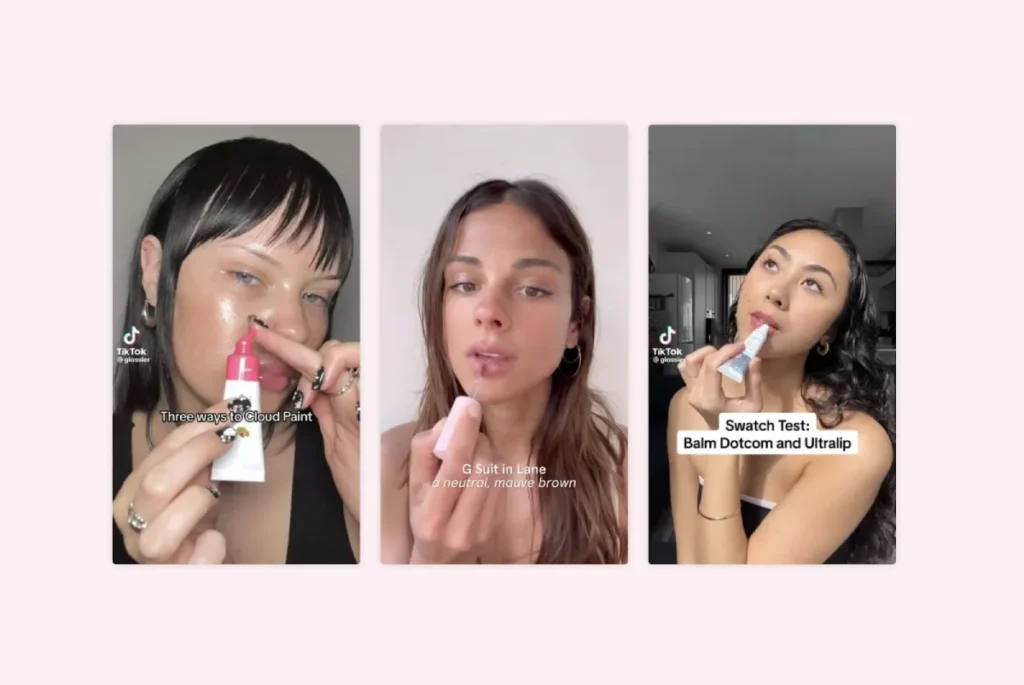
- User-Generated Content (UGC) as Brand Fuel: Encourage your community to share their “success stories.” In 2026, a video of a real person using your product in a “messy, real-world” environment is worth more than a £50k studio-produced ad.
- Co-Creation: Involve your community in your brand’s evolution. When Lego allows fans to submit and vote on new sets via “Lego Ideas,” they aren’t just doing R&D; they are building unshakeable brand salience.
Why this builds awareness: When your community talks about you, they use their own language and reach their own networks. This is “organic reach” that bypasses ad-blockers and AI filters. It creates a “trust-halo” around your brand that is impossible to buy.
10. Predictive Analytics and AI Sentiment
In 2026, we are no longer guessing how people feel about a brand. We use AI-driven sentiment analysis to track brand perception in real-time.
Tools now allow us to scan millions of social conversations, forum posts, and reviews to see not just how much people are talking about you, but the context of those conversations.
Are you being associated with “innovation” or “poor customer service”?
By tracking these semantic shifts, you can pivot your brand strategy before a narrative becomes permanent.
The Myth of Virality: Why It’s Killing Your Brand
Let’s address the elephant in the room: “Going Viral.”
Marketing departments across the UK are obsessed with it. But virality is usually “Low-Quality Reach.”
Most people who see a viral video will never buy from you. Worse, viral content often lacks “Branding Cues.” If people remember the joke but not the brand, that marketing spend is a total loss.
The IPA has repeatedly shown that fame is important, but only Brand-Linked Fame.
A slow, consistent, and broad-reach campaign will outperform a viral hit 99% of the time in the long run. Virality is a gamble; building brand awareness is an investment.
The State of Brand Awareness in 2026
We have moved into the era of “Zero-Click Awareness.”
With Google and AI assistants providing answers directly on the search results page, users might never visit your website. This means your brand must be visible in the search results themselves.
- SGE Optimisation: Your brand name must appear in the citations and summaries provided by AI.
- Visual Dominance: Your distinctive assets must be instantly recognisable in the “images” and “video” snippets.
- Trust Signals: In 2026, “Expertise, Experience, Authoritativeness, and Trustworthiness” (E-E-A-T) are the primary currency. If your brand isn’t cited by other trusted entities, your awareness will stall.
The Branding Comparison
| Feature | The Amateur Way (Wait & See) | The Professional Way (Inkbot Method) |
| Strategy | Post when “inspired” | Data-driven reach and frequency |
| Identity | Follows the latest design trends | Follows the laws of Distinctive Assets |
| Metrics | Likes, Follows, “Vibes” | Share of Search, Mental Availability |
| Focus | Just the “Likely Buyers” | Category-wide reach (The 95% rule) |
| Longevity | Short-term tactical bursts | Long-term brand equity building |
The Verdict
Building brand awareness is a technical discipline, not a creative whim.
It requires a deep understanding of human memory, the 60:40 rule of investment, and the technical landscape of 2026 SEO.
If you focus on building mental availability and protecting your distinctive assets, you will win. If you chase “engagement” and “virality,” you will eventually become invisible.
If you’re tired of “fluff” and want a brand that actually commands attention in the UK market, it’s time to get serious.
Explore how we can help you with your brand identity or request a quote to start building real equity today.
FAQ
How do I get my brand mentioned in Google’s AI Overviews?
Focus on becoming a recognised entity. This requires consistent mentions across high-authority UK news sites, a complete and verified Google Business Profile, and structured Schema markup on your site. AI prioritises “consensus” and “authority.”
Is “Share of Voice” still a relevant metric?
Yes, but in 2026, we prefer Share of Search. Share of Voice measures how much you spend compared to competitors; Share of Search measures how much people actually care and search for you. The latter is a much better predictor of growth.
What is the most effective channel for brand awareness in the UK?
For broad reach, YouTube Ads and Connected TV (CTV) are dominant. For high-trust, B2B awareness, LinkedIn and niche industry newsletters remain the gold standard.
How much should a small business spend on brand awareness?
Follow the 60:40 Rule. If your marketing budget is £1,000, spend £600 on long-term brand-building activities (content, PR, reach-based ads) and £400 on direct sales activation (search ads, email offers).
Can I build a brand without a logo?
A logo is just one Distinctive Brand Asset. While possible (e.g., through a very specific “voice” or “colour”), it makes the brain’s job much harder. It’s better to have 3-4 consistent assets, including a visual mark.
Does “going viral” actually help my brand?
Only if the content is “brand-linked.” If people remember the funny cat but not the insurance company that posted it, the virality is a failure. Always ensure your distinctive assets are central to the story.
How do I measure brand awareness on a £0 budget?
Use Google Trends to compare your brand search volume against your top 3 competitors. It provides a real-time, free, highly accurate “Share of Search” analysis.
What is the difference between brand awareness and brand equity?
Awareness is simply being known (Mental Availability). Equity is the value of that awareness—the ability to charge a higher price or have higher customer loyalty because of the brand’s reputation.
Why is my brand awareness decreasing?
The most common reason is “Brand Decay.” If you stop advertising or being active, your neural links in the consumer’s brain weaken. Consistency is more important than intensity.
Should I use influencers for brand building?
Yes, but prioritise “relevance” over “reach.” In 2026, Micro-influencers with high authority in a specific niche (e.g., UK sustainable gardening) drive better brand recall than generic celebrities.