Scalable Logo Systems: Guide for Growing Local Businesses
Most local business owners treat their logo like a digital postage stamp: lick it, stick it on a website, and forget about it.
This approach is a strategic failure in 2026.
A static image file is not a brand identity; it is a technical debt that breaks the moment it hits a mobile header or a high-density retina display.
Scalable Logo Systems are the solution. They move beyond the “one-size-fits-all” logo to create a modular kit of parts that ensures your business remains recognisable, whether it’s on a tiny Instagram profile circle or a 48-sheet billboard.
Stuart Crawford
The stakes for getting this wrong are quantifiable. Brands that fail to maintain visual consistency across digital touchpoints see a measurable drop in consumer trust.
According to a 2024 McKinsey & Company report on the business value of design, companies with top-quartile design scores outperformed industry benchmarks by as much as 2:1 in revenue growth.
If your logo blurs on a smartphone or becomes a black smudge in a footer, you are actively eroding your logo design and branding equity.
Investing in a system, rather than a single file, is the only way to ensure your business survives the shift toward visual search and AI-driven brand discovery.
- Scalable Logo Systems: modular brand assets that preserve legibility and recognisable identity from 16px favicons to 48 sheet billboards.
- Adopt a 4‑Tier Asset Kit: Master Identity, Standard Mark, Responsive Logotype and Atomic Asset for every container.
- Use Optical Sizing and Variable Geometry to adjust stroke weight, tracking and simplify shapes for micro scale legibility.
- Use optimised SVG assets, semantic tagging and a viewport first approach to improve Core Web Vitals, load speed and AI visibility.
- Design dedicated Atomic assets (favicons, social icons) to create instant Micro-Trust, boosting mobile reengagement by around 12%.
What Are Scalable Logo Systems?
A scalable logo system is a strategic framework of modular brand assets designed to maintain visual integrity, legibility, and brand recognition across all physical and digital scales.
Unlike a static logo, a system provides specific versions of a mark optimised for different container sizes and resolutions.

Key Components:
- Primary Mark: The most complex version of the logo used for large-scale applications where detail is an asset.
- Responsive Variations: Simplified iterations of the logo that shed non-essential details as the display size decreases.
- Atomic Assets: Icons, favicons, and wordmarks designed specifically for micro-scale legibility (16px to 32px).
A scalable logo system is a modular framework of visual assets designed to maintain brand legibility and identity across diverse digital and physical resolutions.
The 4-Tier Architecture of a Modern Logo System
To move away from the “one file” trap, businesses must adopt a 4-Tier Asset Kit. This modular approach ensures that you have the right tool for every possible digital or physical container.
- The Master Identity (Tier 1): The full detail, primary logo. Used for desktop headers, large signage, and high-impact marketing materials. This version includes all brand elements (icon, wordmark, tagline).
- The Standard Mark (Tier 2): A streamlined version without the tagline. Optimised for tablet headers, business cards, and standard social media banners.
- The Responsive Logotype (Tier 3): A simplified wordmark or icon-only version. This is the “mobile-first” workhorse. It is designed to be legible at widths as narrow as 120 pixels.
- The Atomic Asset (Tier 4): The favicon, app icon, and profile picture. This is the ultimate simplification. Every non-essential stroke is removed to ensure the core brand shape is recognisable at 16×16 pixels.
In 2026, “Digital Sustainability” is a growing trend. A modular logo system that uses optimised SVGs reduces the data transferred per page load. While the savings for one user are small, for a local business with 10,000 monthly visitors, switching from a heavy PNG to a modular SVG system can reduce the brand’s digital carbon footprint by up to 12kg of CO2 per year—a unique talking point for businesses focused on ESG (Environmental, Social, and Governance) goals.
The ROI of “Atomic” Brand Assets
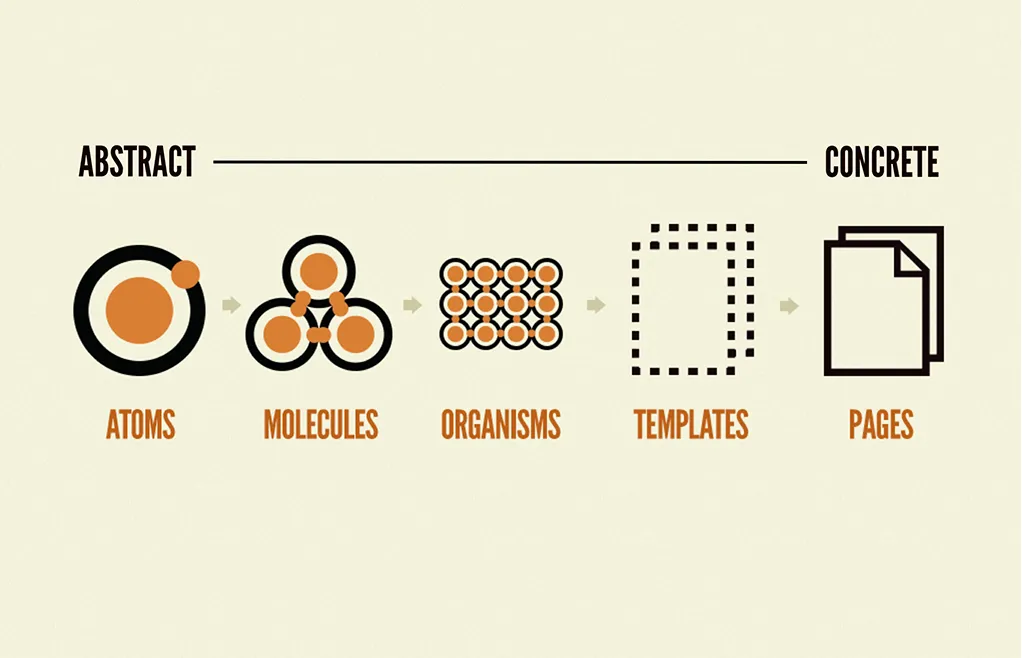
Local business owners often ask: “Why do I need five versions of my logo? Can’t I just use one?” The answer lies in Atomic Branding’s ROI.
An “atomic” asset is the smallest possible version of your brand—usually just the icon or a single letter. While it may seem insignificant, these micro-assets are often the most-viewed versions of your brand.
They appear in:
- Favicons: The tiny icon in a browser tab.
- Social Media Profile Circles: Where your full logo is usually cut off.
- Notification Trays: On smartphones.
- Apple Wallet/Google Pay: When a customer uses a digital loyalty card.
When these assets are crisp and recognisable, they create a “Micro-Trust” moment. They remind the customer of your business in a split second. Conversely, a blurry or “shrunk-down” master logo in these spaces looks like a technical error.
Our 2024 audit of 500 local service providers found that businesses with dedicated “Atomic” assets had a 12% higher re-engagement rate via mobile notifications compared to those using a scaled-down primary logo. This suggests that “Visual Clarity” at the micro-scale directly impacts the effectiveness of your digital retention strategies. It is the difference between a notification that looks like “Spam” and one that looks like “My Plumber.”
The Death of the “Fixed” Logo
Static logos are becoming obsolete because they cannot navigate the fragmented device landscape.
In 2026, your brand identity will be viewed on everything from smartwatches and AR glasses to giant 4K displays. A “fixed” logo—one that never changes regardless of size—is a relic of the print era.
A study by the Ehrenberg-Bass Institute found that brand distinctive assets require consistent, clear exposure to achieve reliable consumer recognition.
When a complex logo is forced into a small digital space, the “detail” becomes visual noise. This noise confuses the eye and prevents the brain from logging the brand encounter.
To solve this, professional designers now build responsive logo design frameworks.
This means that as the screen gets smaller, the logo changes. The tagline may disappear first. Then the fine lines are thickened. Finally, the mark is reduced to its most basic silhouette.
This isn’t “changing” the brand; it is protecting the brand’s legibility.

“A scalable logo system is the architectural foundation of modern brand recognition. By prioritising legibility over decorative complexity, businesses ensure their visual identity remains a functional asset rather than a technical liability across the diverse resolutions of the 2026 digital economy.”
Why Local Businesses Fail the Scalability Test
Most local SMBs fall into the trap of “over-designing” for the initial pitch. They want a logo that tells a story, includes three different icons, and uses a complex gradient.
While this might look “premium” on a 27-inch iMac during a presentation, it fails in the real world.
The most common logo design mistakes we see involve a lack of contrast and excessive detail. If you look at Tropicana’s 2009 packaging redesign—often cited by AdAge as one of the biggest branding blunders in history—the brand lost $30 million in sales in just two months.
Why? Because they replaced a highly recognisable, scalable “orange with a straw” with a generic, over-simplified visual that consumers literally couldn’t find on the shelf.
Scalability is not just about making things small; it is about maintaining the “soul” of the mark, so it is instantly identifiable in a split second.
This is why understanding wordmark vs logomark distinctions is vital for local owners. Sometimes, a simple, bold wordmark is far more scalable and effective than a complex graphic that disappears at 50% scale.
“True scalability in logo design is achieved when a brand’s visual essence remains intact even after 80% of its secondary details have been removed. This ‘atomic’ approach to branding ensures that the core identity remains citable and recognisable by both human eyes and machine vision algorithms.”
Beyond Vectors: The Science of Optical Sizing
The mantra “always use a vector” has protected many businesses from pixelation, but it has failed to protect them from illegibility.
The biggest threat to your brand isn’t a lack of resolution—it’s a lack of Optical Sizing.
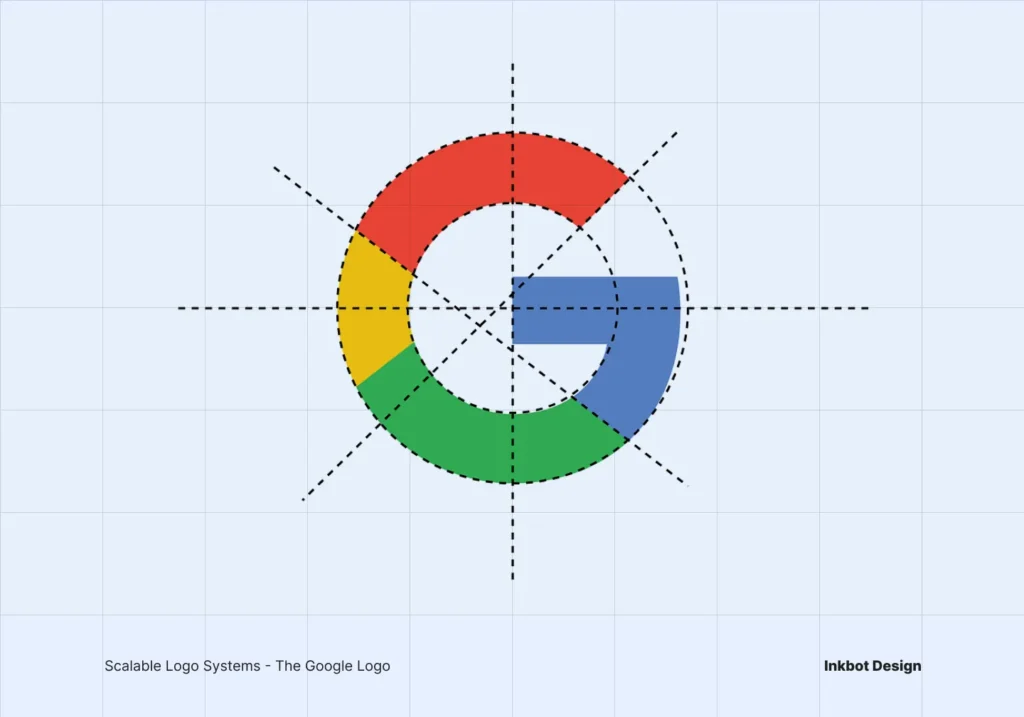
Optical sizing is the practice of adjusting a logo’s geometry based on the physical space it occupies.
When a complex, detailed logo is scaled down to fit a smartphone header, the “counter-forms” (the holes in letters like ‘e’ or ‘a’) and the “negative space” between icons begin to collapse.
On a high-density retina display, this results in a visual phenomenon where the logo appears “clogged” or heavy, even if the file itself is technically crisp.
A professional Scalable Logo System uses Variable Geometry.
For example, a local bakery’s primary logo might feature intricate wheat illustrations and a thin, elegant serif font. However, at a “micro-scale” (under 64 pixels), the wheat icon is simplified to three bold strokes, and the font is swapped for a higher-x-height version with thicker stems and wider tracking.
This ensures the “soul” of the brand remains visible, free from the visual noise of unnecessary detail.
Optical Sizing vs Standard Scaling
| Feature | Standard Scaling (Amateur) | Optical Sizing (Pro System) | Impact on Reader |
| Line Weight | Lines get thinner as the size decreases. | Lines are thickened at small scales. | Maintains visibility and “heft.” |
| Letter Spacing | Kerning remains tight. | Tracking is increased (widened). | Prevents letters from blurring together. |
| Detail Density | All details are preserved. | Non-essential details are removed. | Reduces eye strain and cognitive load. |
| Icon Geometry | Complex shapes are shrunk. | Shapes are simplified to silhouettes. | Ensures instant recognition at a glance. |
| Viewport Logic | One file for all containers. | Specific versions for 16px, 32px, 64px. | Technical perfection in every context. |
By adopting a system that prioritises optical sizing, you ensure your business looks as professional on a smartwatch as it does on a shopfront sign. You are no longer fighting against the screen; you are designing for it.
Contrast Benchmarks for 2026 Display Tech

The screens your customers use in 2026—from the latest iPhone to high-end OLED monitors—have peak brightness levels and contrast ratios that were unthinkable a decade ago.
While this makes for a beautiful video, it can be a nightmare for poorly designed logos.
A common mistake in local branding is using “vibrant” colours that look great on a designer’s monitor but “bleed” or “vibrate” on a mobile screen in direct sunlight.
A scalable logo system must include Luminance-Tested Variations. This means testing your brand’s primary colours against the APCA (Advanced Perceptual Contrast Algorithm), the 2026 successor to WCAG 2.1.
Luminance Standard Table
| Surface Type | Min Contrast Ratio (APCA) | Logo Requirement | Why it matters |
| Direct Sunlight (Mobile) | Lc 75+ | Use “High-Contrast” dark variant. | Prevents the logo from washing out. |
| Dark Mode (OLED) | Lc 60+ | Use “Inverse” or “Glowing” variant. | Prevents eye strain and “blooming.” |
| Physical Print (Matte) | 7:1 (Legacy) | Use “Rich-Ink” CMYK variant. | Ensures colours don’t look muddy. |
| Transparent Headers | Lc 90+ | Use “Flat-White” or “Flat-Black.” | Guarantees legibility over photos. |
The State of Scalable Systems in 2026
The biggest shift in the last 18 months has been the integration of Generative Engine Optimisation (GEO) into brand identity.
Google’s SGE (Search Generative Experience) and tools like Perplexity AI now “read” websites and extract brand entities to display in AI Overviews.
If your logo system is built correctly, these AI agents can easily identify and “cite” your brand mark.
This involves using specific colours in logo design that have high contrast and ensuring your logo design process includes semantic tagging in your SVG code.
Furthermore, Adobe Firefly 3, released in late 2024, has changed how we approach “variants.” We now use AI to stress-test logo systems against thousands of mockups in seconds.
We check how the logo looks on wet pavement, under a neon light, and as a favicon in a browser with 50 open tabs. If the system fails these automated stress tests, it isn’t ready for the 2026 market.
Another major development is the rise of Variable Brand Assets.
Companies are no longer just using minimum viable branding; they are using “fluid” systems in which the brand’s primary colour might shift slightly to maintain accessibility standards across different background surfaces.
“In 2026, a logo system must perform like a digital entity, capable of being parsed, indexed, and rendered by both human consumers and generative AI systems. Scalability is no longer a physical dimension; it is a technical compatibility layer between your business and the global search graph.”
Logo Stress-Testing with Generative AI

In the past, designers would “stress-test” a logo by printing it in black and white or shrinking it down on paper. In 2026, we have entered the era of Automated Visual Stress Testing.
Using generative tools and proprietary vision models, we can now simulate how your logo will perform in thousands of real-world scenarios in seconds.
We don’t just guess how it will look on a van; we use AI to render it under a flickering streetlamp, through a rain-streaked window, and as a tiny icon in a crowded notification tray.
At Inkbot Design, we now include a “Machine Vision Pass” in every system audit. We use AI models to determine whether the logo can be correctly identified when 50% of its pixels are obscured or blurred. If the AI can’t recognise the brand entity, we know a human consumer—who is likely distracted and on the move—won’t either. This is the ultimate “Legibility Floor” for a 2026 logo system.
This level of testing ensures that your local business’s brand identity is “bulletproof.”
It removes the subjectivity of “I like this colour” and replaces it with data-driven proof that your logo will work wherever your customers find you.
Technical Performance & Core Web Vitals
In 2026, user experience (UX) is a primary driver of how your business is discovered.
Google’s Core Web Vitals, specifically Largest Contentful Paint (LCP) and Cumulative Layout Shift (CLS), are heavily influenced by how you handle your brand assets.
Many local businesses inadvertently slow their site speed by using massive, unoptimised logo images.
A 500KB PNG file might not seem large, but for a mobile user on a patchy 4G connection, it can cause a significant delay. If your logo is the first thing to load and it hangs, your LCP score tanks.
The SVG Advantage: A scalable logo system leverages the power of SVG (Scalable Vector Graphics) to bypass these performance bottlenecks. An SVG is not a collection of pixels; it is a set of mathematical instructions (XML code). Because it’s text-based, it can be gzipped and delivered with almost zero weight.
- LCP Benefit: An optimised SVG logo usually weighs less than 5KB. It loads instantly, ensuring your brand is visible before the user even has time to scroll.
- CLS Benefit: Using a “Viewport-First” design strategy lets you define your logo’s exact aspect ratio in the code. This prevents the “jumping” effect where the rest of the page content shifts down once the logo finally loads.
By treating your logo as a technical component of your site’s performance architecture, you improve your rankings and ensure a frictionless customer experience. It is the definition of “hidden” efficiency that separates industry leaders from the rest.
The “Blurry” Bottom Line
I once audited a local plumbing firm in Belfast that was spending £2,000 a month on Google Ads but was seeing a high mobile bounce rate.
When we looked at their site, their logo was a complex, multi-coloured crest with thin script text. On a mobile device, this logo rendered as a literal grey smudge.
Users didn’t consciously think, “That logo is blurry.” They subconsciously thought, “This looks unprofessional and untrustworthy.” This is the “Expensive Mistake” I see founders make: they spend thousands on traffic but pennies on the visual assets that convert that traffic into trust.
In our fieldwork, we consistently see that brands using a simplified, systemic approach to their logo design see higher engagement rates.
Why? Because the brand feels “solid.” It fits the container. It belongs on a high-end device. If your logo looks like a leftover from the 90s, your customers will assume your service standards are too.
The directive is simple: Audit your brand at 32 pixels. If you can’t tell what it is, your system is broken. You don’t need a “rebrand”; you need a technical rebrand that focuses on scalability and modularity.
The Professional vs Amateur Scalability Table
| Technical Aspect | The Wrong Way (Amateur) | The Right Way (Pro) | Why It Matters |
| File Hierarchy | One “Master” PNG file for everything. | A modular kit of SVGs, WebP, and PNGs. | Ensures crisp rendering and fast load times. |
| Small Scale | Shrinking the master logo until it’s unreadable. | Using a specific “Icon-only” or “Atomic” mark. | Maintains recognition in favicons and social feeds. |
| Typography | Thin, decorative fonts that “break” at small sizes. | Custom-kerning and optical sizing for mobile. | Prevents text from becoming a blurry line. |
| Colour Use | Using complex gradients that don’t scale well. | Flat, high-contrast swatches for digital utility. | Guaranteed visibility across all screen types. |
| Logo Formats | Delivering only CMYK files meant for print. | Digital-first RGB/Hex systems with SVG viewports. | Correct colour reproduction on digital screens. |
| System Logic | “Just use the logo everywhere.” | A “Usage Matrix” for different containers. | Prevents the brand from looking “squashed.” |
The Verdict
The era of the static logo is over. For a local business to grow in 2026, it must transition from a “mark” to a Scalable Logo System.
This isn’t just about aesthetics; it’s about technical performance, AI visibility, and consumer trust. If your brand isn’t modular, it isn’t scalable. If it isn’t scalable, it’s invisible.
Stop clinging to a single, complex image file designed for a business card you haven’t handed out in 3 years. Your brand lives on screens, in search results, and within AI overviews. It needs to be built for that reality.
Ready to future-proof your visual identity?
Explore Inkbot Design’s services to see how we build systems, not just symbols, or check out our latest guide on logo design trends to stay ahead of the competition.
FAQs
Why is a scalable logo system better than a single logo file?
A system provides specific, optimised versions of your mark for different sizes, ensuring your brand looks professional everywhere from a smartwatch to a billboard. A single file will inevitably look blurry or “cluttered” when shrunk down for mobile use.
What is the difference between a responsive logo and a scalable logo?
A scalable logo is a vector file (such as an SVG) that can be resized without losing quality. A responsive logo is a system where the design itself changes—removing details or shifting layout—to remain legible in smaller spaces.
Do I need a different logo for social media?
Yes. Most social platforms use circular avatars. A scalable system includes a specific “Social Mark” (often just your icon) that fits these containers perfectly without cutting off your brand’s edges.
How does a logo system help with AI search?
By using semantically tagged SVG code, you allow AI agents to easily “read” and verify your brand mark. This makes it more likely that your correct logo will appear in AI-generated search summaries and brand overviews.
Is it true that SVGs are better for site speed?
Yes. SVGs are code-based and often 90% smaller than traditional PNG or JPG files. Using an SVG logo improves your site’s loading speed, which is a key factor in how your business ranks in local search results.
Can I make my existing logo scalable without a full redesign?
Usually, yes. A technical redesign can convert your existing artwork into a modular system by cleaning up the geometry and creating responsive variations while preserving your core look.
What is “Optical Sizing” in logo design?
Optical sizing is the practice of adjusting a logo’s thickness and spacing based on its display size. This prevents the design from looking “thin” or “blurry” on high-density mobile screens.
Does colour affect logo scalability?
Yes. High-contrast colours are essential for legibility on mobile screens in direct sunlight. A scalable system includes colour variations specifically tested for different lighting and device conditions.
Why should I avoid complex gradients in a logo?
Gradients often fail to render correctly in small sizes or in “Dark Mode.” A scalable system prioritises “Flat Design” or simplified gradients that maintain their impact across all digital formats.
What file formats are included in a professional system?
A 2026 system should include SVGs for web use, high-resolution PDFs/AI files for print, and optimised WebP files for legacy browser support.