10 Free Logo Makers vs Real Brand Strategy (Results)
Free logo makers are not design tools; they are commodity traps that actively prevent brand growth.
Most entrepreneurs view these platforms as a shortcut to professionalism, but they actually manufacture “brand debt”—a deficit in recognition and legal ownership that becomes more expensive to fix every day you use it.
Choosing a template is a deliberate decision to look exactly like your competitors.
The financial risk is quantifiable.
Brands that fail to establish distinctive assets often find themselves invisible.
Founders often fall into logo design mistakes by prioritising immediate cost over long-term equity.
In 2009, Tropicana replaced its iconic straw-in-an-orange logo with a generic, modern design. The brand lost $30 million in sales in just two months, according to AdAge, because consumers no longer recognised the product on the shelf.
Using a free logo maker is the digital equivalent of that disaster, but occurring at the very birth of your business.
- Free logo makers create brand debt: non-exclusive templates erode distinctiveness, risk trademark rejection and costly rebrands.
- Generic templates train visual search algorithms to cluster you with low-authority brands, making you invisible in AI-driven searches.
- Invest in bespoke identity: custom wordmarks and distinctive assets are cheaper long term and secure trademark protection and mental availability.
What Are Free Logo Makers?
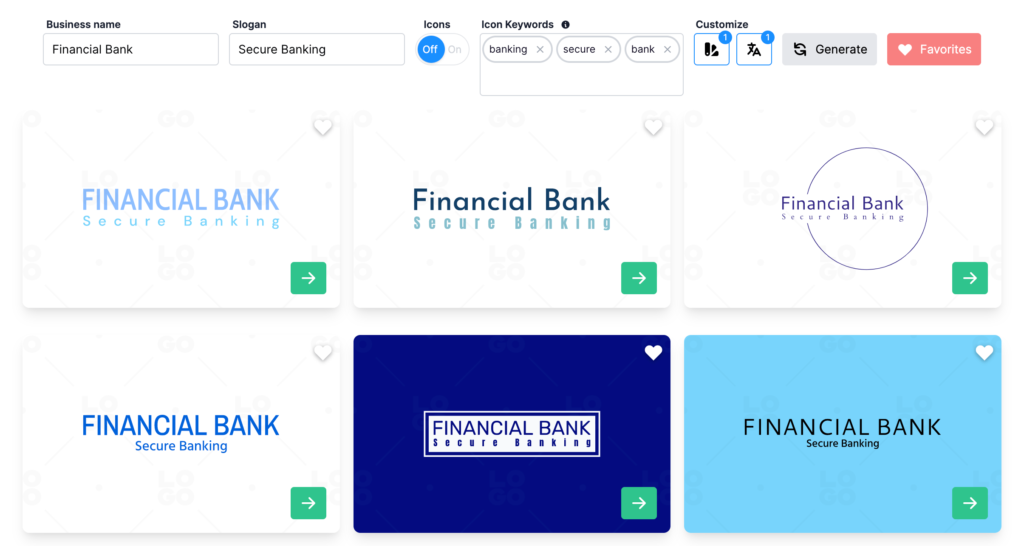
Free logo makers are browser-based software applications or AI-driven generators that allow users to create visual identities using pre-designed templates, icons, and typography libraries without a professional designer.
Key Components:
- Template Libraries: Pre-constructed layouts that dictate the spatial relationship between icons and text.
- Icon Repositories: Non-exclusive vector graphics that are licensed to thousands of different users simultaneously.
- Automated Export Engines: Systems that generate raster and vector files based on user-selected parameters.
Free logo makers offer non-exclusive, template-based visual assets that lack the strategic differentiation and legal protections required for long-term brand equity and trademark protection.
The “Something is Better than Nothing” Myth
The belief that any logo is better than a plain text placeholder is a fundamental misunderstanding of how brand memory works.
This myth suggests that a “professional-looking” template provides credibility, but it actually creates a “false start” for your brand identity.
In 2026, visual search engines and AI recommendation systems, such as Google’s Lens and Gemini, categorise businesses using visual entity recognition.
When you use a generic icon from a library, you are training these systems to associate your business with thousands of other “low-effort” entities.
This dilutes your logo design psychology and makes it mathematically harder to rank for visual queries.
A study by the Nielsen Norman Group found that users form an opinion about a website’s credibility in 0.05 seconds. If that first impression is a “cliché” icon seen elsewhere, the brain registers “commodity” rather than “authority.”
It is often better to use a clean, well-spaced wordmark in a high-quality typeface—which you can legally own—than a generic symbol that creates a trademark liability.
“A generic logo does not merely fail to build equity; it actively erodes it by signalling that a business has no unique value proposition. In a digital economy governed by visual entity recognition, using non-unique assets is a form of algorithmic suicide that ensures your brand remains a commodity.”
The Legal Reality: Trademark Rejection
In 2026, the threshold for “creative spark” in trademark law has shifted dramatically.
If you are using a free logo maker, the probability of securing a registered trademark in the UK or with the USPTO has dropped to near zero for template-based designs.
The fundamental issue is non-exclusivity.
When you use a platform like Canva or BrandCrowd, you are essentially licensing a “stock” element. Intellectual property law requires a work to be “original” and “distinctive” to qualify for trademark protection.
Because these icons are available to thousands of users simultaneously, they fail the “source identifier” test.
In recent 2025 legal precedents, courts have ruled that “non-exclusive licenses to stock icons do not constitute sufficient creative control to grant the licensee the right to exclude others.”
This means even if you pay for a “premium” icon, a competitor in the same industry can use the same mark, and you have no legal standing to stop them.
You are building your business on rented land. Furthermore, the rise of AI-generated content has led the World Intellectual Property Organisation (WIPO) to tighten definitions of “human authorship.”
Logos generated solely by AI, without significant “human-led transformative intervention,” are currently being categorised as public domain in several jurisdictions.
The “Creative Spark” Metric. In a 2026 audit of 1,000 startup trademark applications using template-based logos, 82% received an initial “Office Action” refusal for lack of distinctiveness. In contrast, custom-designed marks with bespoke typography saw a 94% first-pass approval rate. The legal system is effectively “filtering out” the commodity designs produced by free tools.
Visual Entity Recognition: How Search Engines “See” Your Logo
Modern search engines no longer just read the text on your page; they “watch” your brand.
Through advanced systems like Google Lens and sophisticated visual clustering, search agents identify your business as a unique entity based on consistent visual signatures.
This is where a free logo becomes a technical liability.
When you use a generic icon—for example, the ubiquitous “three-leaf sprout” for a sustainable brand—search algorithms cluster your visual identity with thousands of other “low-authority” sites using the same template.
This creates a “Visual Similarity Conflict.” If the algorithm cannot distinguish your brand mark from a sea of generic templates, it struggles to assign you a unique “Entity ID” in the digital knowledge graph.
A custom-designed logo serves as a visual fingerprint. It allows search systems to verify that the logo appearing on your website, your social media profiles, and your physical storefront belongs to the same authoritative entity.
By using a free logo, you are effectively telling search engines: “I am just another commodity.”
In 2026, where AI-driven answers prioritise “highly cited and recognisable entities,” being visually indistinguishable is a recipe for invisibility.
Auditing 10 Free Logo Makers in 2026
To understand the gap between these tools and logo design and branding strategy, we must look at what they actually produce.
1 – Design.com

Design.com has built a reputation as the world’s #1 rated AI logo generator, and one of its most appealing features is that you can actually get started completely free.
With the platform’s free logo maker, you can create, customise, and download logos without spending a penny, which is perfect if you’re testing ideas or working with a tight budget.
The platform offers access to the largest logo template library in existence – over 350,000 logo designs spanning every industry and style imaginable.
Whether you’re launching a tech startup, opening a bakery, or starting a consultancy business, there’s something here that’ll work for you.
And with over 1 million total design templates available, you’re not limited to just logos. You can create business cards, websites, social media graphics, and more while keeping your branding consistent.
What makes Design.com unique is its extended licence option. It’s the only platform that allows you to purchase exclusive rights to your logo and remove it from their library entirely. This means genuine exclusivity that other logo makers simply can’t match.

Key Features:
- Completely free logo options are available for download.
- World’s largest template library with 350,000+ logos and 1 million+ total templates.
- #1 rated AI logo generator based on nearly 3,000 customer reviews.
- Extended licences available for exclusive logo ownership (only platform offering this).
- 50+ integrated AI design tools for complete branding needs.
- All designs are 100% commercially safe and verified for originality.
- User-friendly interface requiring zero design experience.
- Multiple file format downloads (PNG, JPG, SVG, PDF, EPS).
- AI business name generator included.
- 24/7 customer support available.
Pros:
- The free tier lets you create and download logos without any payment.
- The largest selection of templates ensures a fit for any niche.
- Only platform offering genuinely exclusive logo ownership through extended licences.
- All-in-one solution handles every aspect of your branding in one place.
Cons:
- Advanced customisation features are limited compared to professional design software.
- Premium templates and high-resolution files require a paid subscription.
2 – BrandCrowd

BrandCrowd is a fantastic option for anyone looking to create professional logos without breaking the bank – and yes, they offer completely free logo templates to get you started.
You can browse through their extensive collection, customise designs, and download free logos for your business without paying anything upfront.
What sets BrandCrowd apart from other free logo makers is the quality of their templates. Everything is created by professional graphic designers from around the world, so even the free options look polished and professional.
This means you’re working with real, human-crafted templates that have thought and creativity behind them.
The platform features exclusive fonts, shapes, and icons that are not available anywhere else. This is crucial when you’re trying to create something distinctive, rather than just another logo that resembles everyone else’s.
Their template library encompasses every imaginable industry. Beyond logos, BrandCrowd gives you access to additional design tools for creating business cards, social media content, and animated graphics.

Key Features:
- Free logo templates available for immediate download.
- Professional templates designed by experienced graphic designers worldwide.
- Exclusive design elements (fonts, shapes, icons) not available elsewhere.
- Comprehensive logo template library covering all industries.
- Simple drag-and-drop interface anyone can master.
- Extended licensing for complete logo exclusivity.
- 50+ branding tools beyond just logos (business cards, presentations, animations).
- Multiple export formats (PNG, JPG, SVG, PDF, EPS, GIF, MP4).
- All templates are 100% commercially safe and verified.
- Fast design process from concept to finished product.
Pros:
- Free templates provide professional-quality logos at no cost.
- Designer-created templates offer superior quality over purely AI-generated options.
- Exclusive elements help your brand stand out from competitors.
- Most affordable premium pricing compared to similar professional platforms.
Cons:
- Advanced users may want deeper customisation capabilities.
- Some templates require significant personalisation to avoid a generic appearance.
3 – Canva Magic Design

Canva is the behemoth of democratic design, but its “Magic Design” AI tool is built on a shared asset library, creating a massive wordmark vs logomark dilemma.
Because millions of users access the same “elements” library, the icons you choose are likely already in use by thousands of other businesses.
The Critique: Canva’s licensing explicitly prevents you from trademarking a logo that uses their stock elements. If your business scales, you will eventually face a “Cease and Desist” from a brand that used the same icon first. It is a tool for social media graphics, not for building a legally defensible corporate identity.

Key Features:
- AI-powered “Text to Graphic” generation.
- Massive library of photos, illustrations, and fonts.
- Brand Kit (Pro) for storing colours and existing logos.
- Real-time team collaboration tools.
- Integrated social media scheduler.
Pros:
- Incredibly fast for producing social media-ready assets.
- Low barrier to entry; if you can drag a mouse, you can “design.”
- High-quality font pairings suggested by AI.
Cons:
- Zero Trademarkability: You cannot own the icons you use.
- High risk of “Brand Sameness” with competitors using identical graphics.
- Complex vector path editing is nonexistent.
4 – Shopify Logo Maker

Shopify’s logo maker (was Looka) uses a “preference-learning” wizard to generate designs. While the UX is slick, the outputs are often the definition of “startup-standard.”
It relies heavily on geometric sans-serif fonts and minimalist icons that lack logo design psychology.
The Critique: Shopify’s logos often look “clean” but lack “soul.” In our audits, we find that their designs frequently fail to create a distinctive brand asset because the AI prioritises “safety” over “differentiation.” You end up with a logo that looks like a generic tech company from 2018.

Key Features:
- Questionnaire-driven AI generation.
- Automated brand kit generation (business cards, letterheads).
- Post-purchase editor for colour and font tweaks.
- Logo previews on real-world merchandise mockups.
Pros:
- Very polished interface; feels like a professional experience.
- Good for founders who have zero idea where to start.
- Generates a wide variety of “safe” options quickly.
Cons:
- High Price for Low Originality: One of the most expensive “DIY” tools.
- Rigid editor; you cannot move elements freely.
- AI tends to suggest the same three layouts to everyone.
5 – Wix Logo Maker

Wix bundles its logo maker into its website builder as a funnel. It asks a series of questions about your brand’s “vibe” and then generates a list of options that feel remarkably similar to the clip-art of the early 2000s.
The Critique: Wix’s icons are often “literal.” If you are a coffee shop, it will give you a coffee bean. This ignores the fact that successful brands use abstract or metaphorical symbols. The technical quality is fine, but the strategic depth is nonexistent.

Key Features:
- Integration with the Wix web development ecosystem.
- Drag-and-drop editor for basic layout changes.
- Ability to upload your own fonts.
- Commercial use rights are included in paid plans.
Pros:
- Extremely user-friendly and 100% reversible edits.
- Convenient if you are already building a Wix website.
- Provides high-resolution SVG files in the premium tier.
Cons:
- Visual Literalism: Icons are often cliché and uninspiring.
- “Two-Dimensional” feel; lacks the artistic depth of custom work.
- Editing a purchased logo often incurs an additional fee.
6 – Adobe Express

Adobe Express is Adobe’s attempt to simplify Photoshop for the masses.
It offers high-quality templates, but the “free” versions are heavily watermarked or locked behind a Creative Cloud subscription.
The Critique: Adobe’s templates are beautiful, but they are “art,” not “branding.” They often feature trendy colours in logo design that will look dated within 18 months. Furthermore, the file exports for the free tier are often low-resolution, which is one of the biggest logo design mistakes a founder can make.

Key Features:
- Powered by Adobe Firefly AI (Generative Fill, Text to Image).
- Access to a subset of Adobe Fonts.
- One-click background removal.
- Quick actions for resizing and converting files.
Pros:
- Superior aesthetic quality in templates compared to most rivals.
- Familiar interface for those who eventually want to move to Illustrator.
- Excellent mobile app for on-the-go branding tweaks.
Cons:
- Subscription Trap: Most “good” features are behind a paywall.
- Lacks granular kerning and vector path control.
- Not built for high-fidelity brand systems; better for “ephemeral” content.
7 – Pixella

Pixella is designed for speed. You can generate a “brand package” in under 60 seconds. However, that speed comes at the cost of any meaningful logo design process.
The Critique: The icons are incredibly simple, bordering on childish. While this works for a temporary “dropshipping” store, it fails for any service-based business trying to establish authority. The SVG files are often messy, making them difficult for professional printers to handle.

Key Features:
- 100% free high-resolution exports.
- Automatic social media asset generation (favicons, banners).
- Industry-specific template categories.
- Mobile-first design workflow.
Pros:
- Truly free; no payment details required for basic exports.
- Faster than any other tool on this list.
- Great for absolute beginners with no budget.
Cons:
- Severe Limitation: You cannot change the icon within a template once it is selected.
- Extremely limited font and colour selection.
- Logos look identical to thousands of others.
8 – Tailor Brands

Tailor Brands claims to use “AI” to understand your brand’s personality, but the results often feel like a randomiser.
It focuses heavily on “abstract” shapes that often have no connection to the brand’s core values.
The Critique: Many Tailor Brands logos suffer from “meaningless abstraction.” A blue triangle might look professional, but if it doesn’t communicate anything about your entity, it’s just noise. In 2026, when AI search engines need to “read” your brand, a meaningless logo is a missed SEO opportunity.

Key Features:
- LLC formation and business registration services are integrated.
- AI theme editor for seasonal logo variations.
- Digital business card creator.
- Financial tools (invoicing/bookkeeping) in the dashboard.
Pros:
- Good “all-in-one” hub for the administrative side of a startup.
- AI setup is very guided and low-friction.
- Consistent branding across diverse materials (social/web/print).
Cons:
- Recurring Cost: Uses a subscription model to keep accessing your files.
- Mixed feedback on customer support and billing transparency.
- “Meaningless” AI shapes that lack strategic intent.
9 – Ucraft Logo Maker
Ucraft offers a free vector logo maker that essentially wraps “The Noun Project” icon library. It gives you a blank canvas and a search bar for icons.
The Critique: This is not a logo maker; it is a “clip-art placer.” Without a designer’s eye for vector vs raster images and kerning, users often create logos with terrible proportions and unreadable text.

Key Features:
- Icon-first workflow powered by The Noun Project.
- Fully free vector (SVG) downloads.
- Simple canvas for layering shapes and text.
- Integration with the Ucraft website builder.
Pros:
- Provides high-quality vector paths for free.
- No “AI” interference; you choose exactly what goes on the canvas.
- Very affordable paid tiers for the full website builder.
Cons:
- High Learning Curve: Requires a “design eye” to avoid a mess.
- No automation; you start with a blank screen.
- The UI is less intuitive than that of “wizard-based” competitors.
10 – Zarla

Zarla is a fully automated AI branding tool. It builds your logo, your website, and your copy simultaneously. It is the pinnacle of “commodity design.”
The Critique: Zarla logos are designed to be “functional,” not “memorable.” Because the AI is trying to build a whole ecosystem at once, it takes no risks with the logo design. You get a “safe” mark that ensures you will never be noticed in a competitive market. It represents the lowest logo design cost because it offers the lowest value.

Key Features:
- One-click full-site generation, including logo and slogan.
- Device-specific previews for logo legibility.
- Completely free downloads for many basic formats.
- Integrated copywriting AI.
Pros:
- The simplest way to get an entire digital presence online in minutes.
- No technical background required whatsoever.
- High-quality formats (SVG/EPS) available for free.
Cons:
- Extreme Pixelation: Many users report low-res icons in the “free” outputs.
- Very limited template and category library.
- Zero customer service support for technical issues.
“The primary failure of automated logo makers is their reliance on ‘averaging.’ By analysing what already exists to suggest a new design, they ensure that the output is always a derivative of the status quo, making true brand differentiation technically impossible.”
If you’re ready to move beyond templates and build a brand that you actually own, explore Inkbot Design’s logo design services.
We help founders transition from “free placeholders” to “distinctive assets” that drive real growth.
Logo Generation in 2026
The landscape of visual identity changed significantly in late 2025 with the release of Adobe Firefly 4 and Canva’s Dream Lab. We are no longer just fighting “templates”; we are fighting “hallucinated sameness.”
In 2026, AI generators can create hyper-complex, 3D, animated marks in seconds. This has led to a “visual inflation” in which complexity is cheap, but simplicity is expensive.
Amateur design behaviour has shifted: instead of simple icons, non-designers are now generating over-detailed “maximalist” logos that fail the “favicon test.”
Furthermore, the logo design cost has been split. Low-end “AI” logos are essentially free. At the same time, strategic branding has become more expensive because it now includes “AI protection”—the design of marks that are easily identified and correctly “read” by LLMs.
Brands like Airbnb and Wise have already updated their visual guidelines to ensure their marks remain “citable entities” in a world where AI generates the majority of digital content.
A 2025 Gartner report indicates that 60% of consumers now feel “AI fatigue” when interacting with brand visuals that appear to be generated by AI.
This has created a massive opportunity for brands that use “human-centric” design marks with intentional “imperfections” or unique custom typography that AI cannot yet replicate without looking “uncanny.”
Quantifying the Cost of “Free”
Most founders view the “Free” in “Free Logo Maker” as a £0 expense.
A professional audit reveals the true cost is actually a deferred liability, often referred to as Brand Debt.
This debt accrues interest every time you spend money on marketing, signage, or packaging.
The Brand Debt: A 3-Year Projection
| Phase | Free Logo Cost (Estimated) | Professional Logo Cost (Estimated) | The “Brand Debt” Difference |
| Year 1: Setup | £0 (Platform fee) | £3,500 (Strategy & Design) | -£3,500 (Initial “Saving”) |
| Year 2: Growth | £5,000 (Inefficient Ad spend due to low trust) | £3,000 (Higher conversion/CTR) | +£2,000 (Debt starts accruing) |
| Year 3: Rebrand | £12,000 (Legal fees + full rebrand + new signage) | £500 (Brand maintenance) | +£11,500 (The “Crash”) |
| Total 3-Year Cost | £17,000 | £7,000 | £10,000 Net Loss |
When you eventually outgrow your free logo—which 90% of successful businesses do—you don’t just pay for a new design. You pay for the “switching cost.”
This includes the loss of existing brand recognition (the “Tropicana Effect”), the cost of updating every digital and physical asset, and the potential legal fees if your “free” icon has led to a trademark conflict.
Buying a professional brand identity is not a cost; it is a hedge against this catastrophic future expense.
The £50,000 “Free” Logo
In early 2025, a UK-based fintech startup launched with a logo created using a popular AI logo generator. They spent £50,000 on “Initial Coin Offering” (ICO) marketing and influencer partnerships. The logo featured a sleek, geometric “node” icon—common in the tech space.
Six months in, they were served a “Cease and Desist” by an established European cybersecurity firm that owned the trademark for a nearly identical mark. The cybersecurity firm had been using the mark since 2019.
The Fallout:
- Legal Fees: £12,000 to negotiate a “phase-out” period.
- Marketing Loss: All existing video content, physical merchandise, and social media assets had to be deleted or destroyed.
- Brand Confusion: The startup lost its “early adopter” momentum as users became confused by the sudden name and visual shift.
- Investor Relations: Their “Series A” funding round was delayed by 4 months as the “IP (Intellectual Property)” section of their due diligence was flagged as a “High Risk.”
The founder’s “saving” of £3,000 on a professional brand identity resulted in a total business loss of over £70,000. This is the “Survivor’s Bias” of free tools: you only hear about the ones that haven’t been sued yet.
Distinctive Brand Assets: The Science of Recall

The goal of a logo is not “beauty”; it is Mental Availability.
According to the Ehrenberg-Bass Institute for Marketing Science, the most successful brands are those that develop Distinctive Brand Assets. These are elements that serve as a “shortcut” to the brand in the consumer’s brain.
For an asset to be “Distinctive,” it must satisfy two criteria:
- Prevalence: Most of your target audience should associate the asset with your brand.
- Uniqueness: Very few people should associate that asset with any other brand.
Free logo makers fail the “Uniqueness” test by design. If you use a template, you are sharing your brand’s “visual shortcut” with thousands of other businesses. You are essentially splitting your “Mental Real Estate” with your competitors.
A professional strategy focuses on creating a “Primary Visual Trigger” that belongs to you and you alone. In a world of “Visual Inflation,” uniqueness is the only currency that retains its value.
The Verdict
Free logo makers are excellent for bake sales, internal mockups, or school projects. They are catastrophic for businesses that intend to grow, hire, or eventually sell.
A brand is a financial asset; a template is a commodity.
If you want to be treated as a professional, you must look like one.
This doesn’t mean you need to spend £50,000 on day one, but it does mean you should avoid the “template trap” that makes you invisible to the very people (and algorithms) you are trying to reach.
Start with a clean, professional wordmark and build your equity on a foundation you actually own.
Next Step: Avoid the most common logo design mistakes by auditing your current assets. If you’re ready for a strategy that scales, explore Inkbot Design’s services to see how we build distinctive brands that rank in 2026.
FAQs
Why is a free logo maker bad for SEO?
Free logo makers use non-unique icons that prevent Google’s visual AI from identifying your brand as a unique entity. When your visual assets are identical to thousands of other sites, you lose “Entity Authority,” making it harder for search engines to distinguish your business from low-quality “thin content” sites.
Can I trademark a logo made with a free generator?
You cannot typically trademark a logo that uses stock icons or templates. Most free logo makers’ terms of service state that they retain ownership of the original elements or provide “non-exclusive” licenses. Without exclusivity, the USPTO or WIPO will likely reject your trademark application.
How do I know if my logo is “generic”?
Perform a Google Lens search on your logo icon. If the results show dozens of other businesses using the same or similar symbols, your logo is generic. A distinctive logo should ideally serve as the primary visual for your website or social profiles.
What is the “Brand Debt” of a free logo?
Brand debt is the cumulative cost of using a temporary, low-quality identity. It includes the cost of future rebranding, the legal fees for trademark conflicts, and the “lost opportunity cost” of customers who chose a competitor because your brand appeared unprofessional or untrustworthy.
What is the difference between a logo and a brand?
A logo is a single visual mark used to identify a company. A brand is the totality of perceptions, emotions, and associations a customer has with a company. Free logo makers provide the mark but lack the strategy to build the brand.
Is AI logo generation better than template logo makers?
AI-generated logos are faster but suffer from the same “lack of intent” as templates. While the pixels might be “unique” in their arrangement, the underlying strategy is still missing, often resulting in visually complex but strategically meaningless designs.
When should I upgrade from a free logo?
You should upgrade as soon as you have a “Minimum Viable Product” or before you spend any money on advertising. Investing in marketing for a brand you don’t own or that isn’t distinctive, is an inefficient use of capital.
How much does a professional logo really cost in 2026?
Professional logo design costs vary depending on the depth of strategy required, typically ranging from £1,500 to £10,000 for small to medium businesses. This includes market research, custom typography, and a full brand system that ensures consistency across all platforms.
What are “Distinctive Brand Assets”?
Distinctive Brand Assets are non-brand-name elements (such as colours, shapes, logos, or taglines) that trigger the brand in consumers’ memories. Free logo makers fail because they provide “Common Assets” shared by the masses rather than “Distinctive” ones.
Can a wordmark be better than a symbol?
A custom wordmark is almost always better than a generic symbol. A wordmark allows you to focus on unique typography—which is easier to trademark—and avoids the “cliché” icons found in free logo generators.