How to Create a Brand Guideline Template: Step-by-Step Guide
Have you ever walked into a party and felt you didn’t belong?
That’s how your brand feels when it’s inconsistent.
Trust me, I’ve been there.
I remember frantically cobbling together a “brand guide” for my first client. PowerPoint was my weapon of choice (it was like 20 years ago), and my idea of consistency was using the same dodgy clip art on every slide.
Spoiler alert: It was a disaster.
The client looked at me like I’d just served them a mouldy sandwich. I lost the account faster than you can say “unprofessional”.
But here’s the thing: That embarrassing failure taught me more than any marketing course ever could.
I realised that a solid brand guideline isn’t just a fancy document – it’s the backbone of your marketing strategy. It’s the difference between looking like a polished pro and a clueless amateur.
So, buckle up. I’m about to show you how to create a brand guideline template that’ll make your clients go “Wow!” (in a good way this time).
No design degree is required. Promise.
🔰 TL;DR: This guide walks you through creating a killer brand guideline template, covering everything from visual elements to tone of voice. You’ll learn how to craft a document that keeps your brand consistent, impresses clients, and makes your marketing efforts 10x more effective. No fancy design skills are required – just follow these steps and watch your brand transform.
- Consistency builds trust: A cohesive brand image differentiates you from competitors and enhances customer loyalty.
- Streamlined processes: Clear guidelines reduce time spent on design decisions, improving efficiency across the team.
- Professionalism impresses clients: A well-defined brand guideline showcases expertise, instilling confidence in current and potential clients.
Why Bother With a Brand Guideline? (It’s Not Just Pretty Colours)
Let’s get real for a second.
You might be thinking, “Do I need this? Can’t I just wing it?”
Sure, you could. But here’s why that’s a terrible idea:
- Consistency is king: A cohesive brand builds trust. Period.
- Save time (and sanity): No more hunting for that logo file or debating which shade of blue to use.
- Impress clients: A professional guideline screams, “I know what I’m doing.”
- Empower your team: Give everyone the tools to represent your brand correctly.
- Stand out from the crowd: In a sea of mediocre marketing, be the brand people remember.
Still not convinced? Let’s look at some cold, hard facts:
According to a 2023 study by Lucidpress, consistent brand presentation across all platforms increases revenue by up to 33%.
That’s not chump change, folks.
The Essential Elements of Your Brand Guideline Template

Right, let’s dive into the meat of this thing. Your brand guideline template needs to cover these key areas:
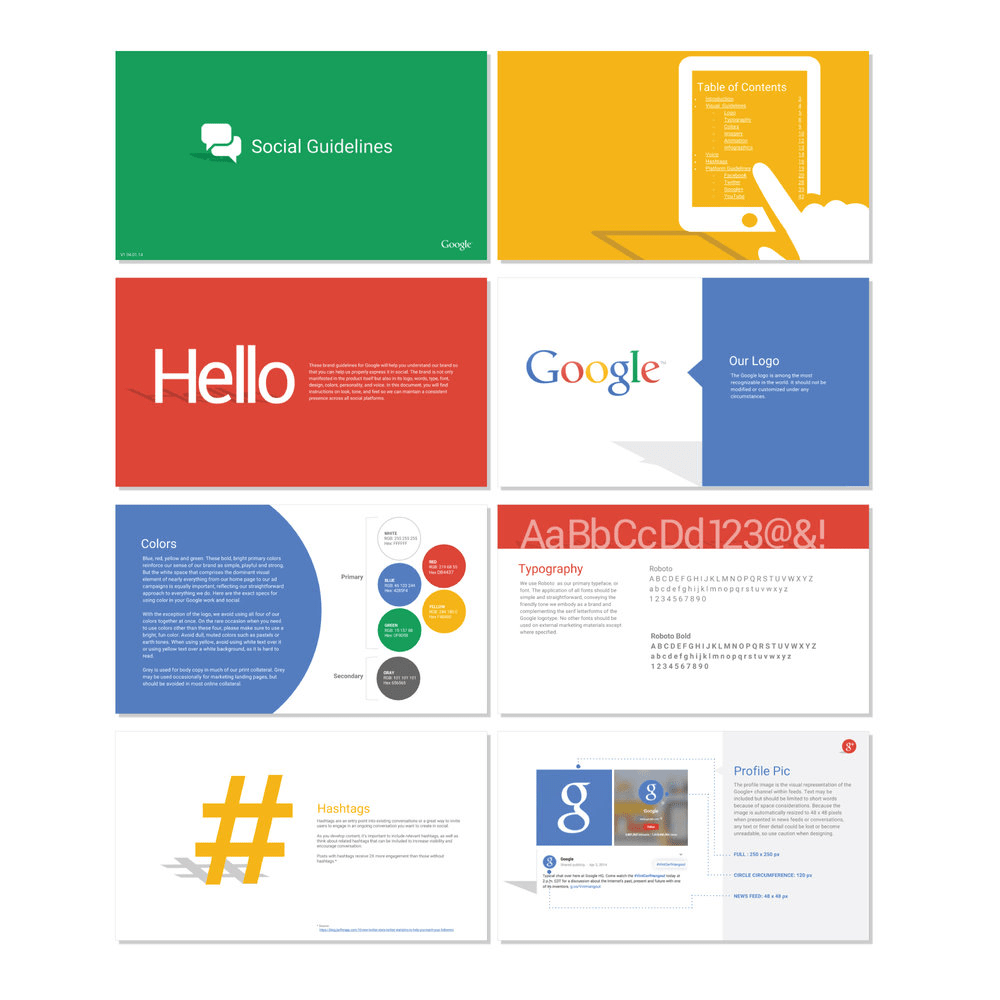
1. Logo Usage 🖼️
Your logo is the face of your brand. Treat it with respect.
Include:
- Primary logo
- Secondary/alternate versions
- Minimum size requirements
- Clear space rules
- Do’s and don’ts of logo usage
Pro Tip: Create a simple grid system for your logo. It’ll make sizing and placement a breeze across different media.
2. Colour Palette 🎨
Colours evoke emotion. Choose wisely.
Include:
- Primary colours
- Secondary colours
- Accent colours
- Colour codes (HEX, RGB, CMYK, Pantone)
Remember: Limit your palette to 3-5 core colours. Too many, and you’ll end up with a rainbow mess.
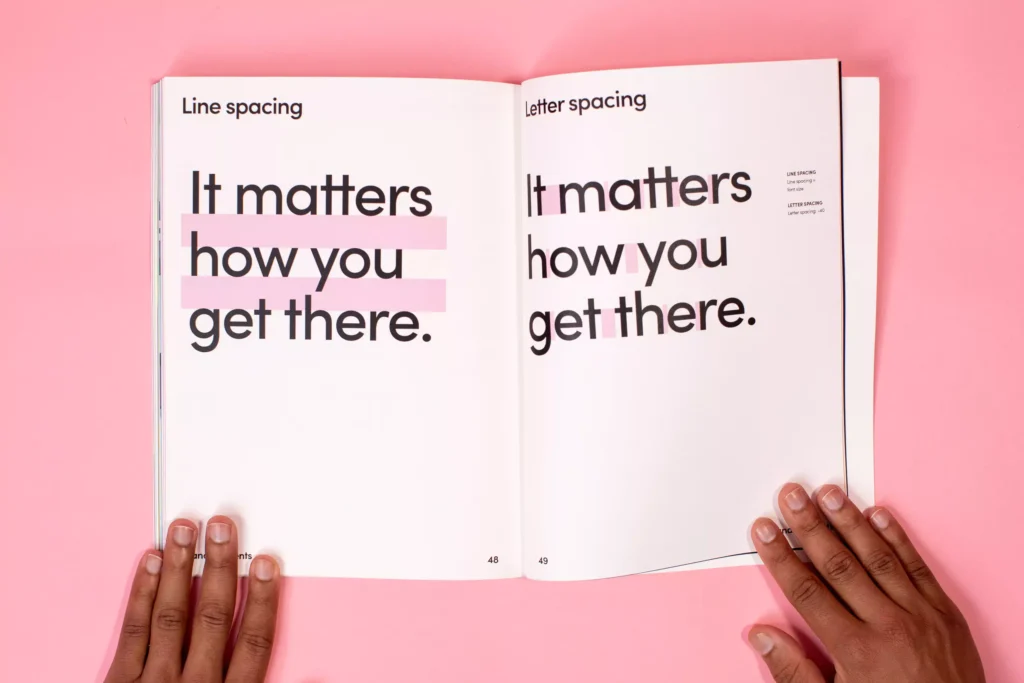
3. Typography 📝
Fonts matter more than you think.
Include:
- Primary typeface
- Secondary typeface
- Web-safe alternatives
- Font sizes for different applications (headings, body text, etc.)
- Typographic hierarchy
Hot Take: Ditch the overused fonts. No Papyrus or Comic Sans allowed (I’m looking at you, Karen from accounting).
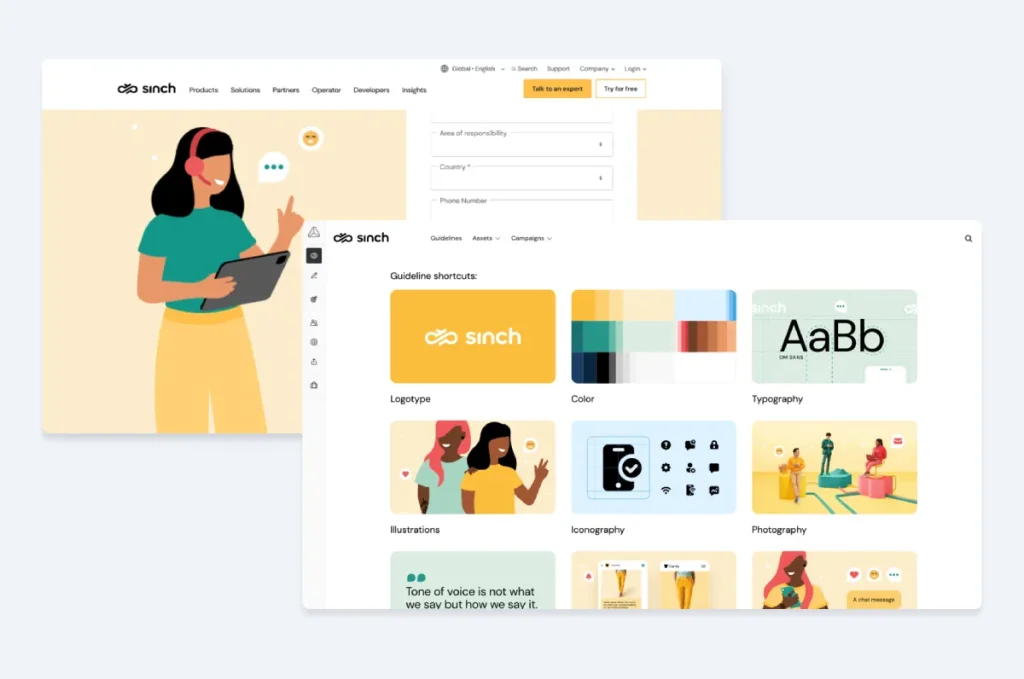
4. Imagery Style 📸
A picture’s worth a thousand words. Make sure they’re the right ones.
Include:
- Photography style guidelines
- Illustration style (if applicable)
- Icon style
- Image treatments (filters, overlays, etc.)
Quick Tip: Create a mood board to represent your brand’s imagery style visually. It’s worth a thousand… well, you know.
5. Brand Voice and Tone 🗣️
How you say something is just as important as what you say.
Include:
- Brand personality traits
- The tone of voice for different channels (social media, website, emails)
- Writing style guide
- Key messaging and taglines
Example: Are you the quirky best friend or the wise mentor? Define your brand’s personality and stick to it.
6. Brand Story and Values 📖
Give your brand some heart and soul.
Include:
- Brand mission statement
- Core values
- Brand story/history
- Target audience personas
Reality Check: Don’t just copy-paste some corporate jargon. Be authentic. Your customers can smell BS from a mile away.
7. Design Elements and Patterns 🔷
The little details that make your brand uniquely… you.
Include:
- Iconography style
- Patterns or textures
- Design elements (lines, shapes, etc.)
- Layout guidelines
Psst: This is where you can let your creativity shine. Just remember – consistency is vital.
8. Social Media Guidelines 📱
Because your brand lives online, too.
Include:
- Profile image and cover photo specifications
- Posting style and frequency
- Hashtag usage
- Engagement guidelines
Fun Fact: According to Sprout Social, 57% of consumers say they’re likelier to buy from a brand they follow on social media. Make it count!
9. Email Marketing Templates 📧
Don’t let your emails be the ugly stepchild of your brand.
Include:
- Email header and footer designs
- Typography guidelines for email
- CTA button styles
- Sample layouts
Hot Take: The days of text-only emails are dead. Embrace design, but keep it mobile-friendly.
10. Application Examples 🖥️
Show how it all comes together.
Include:
- Business card designs
- Letterhead and document templates
- PowerPoint or presentation templates
- Merchandise or packaging examples
Remember: This section is your chance to wow. Make it visual, make it practical, make it awesome.
How to Create Your Brand Guideline Template (Without Tearing Your Hair Out)

Alright, theory, time’s over. Let’s get our hands dirty.
Step 1: Gather Your Assets 🗃️
Before you start, collect everything you already have:
- Existing logos
- Colour codes
- Fonts
- Any previous brand documents
Pro Tip: Create a folder structure now. Future you will thank present you.
Step 2: Choose Your Tool 🛠️
You don’t need fancy software. Really.
Options include:
- Canva (great for beginners)
- Adobe InDesign (if you’re feeling fancy)
- Google Slides (yes, really – it’s free and easy)
- Figma (my personal favourite)
Confession: Remember that PowerPoint disaster I mentioned? Sometimes, simple tools work best. It’s the content that matters.
Step 3: Start With a Template 📑
Why reinvent the wheel?
- Use a pre-made brand guideline template as a starting point
- Customise it to fit your brand
- Focus on content first, pretty it up later
Where to Find Templates:
- Canva has tons of free options
- Creative Market for more unique designs
- Behance for inspiration (just don’t copy outright)
Step 4: Fill in the Blanks ✍️
Work through each section of your template:
- Add your logo files and usage rules
- Input your colour codes
- Specify your fonts and typography guidelines
- Describe your imagery style
- Define your brand voice
- Tell your brand story
- Include design elements and patterns
- Outline social media guidelines
- Add email marketing templates
- Showcase application examples
Remember: Be specific. “Use blue” isn’t helpful. “Use Pantone 300C” is.
Step 5: Make It Visually Appealing 🎭
Now’s the time to pretty it up:
- Use your brand colours throughout the document
- Add real examples and mockups
- Include plenty of white space
- Use icons or illustrations to break up text
Pro Tip: If design isn’t your strong suit, keep it simple. Clean and minimal is always better than cluttered and confusing.
Step 6: Get Feedback 👂
Don’t work in a vacuum:
- Share with team members
- Get input from trusted clients
- Consider hiring a professional designer for a quick review
Real Talk: Feedback can sting, but it’s essential. Put on your big kid pants and listen.
Step 7: Finalise and Distribute 🚀
You’re almost there!
- Make final tweaks based on feedback
- Proofread (then proofread again)
- Save in multiple formats (PDF, editable file)
- Create a shareable link or cloud folder
Important: Set a reminder to review and update your guide annually. Brands evolve, and your guidelines should, too.
Common Pitfalls (And How to Avoid Them)
Learn from my mistakes, people:
- Making it too complicated: If your team can’t understand it, they won’t use it.
- Forgetting digital applications: Your brand lives online. Don’t ignore it.
- Being too rigid: Allow some flexibility for different contexts.
- Neglecting to update: Brands evolve. Your guidelines should, too.
- Focusing only on visuals: Brand voice is as important as pretty colours.
The Secret Sauce: Bringing Your Brand to Life

Here’s where the magic happens.
Your brand guideline isn’t just a rulebook – it’s the blueprint for your brand’s personality.
Think of it this way: If your brand were a person, what would they be like?
- Are they the life of the party or the quiet intellectual?
- Do they prefer dad jokes or witty one-liners?
- Are they the trusted advisor or the innovative disruptor?
Define this personality, then infuse it into every aspect of your guideline.
Example: Let’s say your brand is the “quirky best friend”. Your guidelines might include the following:
- Bright, playful colours
- A fun, sans-serif font
- Imagery featuring people and laughter
- A tone of voice that’s casual and full of pop culture references
Bring it to life: Include a section called “A Day in the Life of [Your Brand]”. Describe how your brand would interact in different scenarios. It sounds cheesy, but trust me – it works.
Case Study: From Bland to Grand
Let me tell you about Sarah.
Sarah ran a small digital marketing agency. Her work was good, but her brand was… forgettable.
She came to me, frustrated that she wasn’t attracting the high-end clients she wanted.
We spent a weekend creating a killer brand guideline. Here’s what we did:
- Refined her logo for a more premium feel
- Switched to a sophisticated colour palette (goodbye, neon green)
- Chose sleek, modern fonts
- Defined a brand voice “confident expert with a twist of humour.”
- Created templates for everything from proposals to Instagram posts
The result? Within three months, Sarah landed two clients that TRIPLED her average project value.
Why? Because now she looked the part. Her brand guidelines gave her the tools to present a cohesive, professional image across every touchpoint.
The lesson: Never underestimate the power of a well-defined brand.
Your Action Plan: Next Steps
Feeling overwhelmed? Don’t be. Here’s your step-by-step action plan:
- Day 1-2: Gather all existing brand assets
- Day 3: Choose your tool and find a template
- Day 4-7: Fill in the content for each section
- Day 8-9: Design and visual polish
- Day 10: Get feedback from team/clients
- Day 11: Make revisions
- Day 12: Finalise and distribute
Two weeks. That’s all it takes to transform your brand from meh to marvellous.
The Bottom Line
Creating a brand guideline template isn’t just about pretty colours and fancy fonts.
It’s about giving your brand a voice, a personality, and a consistent presence that resonates with your audience.
It’s the difference between being forgettable and being unforgettable.
So, what are you waiting for?
Your brand deserves this. Your clients deserve this. YOU deserve this.
Get started today.
Trust me, in future, you will be glad you did.
FAQs: Your Burning Questions, Answered
Do I need a brand guideline if I’m a solopreneur?
Absolutely. It helps you stay consistent and professional, even if you’re a one-person show.
How often should I update my brand guidelines?
At a minimum, review it annually. Update as your brand evolves or expands.
What if I can’t afford professional design software?
No problem. Free tools like Canva or Google Slides work great for creating guidelines.
How long should my brand guideline be?
Aim for 10-20 pages. It’s comprehensive enough to be helpful but not so long it’s overwhelming.
Should I include budget allocation in my guidelines?
Not typically. Keep financial details separate from your brand identity guide.
Can I use my competitor’s guidelines as a template?
For inspiration, sure. But never copy directly. Your brand should be uniquely yours.
What’s the most essential element of a brand guideline?
Consistency across all elements. But if I had to pick one, I’d say your brand’s tone of voice.
How do I enforce the use of my brand guidelines?
Make it easily accessible, provide training, and lead by example in all your communications.
Should I include my brand’s history in the guidelines?
Yes, but keep it brief. A short brand story adds depth and context to your identity.
What if I’m rebranding? How does that affect my guidelines?
Create a new guideline for your rebrand, but include a section on transitioning from the old to the new brand.
Is it okay to have multiple versions of my logo?
Yes, but limit it to 2-3 variations (e.g., full colour, monochrome, and a simplified version for small applications).
Should I copyright my brand guidelines?
While the guideline itself isn’t typically copyrighted, the elements within it (logo, specific text) can be. Consult a legal professional for specifics.