The Importance of Branding in Building Market Authority
Brands aren’t just fancy logos or catchy slogans. They’re powerful business assets that shape how customers see, feel about, and interact with your company.
The difference between struggling businesses and industry leaders often comes down to effective branding. And I’m not just talking about having a nice-looking design—I mean developing a comprehensive brand strategy that builds genuine market authority.
Right, let’s tackle this head-on.
- Effective branding shapes customer perception and builds market authority, distinguishing successful businesses from struggling ones.
- Strong brand identity fosters customer loyalty, justifies premium pricing, and provides instant credibility in competitive markets.
- Consistent branding across all platforms is essential for recognition, trust-building, and long-term business success.
Why Branding Makes or Breaks Your Business Success

The marketplace is crowded. In virtually every industry, consumers face overwhelming choices. So what makes someone choose your product or service over countless alternatives?
Your brand.
Strong branding creates immediate recognition. Think about it—when you see a swoosh, you think Nike. When you see the Golden Arches, you think McDonald’s. That instant recognition is worth its weight in gold.
But recognition is just the beginning. Proper branding delivers these concrete benefits:
- Creates instant credibility in a sceptical marketplace
- Justifies premium pricing (people pay more for brands they trust)
- Builds customer loyalty beyond single transactions
- Attracts ideal clients who align with your values
- Protects market share against cheaper competitors
A study by Lucidpress found that consistent brand presentation across all platforms increases revenue by 33%. That’s not a small change—significant business growth is driven purely by branding.
Brand Identity: The Foundation of Market Authority
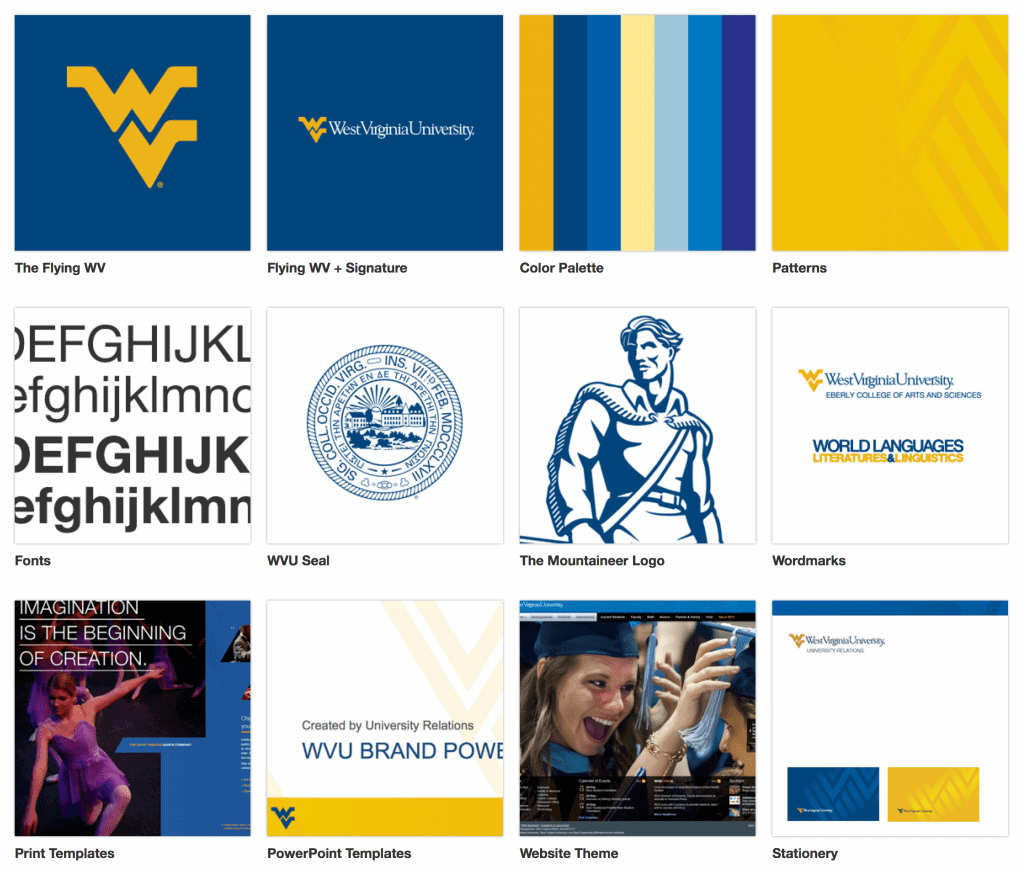
Your brand identity forms the core of how people perceive your business. It’s much more than visuals, though they’re certainly important.
Visual Identity Components
Your brand’s visual elements create the first impression. They include:
- Logo design (primary and secondary versions)
- Colour palette (primary and accent colours)
- Typography (headline and body fonts)
- Imagery style (photography, illustrations, icons)
- Design elements (patterns, textures, shapes)
These visual components should harmonise to reflect your brand’s personality and values.
Inkbot Design’s brand identity services help businesses create cohesive visual systems that stand out in competitive markets. Their approach focuses on developing distinctive assets that build recognition over time.
Beyond Visuals: The Full Brand Experience
While visual identity is crucial, your complete brand encompasses everything that shapes customer perception:
- Brand voice: How you communicate (formal, casual, technical, approachable)
- Brand values: What you stand for as a company
- Brand promise: What customers can expect from you
- Brand personality: The human characteristics your brand embodies
- Brand positioning: How you differentiate from competitors
When these elements align, they create a powerful brand presence that customers connect to emotionally.
Brand Recognition: The Path to Market Dominance
Brand recognition happens when consumers can identify your brand based on visual elements without seeing your name. This recognition is incredibly valuable—you’ve established a place in consumers’ minds.
How Recognition Builds Authority
Recognition doesn’t happen overnight. It develops through:
- Consistent presentation across all channels
- Repeated exposure to your brand elements
- Distinctive assets that stand out from competitors
- Memorable experiences that reinforce brand associations
The goal is to become so familiar that customers automatically think of you when they need products or services in your category.
Measuring Recognition Success
You can track your brand recognition through:
- Unaided recall surveys (“Name three companies that sell X”)
- Social media mention tracking
- Direct traffic to the website (people searching specifically for you)
- Brand search volume on Google
Improving these metrics indicates your branding efforts are paying off in terms of market authority.
Brand Equity: Turning Recognition Into Value
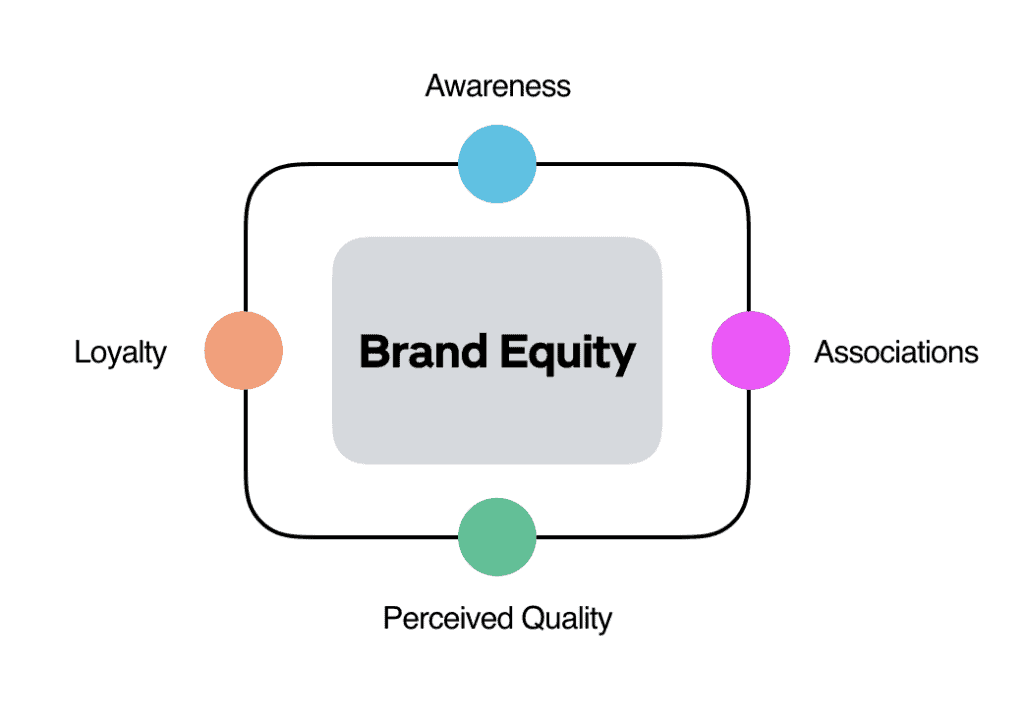
Brand equity represents the commercial value derived from consumer perception of your brand name, rather than just your products or services.
The Components of Brand Equity
Brand equity breaks down into several interconnected elements:
- Brand awareness: How familiar people are with your brand
- Brand loyalty: Customer retention and repeat purchases
- Perceived quality: How customers view your offerings compared to alternatives
- Brand associations: The connections people make with your brand
- Proprietary assets: Trademarks, patents, and intellectual property
The stronger each component, the greater your overall brand equity.
Financial Impact of Strong Brand Equity
Companies with substantial brand equity enjoy significant business advantages:
- Command premium pricing (15-40% higher in many cases)
- Lower customer acquisition costs
- Higher customer lifetime value
- Increased resilience during economic downturns
- Opportunities for successful brand extensions
According to Interbrand, the world’s top brands have equity values in the billions, sometimes exceeding the company’s tangible assets.
Consumer Trust: The Currency of Modern Business
In today’s hyper-connected world, trust is everything. Consumers have endless information at their fingertips, making them more discerning than ever.
Building Trust Through Branding
Strategic branding builds trust through:
- Consistency: Delivering the same quality experience every time
- Transparency: Being honest about your products and practices
- Values alignment: Standing for things your customers care about
- Social proof: Showcasing testimonials and reviews
- Thought leadership: Demonstrating expertise in your field
When customers trust your brand, they’re not just more likely to buy—they become advocates who spread your message.
Trust Signals in Your Branding
Certain branding elements serve specifically as trust signals:
- Professional visual design
- Clear communication
- Industry certifications and partnerships
- Security badges (for online businesses)
- Money-back guarantees
- Notable client logos
Strategically incorporating these elements into your branding builds credibility with new prospects.
Customer Perception: How Your Brand Lives in People’s Minds

Your brand isn’t what you say it is—it’s what your customers say it is. Their perception ultimately determines your success.
Influencing Customer Perception
While you can’t control perception completely, you can influence it through:
- Delivering consistent brand experiences
- Managing customer expectations
- Responding effectively to feedback
- Storytelling that shapes your narrative
- Creating emotional connections
The goal is to align customer perception with your intended brand positioning.
The Perception Gap
Many businesses suffer from a “perception gap”—a disconnect between how they view their brand and how customers perceive it.
Regular brand perception research helps identify these gaps so you can address them before they damage your market authority.
Brand Loyalty: The Ultimate Competitive Advantage
Loyal customers are the backbone of sustainable business success. They cost less to maintain, spend more over time, and bring in new customers through referrals.
Creating Brand Loyalty
Brand loyalty develops when:
- Customers consistently have positive experiences
- Your brand connects emotionally, not just functionally
- You provide value beyond the basic transaction
- Customers identify personally with your brand values
- You recognise and reward repeat business
The outcome is a base of customers who wouldn’t dream of switching to competitors.
Loyalty Programs vs. Genuine Brand Loyalty
Many companies mistake loyalty programs for actual brand loyalty. While programs can be practical tools, true loyalty runs deeper—an emotional connection that keeps customers returning regardless of incentives.
Inkbot Design’s approach to brand strategy focuses on building these deeper connections rather than just transactional relationships.
Brand Positioning: Carving Your Unique Space
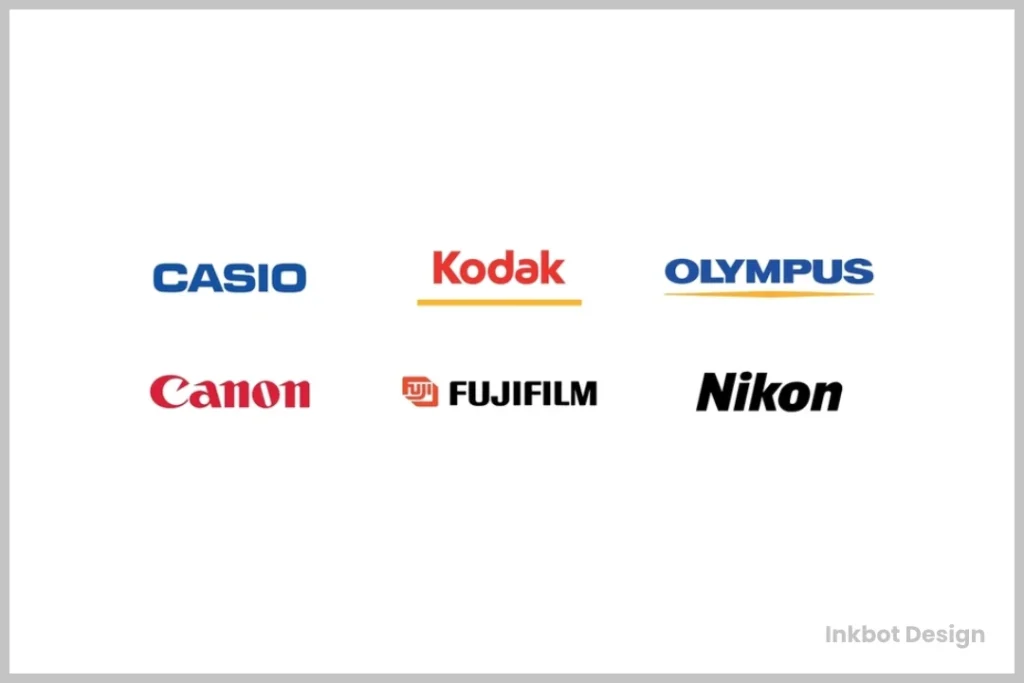
Positioning defines where your brand sits in the market relative to competitors. Strong positioning makes your brand the obvious choice for specific customers with specific needs.
Effective Positioning Strategies
Successful brand positioning requires:
- Identifying your unique value proposition
- Understanding competitor positioning
- Finding underserved market gaps
- Aligning with customer needs and values
- Communicating your position consistently
The most powerful positioning makes competitors irrelevant rather than directly battling them.
Repositioning for Growth
Sometimes, market changes require repositioning your brand. This might happen due to:
- New competitors entering your space
- Changing customer preferences
- Technological disruption
- Expansion into new markets
- Evolution of your product or service offerings
Successful repositioning maintains core brand equity while shifting perception in the desired direction.
Visual Identity: Making a Memorable Impression
Your visual identity is often the first point of contact between your brand and potential customers. Getting it right is essential for building market authority.
Elements of Effective Visual Branding
Strong visual branding requires:
- Distinctiveness: Standing out from competitors
- Relevance: Connecting to your industry and audience
- Flexibility: Working across all applications and media
- Consistency: Maintaining visual standards
- Simplicity: Being instantly recognisable and memorable
These principles apply whether you’re a global corporation or a local small business.
Visual Identity Evolution
The best brands evolve their visual identity over time while maintaining recognition. Think of how companies like Apple, Google, and Coca-Cola have updated their looks while preserving their essential brand identities.
This evolution should be strategic, not reactive, maintaining equity while keeping the brand fresh and relevant.
Brand Consistency: The Secret to Mental Real Estate
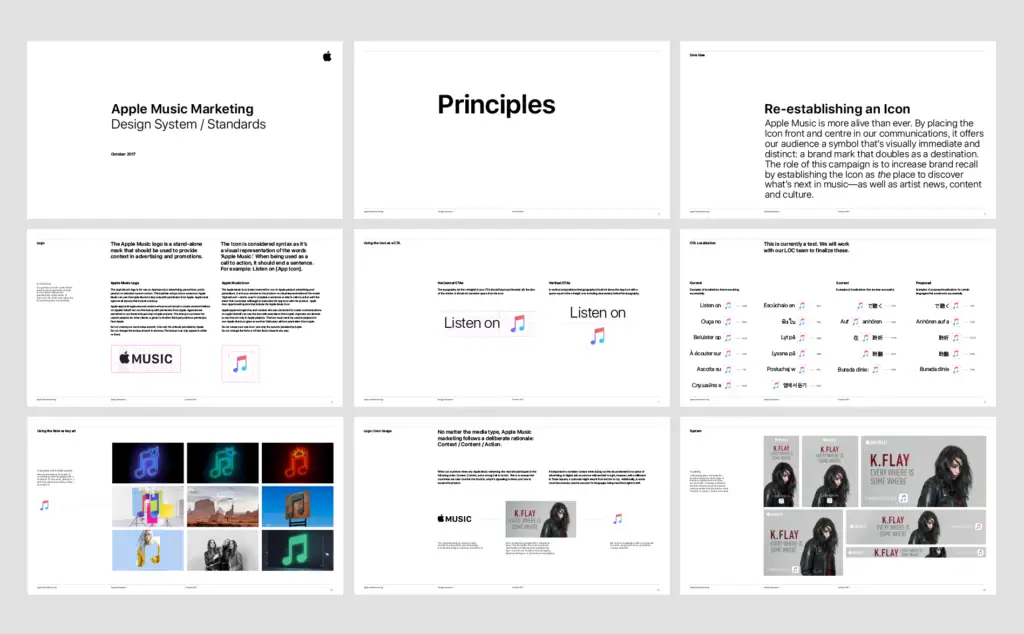
Consistency might not seem exciting, but it’s crucial for effective branding. You build stronger recognition and trust when your brand presents consistently across all touchpoints.
The Consistency Challenge
Maintaining consistency becomes challenging as companies grow and communication channels multiply. Common consistency problems include:
- Different departments are creating their materials
- Multiple agencies are working on different campaigns
- Global markets require local adaptations
- Digital transformation is creating new touchpoints
- Mergers and acquisitions bring together different brand systems
Solving these challenges requires strong brand guidelines and governance.
Creating Comprehensive Brand Guidelines
Adequate brand guidelines cover:
- Logo usage rules and restrictions
- Colour specifications across different media
- Typography standards and licensing
- Photography and illustration styles
- Voice and tone for written communication
- Digital application standards
- Templates for common materials
These guidelines should be living documents that evolve as your brand grows.
Emotional Connection: Beyond Rational Decision Making
Humans are emotional beings, not just rational decision-makers. The strongest brands forge emotional connections that transcend product features and benefits.
The Science of Brand Emotions
Research consistently shows that emotional responses to brands are more potent than rational evaluations:
- Emotional campaigns outperform rational ones by 2:1 in profit generation
- Positive emotions toward a brand have a greater influence on consumer loyalty than trust and other judgments
- Emotional connections help brands survive product failures and other crises
Building these connections requires understanding the core emotions that drive your specific audience.
Creating Emotional Branding
Emotional branding strategies include:
- Storytelling that resonates with the audience’s values
- Creating sensory experiences through design
- Aligning with causes that matter to customers
- Celebrating customer success stories
- Developing brand characters or mascots
When done authentically, these strategies create powerful bonds with customers.
Consumer Behaviour: How Branding Influences Decisions

Understanding how branding affects consumer behaviour gives you powerful tools for building market authority.
The Decision-Making Journey
Branding influences every stage of the consumer journey:
- Awareness: Strong brands get noticed first
- Consideration: Known brands make the shortlist
- Evaluation: Trusted brands reduce perceived risk
- Purchase: Preferred brands command premium prices
- Post-purchase: Beloved brands turn customers into advocates
By strategically addressing each stage, you can create a brand that guides consumers toward choosing you.
Psychological Triggers in Branding
Effective branding leverages psychological principles like:
- Social proof: Showing that others trust your brand
- Scarcity: Creating a sense of limited availability
- Authority: Demonstrating expertise in your field
- Reciprocity: Giving value before asking for a purchase
- Consistency: Aligning with customers’ existing beliefs
When applied ethically, these triggers strengthen your brand’s influence.
Long-term Branding Strategy: Building Lasting Authority
Too many companies approach branding as a short-term project rather than a long-term strategy. This undermines their ability to build actual market authority.
The Long Game of Branding
Sustainable brand building requires:
- Consistency over time rather than constant reinvention
- Evolutionary rather than revolutionary changes
- Investment in brand building, not just activation
- Measurement of long-term metrics, not just sales
- Internal alignment around brand values
These principles create brands that withstand market fluctuations and competitive pressures.
Balancing Short and Long-Term Goals
While building long-term brand equity, you still need short-term results. The key is finding the right balance:
- Use short-term activations within consistent brand frameworks
- Ensure sales promotions don’t undermine brand positioning
- Invest in both brand-building and performance marketing
- Develop metrics that capture both immediate and long-term impacts
- Create an internal understanding of how these approaches work together
With this balanced approach, your branding efforts will deliver immediate returns and lasting market authority.
Business Reputation: The Asset You Can’t Afford to Neglect

Your brand and reputation are deeply intertwined. While branding represents your promises to the market, reputation reflects how well you’ve kept those promises.
Managing Reputation Through Branding
Strategic branding helps manage reputation by:
- Setting appropriate expectations through your brand promises
- Creating consistent experiences that meet or exceed those expectations
- Establishing a voice for responding to both praise and criticism
- Building goodwill that provides a buffer during challenges
- Developing authentic corporate social responsibility initiatives
When aligned, your branding and reputation management create a robust foundation for market authority.
Crisis-Proofing Your Brand
Even the strongest brands face crises. How you respond determines whether your brand emerges stronger or permanently damaged:
- Have response frameworks in place before crises occur
- Ensure your actions align with your stated brand values
- Communicate promptly, transparently, and authentically
- Make meaningful changes based on legitimate criticism
- Re-earn trust through consistent positive actions
With proper preparation, your brand can weather almost any storm.
Marketing Strategy: Branding as the Central Framework
Effective marketing doesn’t exist in isolation from branding. Your brand should provide the strategic framework that guides all marketing activities.
Brand-Centric Marketing
When your brand serves as the centre of your marketing strategy:
- Campaigns feel connected rather than disjointed
- Messages reinforce each other across channels
- Customer experiences remain consistent
- Marketing spend becomes more efficient
- Results build over time rather than starting from zero
This approach creates a cumulative impact rather than a series of one-off efforts.
Integrating Brand and Performance Marketing
Many companies create artificial divisions between “brand marketing” and “performance marketing.” In reality, these approaches work best when integrated:
- Brand building establishes the foundation that makes performance marketing work
- Performance campaigns should reflect and reinforce brand positioning
- Data from performance marketing can inform brand development
- Both approaches contribute to overall business success
The most successful companies understand and leverage these connections.
Corporate vs. Personal Branding: Building Authority at Every Level
While this article has focused primarily on corporate branding, personal branding has become increasingly important in today’s business landscape.
The Personal Brand Advantage
Strong personal brands offer significant benefits:
- Enhanced credibility for company leadership
- Expanded network reach through individual connections
- Humanised corporate messaging
- Additional media opportunities
- Resilience against corporate changes
When aligned with corporate branding, personal brands create multi-layered market authority.
Balancing Personal and Corporate Brands
For business leaders and employees, finding the right balance requires:
- Ensuring personal brand values align with corporate values
- Creating distinct but complementary positioning
- Establishing clear guidelines for representing the company
- Developing transition plans for personnel changes
- Leveraging both brands for maximum impact
With thoughtful strategy, personal and corporate brands can strengthen each other.
Brand Differentiation: Standing Out in a Sea of Sameness

Genuine differentiation is the greatest challenge in modern branding. In crowded markets, creating meaningful distinction is essential for building authority.
Finding Your Differentiators
Effective brand differentiation can come from:
- Unique product features or benefits
- Distinctive customer experiences
- Innovative business models
- Specialised expertise or focus
- Compelling brand story or heritage
The key is finding differences that matter to your target audience.
Making Differentiation Meaningful
Many brands focus on superficial differentiation that customers don’t value. Meaningful differentiation requires:
- Understanding what customers genuinely care about
- Identifying where competitors are underperforming
- Evaluating your authentic strengths and capabilities
- Finding the intersection of these three areas
- Committing fully to owning that space
This process creates differentiation that drives preference and premium pricing when done correctly.
Competitive Advantage: Branding as a Business Strategy
Branding isn’t just a marketing function at its highest level—it’s a core business strategy that creates sustainable competitive advantage.
Branding as a Strategic Asset
Strong brands create competitive advantages through:
- Reduced price sensitivity among loyal customers
- Preferential treatment from suppliers and partners
- Attraction of top talent to your organisation
- Media interest and earned coverage
- Stronger negotiating position in business dealings
These advantages compound over time, making your business progressively stronger.
Brand-Driven Innovation
The most sophisticated companies use their brand as a filter for innovation:
- New products and services must align with brand positioning
- Customer experience innovations reinforce brand values
- Business model changes support brand promises
- Partnerships enhance rather than dilute brand equity
This approach ensures all innovation strengthens rather than fragments your market position.
Storytelling in Branding: Creating Narrative Authority

Humans are hardwired for stories. Brands that master storytelling create deeper connections and more memorable impressions.
The Elements of Brand Storytelling
Compelling brand stories typically include:
- A clear purpose or mission that drives the company
- Origin stories that explain why the brand exists
- Customer journey narratives showing transformation
- Values in action through concrete examples
- A vision for the future that customers can participate in
These stories should feel authentic rather than manufactured.
Platforms for Brand Storytelling
Your brand story can be told through:
- Company website and about pages
- Case studies and customer testimonials
- Social media content and campaigns
- Video content and documentaries
- Founder interviews and presentations
The best approach uses multiple channels to tell consistent but complementary parts of your narrative.
Inkbot Design’s storytelling approach helps brands develop compelling narratives that resonate with their target audiences while building market authority.
Brand Voice: Speaking with Authority and Authenticity
How your brand communicates is just as important as what it communicates. A distinctive and appropriate brand voice strengthens recognition and connection.
Developing Your Brand Voice
Creating a compelling brand voice requires:
- Understanding your audience’s communication preferences
- Defining voice characteristics (friendly, authoritative, playful, etc.)
- Establishing tone variations for different situations
- Creating writing guidelines and examples
- Training content creators on proper implementation
The right voice feels both distinctive and natural, never forced or artificial.
Maintaining Voice Consistency
Voice consistency challenges include:
- Multiple writers are creating content
- Different channels require adaptation
- Evolving language trends and preferences
- International markets and translation issues
- Balancing consistency with contextual appropriateness
Regular reviews and ongoing training help maintain a consistent voice across all touchpoints.
Brand Values: The Core of Authentic Authority
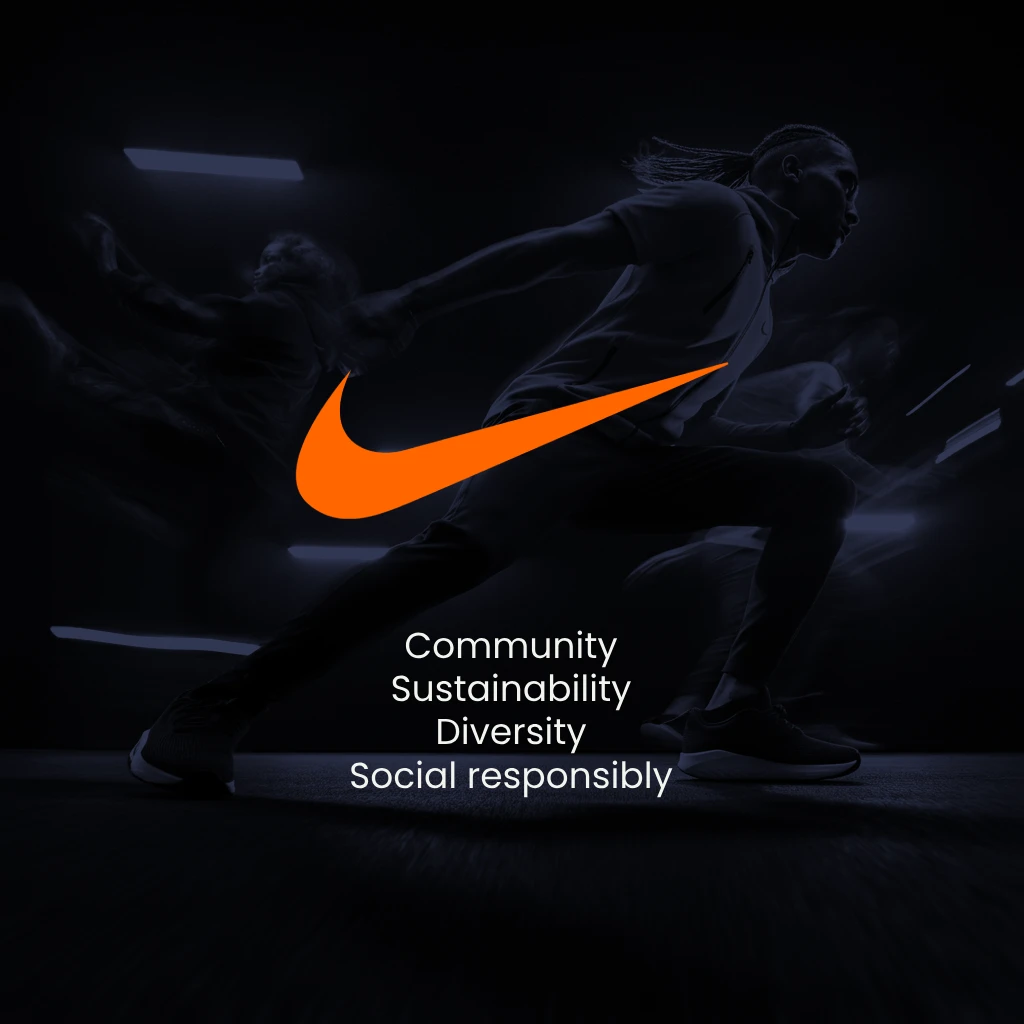
Today’s consumers increasingly support brands that share their values. Clear, authentic brand values create deeper connections and stronger loyalty.
Identifying Genuine Brand Values
Effective brand values are:
- Truly believed within the organisation
- Actively practised, not just stated
- Specific enough to guide decisions
- Differentiating from competitors
- Meaningful to target customers
Generic values like “quality” and “innovation” rarely create distinction or emotional connection.
Activating Values in Your Branding
To make values meaningful, they must be:
- Communicated internally and externally
- Reflected in business operations and decisions
- Evident in product development and service delivery
- Demonstrated through corporate social responsibility
- Used as a criterion for partnerships and collaborations
When consistently activated, values become powerful drivers of brand preference and loyalty.
Brand Image: Perception as Competitive Reality
While you create brand identity, customers create brand image through their perceptions and experiences. Understanding and influencing this image is crucial for market authority.
Measuring Brand Image
You can assess your current brand image through:
- Customer surveys and interviews
- Social media sentiment analysis
- Review site monitoring
- Focus groups and perception studies
- Competitor comparison research
These inputs reveal how your brand is perceived versus how you want it perceived.
Shifting Brand Image
When brand image doesn’t align with your strategic goals, systematic efforts can shift perception:
- Addressing product or service gaps
- Enhancing customer experience touchpoints
- Updating visual identity elements
- Refocusing communication on key messages
- Developing campaigns that challenge existing perceptions
These changes must be substantial and consistent to shift established perceptions successfully.
Brand Credibility: Earning the Right to Lead
Credibility forms the foundation of market authority. Without it, even the most visually appealing brand will struggle to build lasting success.
Sources of Brand Credibility
Brand credibility develops through:
- Consistent delivery on brand promises
- Transparent communication about both successes and failures
- Authentic expertise in your field
- Quality standards that meet or exceed expectations
- Ethical business practices throughout operations
These factors combine to create a reputation for reliability and trustworthiness.
Rebuilding Damaged Credibility
If credibility has been damaged, rebuilding requires:
- Acknowledging issues openly and honestly
- Taking concrete actions to address root causes
- Making amends to affected stakeholders
- Implementing systems to prevent recurrence
- Demonstrating consistent positive behaviour over time
Though challenging, successful credibility rebuilding can create stronger brand connections than before.
Trust Signals: The Building Blocks of Brand Authority
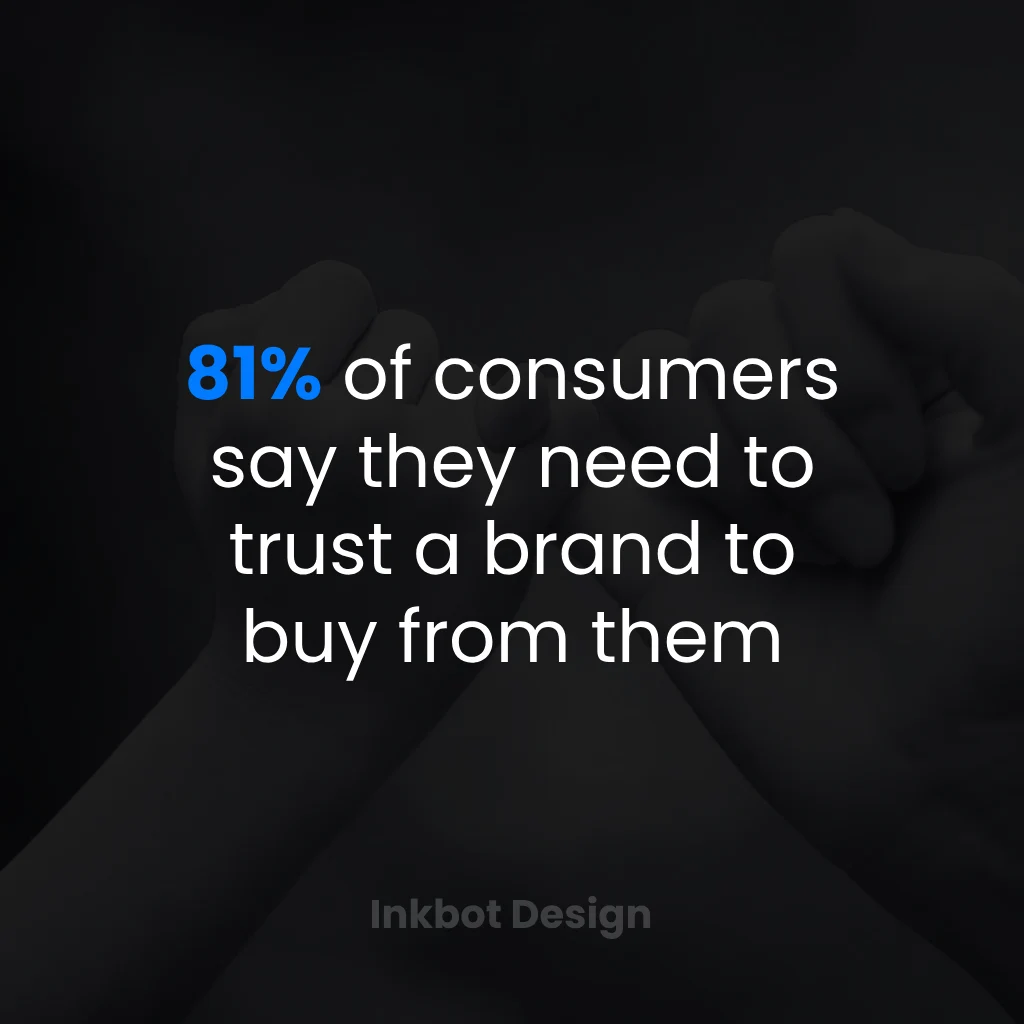
In an era of widespread scepticism, explicit trust signals help overcome initial hesitation and build credibility with new audiences.
Incorporating Trust Signals
Effective trust signals include:
- Social proof: Reviews, testimonials, case studies
- Expertise markers: Certifications, awards, credentials
- Security indicators: Payment security, data protection
- Transparency elements: Pricing clarity, policy accessibility
- Guarantees: Returns, satisfaction, results
Strategically placing these signals throughout the customer journey reduces perceived risk and increases conversion.
Avoiding Trust-Reducing Elements
Just as important as including trust signals is avoiding elements that undermine trust:
- Excessive hype or unrealistic claims
- Hidden fees or unclear pricing
- Inconsistent messaging across channels
- Poor quality website or materials
- Slow or inadequate customer service
These negative signals can undo the work of even the most substantial branding efforts.
FAQS About The Importance of Branding and Market Authority
What is a brand, and why is it more than just a logo?
A brand encompasses everything that shapes how people perceive your business. While your logo is an essential visual shorthand, your complete brand includes your values, voice, customer experience, product quality, and more. Think of your logo as just the tip of the iceberg—there’s much more beneath the surface that creates your total brand impact.
How long does it take to build strong brand recognition?
Building meaningful brand recognition typically takes 1-3 years of consistent effort in most markets. However, this timeframe can vary based on factors like market size, competitive intensity, marketing budget, and the distinctiveness of your brand elements. The key is consistency—sporadic or inconsistent branding efforts significantly extend this timeline.
Can small businesses compete with big brands through branding?
Absolutely. Small businesses can often create stronger emotional connections through personalised experiences, authentic storytelling, and community engagement—areas where many large brands struggle. By focusing on a clearly defined niche and delivering exceptional brand experiences, small businesses can build fierce loyalty that large competitors can’t easily match.
How do I know if my branding is working?
Effective branding shows up in both quantitative and qualitative measures. Look for improvements in metrics like awareness surveys, direct website traffic, search volume for your brand name, social media engagement, customer retention rates, and willingness to pay premium prices. Qualitatively, watch for more positive customer feedback, increased referrals, and greater interest from potential partners or employees.
Should my brand adapt to different platforms and audiences?
Your brand should maintain consistent core elements while adapting its expression to different contexts. Think of it like a person who retains their personality while adjusting how they communicate in various situations—more formal in some contexts, more casual in others. The key is ensuring these adaptations all feel like variations of the same underlying brand, not wholly different identities.
How important is visual consistency across all brand materials?
Visual consistency is crucial for recognition and professionalism. Studies show consumers take 5-7 impressions to remember a brand, and inconsistent visuals reset this counter each time. However, consistency doesn’t mean rigidity—your visual system should have enough flexibility to work across different applications while maintaining a cohesive feel.
How does branding affect customer loyalty?
Strong branding creates emotional connections that transcend transactional relationships. When customers identify with your brand values and consistently have positive experiences, they develop loyalty that makes them less price-sensitive and more resistant to competitor offers. This loyalty manifests as repeat purchases, referrals, and forgiveness when occasional mistakes occur.
What’s the relationship between branding and pricing power?
Effective branding directly impacts your ability to command premium prices. Customers who perceive unique value in your brand, whether through quality, experience, status, or emotional connection, are willing to pay more than comparable unbranded or lesser-branded alternatives. This “brand premium” can range from 10% to several hundred per cent, depending on the category and brand strength.
How do I balance maintaining brand consistency with keeping the brand fresh?
Think of brand evolution as character development in a story—the core identity remains recognisable while growing and adapting. The best approach is to establish strong foundational elements that remain consistent (core values, key visual triggers, positioning) while periodically refreshing more flexible elements (campaign themes, secondary visuals, content approaches). This creates a brand that feels both familiar and contemporary.
What’s the biggest mistake companies make with their branding?
The most common mistake is inconsistency—changing direction too frequently before any approach has time to make an impact. Other major mistakes include failing to differentiate meaningfully from competitors, not aligning internal operations with external brand promises, neglecting to evolve as markets change, and underinvesting in brand building while focusing exclusively on short-term sales activation.
What should I focus on first when improving my brand?
Start with getting absolute clarity on your positioning and values—what makes you meaningfully different, and what do you stand for? Once that strategic foundation is solid, ensure your customer experience consistently delivers on those promises. Visual identity updates should generally come after these fundamental elements are strong, as aesthetics without substance rarely create a lasting impact.
How does social media affect branding today?
Social media has dramatically changed branding by creating direct, ongoing conversations between brands and customers. This shift requires brands to be more responsive, transparent, and authentic, as inconsistencies or failures are quickly exposed. However, it also offers unprecedented opportunities to build community, demonstrate values in action, and create more personal connections with audiences.
Ah, and that’s the true importance of branding—turn simple business transactions into branded experiences that command premium prices, build fierce loyalty, and establish unshakable market authority.